Best 2.5-Inch SATA SSDs for Laptops and Desktops in 2026
SATA SSDs aren’t dead. Not even close. While NVMe drives grab all the headlines, millions of laptops and desktops still rely on 2.5-inch SATA bays as their only upgrade path. If you’re breathing new life into an older ThinkPad, upgrading a budget desktop, or replacing a failing hard drive in a system that doesn’t have an M.2 slot, a good SATA SSD remains one of the smartest upgrades you can make. The speed difference between a spinning hard drive and even a “slow” SATA SSD is night and day.
The challenge is picking the right one. The SATA SSD market in 2026 is mature, which means there are plenty of solid options but also some drives cutting corners to hit lower price points. I’ve tested and tracked these drives extensively, and this guide covers the ones actually worth your money, whether you need maximum reliability, the best value per gigabyte, or a drive that’ll handle years of daily use without breaking a sweat.
Why SATA SSDs Still Matter in 2026
Before we get into specific drives, it’s worth understanding why anyone would buy a SATA SSD when NVMe exists. The answer is simple: compatibility. Thousands of laptop models from 2010 through 2018 only accept 2.5-inch SATA drives. Many budget desktops still ship with SATA-only motherboards. And if you’re replacing the hard drive in a 2012 MacBook Pro or a similar vintage machine, SATA is your only option.
For a deeper look at how 2.5-inch drives compare to their M.2 counterparts, check out our M.2 vs 2.5-inch SSDs form factor comparison. But the short version is this: SATA tops out at around 560 MB/s, which is a fraction of NVMe speeds. For everyday tasks like booting Windows, opening apps, and browsing the web, you won’t notice a meaningful difference. The real performance gap only shows up in large file transfers and specialized workloads.
SATA SSDs also make excellent secondary drives. If your desktop has an NVMe boot drive but still has open 2.5-inch bays, filling them with SATA SSDs for game libraries, media storage, or backups is a practical and affordable approach. You can learn more about running both types together in our guide on how to use SSD and HDD together in one PC.
Best Overall: Samsung 870 EVO
The Samsung 870 EVO has been the gold standard in 2.5-inch SATA SSDs since its launch, and nothing released since has knocked it off the top spot. It delivers consistent sequential read/write speeds of 560/530 MB/s, and more importantly, its random I/O performance and sustained write speeds remain strong even during heavy workloads.
Samsung’s V-NAND technology and the MKX controller give the 870 EVO excellent endurance ratings. The 1TB model is rated for 600 TBW (terabytes written), which means you could write over 300 GB per day for five years before approaching the warranty limit. For most users, that’s effectively a lifetime of writes. If you’re curious about how long SSDs actually last in practice, our SSD lifespan data analysis breaks down the numbers.
The 870 EVO comes in 250GB, 500GB, 1TB, 2TB, and 4TB capacities. The 1TB model hits the sweet spot for most people, offering the best balance of capacity and per-gigabyte value. Samsung’s Magician software is also genuinely useful, providing firmware updates, health monitoring, and performance optimization tools.
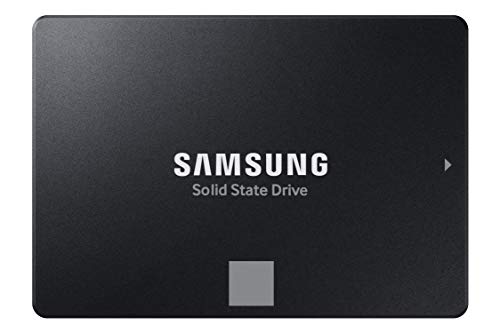
Samsung 870 EVO 1TB
The most reliable and consistently fast 2.5-inch SATA SSD you can buy, with a proven track record and excellent endurance.
Best Value: Crucial MX500
The Crucial MX500 has been a reader favorite for years, and with good reason. It delivers performance that’s within a few percentage points of the Samsung 870 EVO while typically costing less. For most users, the difference in real-world speed is imperceptible.
Crucial uses Micron’s 3D NAND (they’re the same company), which gives the MX500 a solid foundation. Sequential speeds hit 560/510 MB/s, and the drive includes integrated power loss immunity, which protects your data if your system loses power during a write operation. This feature is surprisingly uncommon at this price point, and it’s a genuine differentiator if you’re using the drive in a desktop without a UPS.
The MX500 is available in 250GB, 500GB, 1TB, 2TB, and 4TB sizes. Endurance on the 1TB model sits at 360 TBW, which is lower than the Samsung but still more than adequate for consumer use. If you’re upgrading an older system on a budget and want a drive that just works, the MX500 is the one to get.

Crucial MX500 1TB
Excellent reliability at a lower price than Samsung, with built-in power loss protection that keeps your data safe.
Best for Budget Builds: WD Blue SA510
Western Digital’s WD Blue SA510 is the budget pick that doesn’t feel like a compromise. It replaced the older WD Blue 3D NAND and brought slight improvements to write performance and efficiency. Sequential speeds of 560/520 MB/s keep it competitive, and WD’s long history in storage means you’re buying from a company that knows reliability.
One thing to note: the SA510 uses a DRAM-less design at lower capacities (250GB and 500GB), relying on Host Memory Buffer (HMB) technology instead. This can lead to slightly slower sustained write performance during very large transfers. At 1TB and above, this becomes much less of a concern for typical consumer workloads.
WD includes a free license for Acronis True Image (WD Edition) with the drive, which makes cloning your old drive to the new SSD much easier. If you want a step-by-step walkthrough of the process, we’ve written a full guide on how to clone your hard drive without losing any data.
Other SATA SSDs Worth Considering
Samsung 870 QVO (High Capacity on a Budget)
If you need a lot of storage and want to stay with Samsung, the Samsung 870 QVO offers 1TB, 2TB, 4TB, and even 8TB capacities. It uses QLC NAND instead of the 870 EVO’s TLC, which means lower endurance ratings and slower sustained writes once the SLC cache fills up. For a media storage drive or a secondary drive that handles mostly reads, it’s a fine choice. For a primary OS drive with heavy daily writes, stick with the EVO.
SK hynix Gold S31
The SK hynix Gold S31 is a sleeper pick that doesn’t get enough attention. SK hynix is one of the world’s largest NAND manufacturers, and the Gold S31 uses their own 3D NAND and controller. Performance matches the big names, and reliability data from users over the past few years has been excellent. It’s particularly popular among system builders who want a capable drive from a company that actually makes its own flash memory.
Kingston A400
The Kingston A400 is the bare-minimum SSD for people who just need something fast and cheap. It lacks DRAM cache and has modest endurance ratings, but if you’re upgrading a Pentium-era laptop that’s been limping along on a 5400 RPM hard drive, even the A400 will make it feel like a different machine. I wouldn’t use it as a primary drive for anything important, but for breathing life into old hardware that might not survive another two years anyway, it gets the job done.

SK hynix Gold S31 1TB
An underrated gem from a major NAND manufacturer with TLC flash, DRAM cache, and performance that rivals Samsung.
How to Choose the Right Capacity
Capacity matters more than most people think when it comes to SSDs. Larger drives tend to perform better because they have more NAND chips working in parallel, and they last longer because write wear gets distributed across more cells. A 1TB drive will generally offer better sustained write speeds and longevity than a 250GB version of the same model.
For a primary OS drive, 500GB is the minimum I’d recommend in 2026. Between Windows or macOS, essential applications, and a reasonable amount of personal files, you’ll fill 250GB faster than you expect. If you can swing 1TB, do it. You’ll avoid the constant storage management headaches that come with smaller drives. We’ve covered this decision in more detail in our 1TB vs 2TB SSD capacity guide.
For secondary storage drives, 2TB or 4TB models are becoming increasingly affordable. If you’re using a SATA SSD as a game library or media drive, buying the largest capacity you can budget for will save you from needing another upgrade in a year or two.
Installation Tips and Getting the Most from Your New SSD
Installing a 2.5-inch SATA SSD is one of the easiest hardware upgrades you can do. In a laptop, it usually involves removing a few screws, sliding out the old drive, and sliding in the new one. Desktops typically need a 2.5-inch to 3.5-inch adapter bracket, though many modern cases have dedicated SSD mounting points.
Before you install, clone your existing drive. Samsung, Crucial, and WD all offer free cloning tools with their drives. Cloning preserves your operating system, files, and settings so you can pick up right where you left off. If you’re starting fresh instead, make sure you have your OS installation media ready.
After installation, a few quick optimizations will keep your SSD running at peak speed:
- Enable AHCI mode in your BIOS. If your system was running in IDE mode for a hard drive, switching to AHCI before installing your OS enables TRIM support and improves performance.
- Verify TRIM is active. On Windows, open Command Prompt as admin and run
fsutil behavior query DisableDeleteNotify. A result of 0 means TRIM is enabled. - Don’t defragment your SSD. Windows 10 and 11 handle SSD optimization automatically. Manual defragmentation is unnecessary and adds wear.
- Keep some free space. Aim to leave at least 10-15% of your SSD’s capacity free. This helps the controller manage wear leveling and garbage collection efficiently.
Over time, even well-maintained SSDs can slow down slightly. If you notice performance degrading after a year or two, our guide on why your SSD slows down over time and how to fix it covers the common causes and practical solutions.
SATA vs NVMe: Do You Actually Need the Faster Drive?
This is a question I get constantly. If your system supports both SATA and NVMe, should you skip SATA entirely? Not necessarily. NVMe drives are faster on paper, but the real-world gap depends heavily on what you’re doing.
For booting your operating system, the difference between a good SATA SSD and an NVMe drive is about 2-5 seconds. For loading games, our real-world gaming performance tests comparing SATA and NVMe showed that most titles load within a second or two of each other. Where NVMe truly pulls ahead is in sustained large file transfers, video editing with high-bitrate footage, and database workloads.
If your system has both an M.2 slot and a 2.5-inch bay, a smart approach is to use an NVMe drive for your OS and most-used applications, then add a large SATA SSD for everything else. You get the best of both worlds without overspending.
Frequently Asked Questions
Are 2.5-inch SATA SSDs compatible with all laptops?
Most laptops manufactured between 2008 and 2020 that have a 2.5-inch drive bay will accept a standard 7mm SATA SSD. Some older models expect a 9.5mm thick drive, and most SSDs include a spacer in the box for this purpose. Check your laptop’s service manual or manufacturer website to confirm the bay size before purchasing. Very old systems (pre-2008) may use IDE/PATA connectors, which are physically different from SATA.
How long will a SATA SSD last compared to a hard drive?
In terms of lifespan, modern SATA SSDs with TLC NAND typically last 5-10 years under normal consumer workloads. They don’t suffer from mechanical wear like hard drives, so they’re actually more durable in laptops where vibration and movement are common. The endurance ratings (measured in TBW) on drives like the Samsung 870 EVO and Crucial MX500 far exceed what most consumers will ever write to them.
Can I use a 2.5-inch SATA SSD in a desktop PC?
Absolutely. You’ll need a 2.5-inch to 3.5-inch adapter bracket to mount it in a standard drive bay, or you can use a case that has dedicated SSD mounting points (most cases built after

James Kennedy is a writer and product researcher at Drives Hero with a background in IT administration and consulting. He has hands-on experience with storage, networking, and system performance, and regularly improves and optimizes his home networking setup.