How to Partition Your Drive for Optimal Performance
Most people treat their hard drive or SSD like a single giant bucket. They toss the operating system, personal files, games, and work documents all into one partition and call it a day. It works, sure. But it’s a bit like storing your tools, groceries, and tax documents in the same closet. When something goes wrong, everything is at risk, and finding what you need becomes a chore.
Strategic drive partitioning is one of those techniques that experienced system builders swear by but rarely gets discussed in beginner-friendly terms. Done correctly, it can speed up your workflow, simplify backups, make OS reinstalls painless, and even squeeze a bit more performance out of your storage hardware. Done poorly, it wastes space and creates headaches.
This guide walks you through the practical side of drive partitioning: how to plan your layout, what sizes actually make sense, which file systems to choose, and the alignment details that can make or break SSD performance. Whether you’re building a new PC, setting up a dual-boot system, or just trying to organize a messy drive, you’ll find something useful here.
Why Partition Your Drive in the First Place?
The biggest reason to partition is isolation. When your operating system lives on its own partition, a corrupted Windows install doesn’t endanger your personal files. You can wipe and reinstall the OS without touching your documents, photos, or project files on a separate partition.
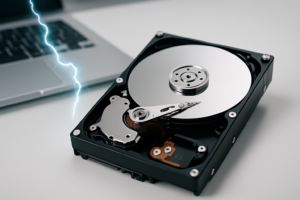
There’s also a performance angle, particularly on traditional spinning hard drives (HDDs). The outer tracks of an HDD platter are physically faster than the inner tracks. By keeping your OS on a smaller partition at the beginning of the drive, you ensure it sits on the fastest portion of the disk. On SSDs this specific benefit doesn’t apply, but partition isolation still helps with organization and maintenance.
Partitioning also makes backup strategies much simpler. You can image your OS partition independently from your data partition. A 100 GB system image is a lot faster to create and restore than a 2 TB full-disk image. Tools like Macrium Reflect and Clonezilla handle partition-level backups beautifully.
Planning Your Partition Layout
Before you start resizing anything, you need a plan. Rushing into partitioning without thinking about your actual needs is how people end up with a 50 GB C: drive that’s constantly full and a 900 GB D: drive sitting mostly empty.
The Single-Drive Setup
If you only have one drive (let’s say a 1 TB NVMe SSD like the Samsung 990 Pro or WD Black SN850X), here’s a layout that works well for most people:
- Partition 1 (OS + Apps): 250 GB. This holds Windows or Linux, your installed applications, and system files.
- Partition 2 (Data): Remaining space (roughly 700 GB after formatting). This holds your documents, downloads, media, projects, and anything you’d want to survive an OS reinstall.
250 GB for the OS partition might sound generous, but modern Windows installations with a few major applications (Adobe Creative Suite, Visual Studio, a couple of games) can easily eat 150 GB or more. Give yourself room to breathe.
The Two-Drive Setup (Recommended)
If your budget allows it, a two-drive configuration is the way to go. I’d recommend a fast NVMe SSD for the OS and a larger secondary drive for data. This is my preferred approach and the one I recommend to anyone building a new system.
- Drive 1 (NVMe SSD, 500 GB to 1 TB): Operating system, applications, and currently active project files. No partitioning needed on this drive.
- Drive 2 (Larger SSD or HDD, 2 TB+): Long-term storage, media libraries, game installs, backups, and archives.
With two physical drives, you get true isolation. A dead OS drive doesn’t take your data with it. You also get the performance benefit of spreading read/write operations across two separate controllers.
The Dual-Boot Setup
Running Windows and Linux side by side requires more careful planning. Here’s what I’d suggest on a 1 TB drive:
- EFI System Partition: 512 MB (shared by both operating systems)
- Windows Partition (NTFS): 250 GB
- Linux Root Partition (ext4): 100 GB
- Linux Swap: Equal to your RAM up to 16 GB, or 8 GB if you have 32+ GB RAM
- Shared Data Partition (NTFS or exFAT): Remaining space
The shared data partition is critical here. Format it as NTFS if you need both operating systems to read and write to it reliably. Linux handles NTFS well these days thanks to the ntfs3 kernel driver. exFAT is another solid option if you don’t need file permissions or journaling.
Choosing the Right File System
Your file system choice matters more than most people realize. Each one has different strengths, and picking the wrong one for your use case can cost you performance or compatibility.
NTFS
NTFS is the default for Windows and the only realistic choice for your Windows boot partition. It supports file permissions, encryption (via EFS and BitLocker), journaling for crash recovery, and files larger than 4 GB. There’s no reason to use anything else for a Windows system drive.
ext4
ext4 is the standard Linux file system and a rock-solid choice for Linux partitions. It’s mature, fast, and well-supported by every Linux distribution. For most Linux users, ext4 is the right default. Btrfs and XFS are viable alternatives if you want features like snapshots (Btrfs) or excellent large-file performance (XFS), but ext4 remains the safe pick.
exFAT
exFAT is your best friend for drives that need to work across Windows, macOS, and Linux. It handles large files without the 4 GB limitation of FAT32. Use it for external drives, USB sticks, and shared data partitions. Just know that exFAT lacks journaling, so unexpected power loss can lead to corruption more easily than with NTFS or ext4.
APFS and HFS+
On macOS, APFS (Apple File System) is the modern default and the only sensible choice for SSDs. HFS+ (Mac OS Extended) still has a role for mechanical hard drives or Time Machine volumes on older setups, but Apple is clearly moving everything toward APFS.
Partition Alignment: The Hidden Performance Factor
This is where things get a bit technical, but stay with me because getting alignment wrong on an SSD can seriously hurt performance.
SSDs read and write data in pages (typically 4 KB to 16 KB) and erase data in blocks (typically 512 KB to several megabytes). If your partition boundaries don’t line up with these block boundaries, every single write operation can end up spanning two physical blocks instead of one. This causes extra read-modify-write cycles, which is known as write amplification.
The good news is that any modern partitioning tool created after roughly 2010 handles alignment automatically. Windows 10 and 11 always create 1 MB-aligned partitions by default. GParted, the popular Linux partition editor, does the same. You really only run into alignment problems when:
- You’re cloning a partition from an old system that was set up with Windows XP-era tools
- You’re using ancient partitioning software
- You’re manually specifying sector offsets without understanding the math
To verify your partition alignment on Windows, open PowerShell and run: Get-WmiObject -Query “SELECT StartingOffset FROM Win32_DiskPartition”. Divide each StartingOffset value by 4096. If the result is a whole number, your partition is properly aligned to 4K boundaries.
On Linux, you can check with sudo parted /dev/sda align-check optimal 1 (replacing the device and partition number as needed). It’ll tell you directly whether the partition is aligned or not.
GPT vs. MBR: Which Partition Table to Use
This one’s easy. Use GPT (GUID Partition Table). Period.
MBR (Master Boot Record) is a legacy format from 1983. It can’t handle drives larger than 2 TB and limits you to four primary partitions. GPT supports drives up to 9.4 ZB (zettabytes, which is absurd) and allows up to 128 partitions on Windows.
Every modern UEFI-based system (basically any computer built after 2012) uses GPT. The only reason to use MBR in 2024 or beyond is if you’re working with very old hardware that lacks UEFI support. If you’re building or upgrading anything remotely current, GPT is the answer.
Practical Tips for Better Partitioning
Here are some lessons I’ve learned from partitioning dozens of systems over the years:
Don’t over-partition. Three or four partitions is usually the sweet spot. Every additional partition adds management overhead and increases the chance you’ll misjudge size requirements. I’ve seen people create seven or eight partitions and then spend their time constantly shuffling files between them because one is full while others sit empty.
Leave 10-20% of your SSD unpartitioned. This free space acts as over-provisioning, giving the SSD’s controller room to manage wear leveling and garbage collection more efficiently. Samsung, Crucial, and other manufacturers actually recommend this. Some enterprise SSDs come with significant over-provisioning built in, but consumer drives typically don’t.
Move user folders to your data partition. On Windows, you can redirect your Documents, Downloads, Pictures, and other user folders to a second partition or drive. Right-click any of these folders in File Explorer, go to Properties, then the Location tab. Point them to your data partition. This is one of the most underrated organizational tricks on Windows.
Use disk management tools you trust. On Windows, the built-in Disk Management tool handles basic tasks fine, but for anything advanced (resizing, moving, converting), AOMEI Partition Assistant or MiniTool Partition Wizard are solid free options. On Linux, GParted is the gold standard. For macOS, Disk Utility covers most needs.
Always back up before partitioning. Resizing or moving partitions on a drive that contains data carries real risk. A power failure mid-operation can destroy everything. Back up anything you can’t afford to lose before touching partition tables.
Partition Sizing Cheat Sheet
Here’s a quick reference for common partition sizes based on real-world usage:
- Windows OS + core apps: 200 to 300 GB (Windows 11 alone needs about 64 GB minimum, but you’ll want much more for updates and applications)
- Linux root (/): 50 to 100 GB for most desktop distributions
- Linux /home: As much as you can spare for personal files
- EFI System Partition: 512 MB (some guides say 100 MB, but 512 MB avoids headaches with multiple bootloaders)
- Linux swap: Match your RAM for systems with up to 16 GB; use 8 to 16 GB swap for systems with 32+ GB RAM. If you want to use hibernation, swap must be at least equal to your RAM size.
- Recovery partition: 1 to 2 GB (Windows creates one automatically; don’t delete it)
Frequently Asked Questions
Can I partition a drive without losing data?
Yes, but with caveats. Tools like AOMEI Partition Assistant, GParted, and Windows Disk Management can shrink an existing partition to create free space for a new one, all without erasing data. That said, there’s always a small risk of something going wrong during the resize process. Back up your important files first. I cannot stress this enough. The operation is generally safe, but “generally safe” and “guaranteed safe” are very different things.
Does partitioning an SSD reduce its lifespan?
Partitioning itself doesn’t affect SSD lifespan at all. The SSD’s controller manages wear leveling across the entire physical drive regardless of how you’ve divided it logically. The only thing that can indirectly affect lifespan is if you fill every partition to capacity, leaving the controller no free space for wear leveling and garbage collection. That’s why leaving some unallocated space (over-provisioning) is a smart move.
Should I partition an external hard drive?
For most people, a single exFAT partition on an external drive works perfectly. It’s compatible with Windows, macOS, and Linux right out of the box. The main exception is if you want to use part of the drive for Time Machine backups on a Mac (which requires APFS or HFS+) and part for general cross-platform storage. In that case, two partitions make sense: one HFS+/APFS for Time Machine and one exFAT for everything else.
Is it better to have two physical drives or two partitions on one drive?
Two physical drives wins every time. Separate drives give you true fault tolerance (one drive dying doesn’t affect the other), genuine performance improvements from parallel I/O operations, and simpler upgrade paths. Two partitions on a single drive give you organizational benefits and easier backup management, but you’re still dependent on one piece of hardware. If your budget allows for two drives, go that route. A fast 500 GB NVMe for the OS paired with a larger 2 TB SATA SSD for storage is an excellent combination that balances speed, capacity, and reliability.
Wrapping Up
Drive partitioning isn’t glamorous, and it’s not something you’ll do often. But spending 20 minutes planning a smart partition layout when you set up a new drive can save you hours of frustration later. You’ll have cleaner backups, faster OS reinstalls, and a system that’s genuinely easier to maintain.
Start with the basics: separate your OS from your data, choose the right file system for each partition, make sure your alignment is correct, and always use GPT. From there, adjust based on your specific needs. The best partition layout is the one that matches how you actually use your computer, not some theoretical ideal from a forum post written in 2009.