Samsung 870 EVO Vs 870 QVO: Which SATA SSD Wins
Samsung makes two SATA SSDs that look almost identical on paper: the 870 EVO and the 870 QVO. They share the same Samsung branding, the same 2.5-inch form factor, and the same SATA III interface. If you’re shopping based on Amazon listings alone, you might wonder why two seemingly identical drives exist.
The differences, though, matter a lot more than the spec sheets suggest. These two drives use fundamentally different NAND flash technologies, and that single distinction ripples through every performance metric, endurance rating, and use case recommendation. One is built for reliability and sustained workloads. The other prioritizes capacity at a lower cost per gigabyte.
I’m going to break down exactly where each drive excels and where it falls short, so you can spend your money on the right one for your specific needs.
The Core Difference: TLC vs QLC NAND Flash
Every comparison between these two drives starts and ends with their NAND technology. The 870 EVO uses Samsung’s V-NAND TLC (Triple-Level Cell) flash, which stores three bits of data per cell. The 870 QVO uses QLC (Quad-Level Cell) flash, storing four bits per cell.
More bits per cell means you can pack more storage into the same physical space, which is why Samsung can offer the 870 QVO in capacities up to 8TB. But cramming that extra bit into each cell comes with tradeoffs in speed, endurance, and long-term reliability.
Think of it like this: TLC cells have fewer voltage states to manage, so the controller can read and write data more quickly and with less wear on the flash. QLC cells are more complex, making them slower in raw NAND operations and more susceptible to wear over time. Samsung compensates for QLC’s limitations using an SLC write cache called TurboWrite, but that cache has limits.
Performance: Where the Gap Really Shows
Sequential Speeds
Both drives are capped by the SATA III interface at roughly 560 MB/s for sequential reads and 530 MB/s for sequential writes. You’ll see these numbers on Samsung’s marketing materials for both the 870 EVO and 870 QVO, and in short burst benchmarks, both drives hit those marks consistently.
If all you’re doing is reading large files, playing games, or booting your operating system, you genuinely won’t notice a difference between the two. SATA is the bottleneck here, not the NAND.
Sustained Write Performance
This is where the 870 EVO pulls away decisively. When you start writing data that exceeds the SLC cache, QLC’s true nature shows up. The 870 QVO’s write speeds can drop to roughly 80-160 MB/s once the TurboWrite buffer fills up, depending on capacity and how full the drive is.
The 870 EVO handles sustained writes far more gracefully. Even after its cache is exhausted, the TLC NAND underneath maintains significantly higher write speeds. For the 1TB model, you’re looking at sustained writes around 500+ MB/s for a much longer stretch before any slowdown, and the slowdown itself is less dramatic.
If you regularly transfer large files, work with video editing projects, or use the drive for anything involving prolonged write operations, the 870 EVO is the only sensible choice between these two.
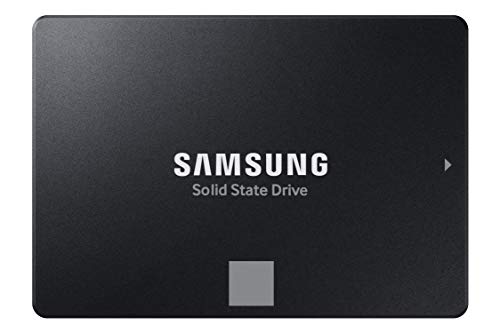
Samsung 870 EVO 1TB SATA SSD
Best all-around SATA SSD with excellent sustained write performance and TLC endurance
Random Read/Write (IOPS)
Random I/O performance matters for everyday computing tasks: opening applications, browsing files, running your operating system. The 870 EVO is rated at up to 98,000 random read IOPS and 88,000 random write IOPS (for the 1TB model). The 870 QVO comes in at 98,000 random read IOPS but only 88,000 random write IOPS for its 1TB variant as well.
On paper, those numbers look similar. In practice, the 870 EVO maintains those IOPS numbers more consistently under load, while the 870 QVO can experience dips during heavier multi-tasking or when the drive is nearly full. A QLC drive that’s 80% full behaves noticeably worse than one that’s 40% full.
Endurance and Longevity
TBW (Terabytes Written) ratings tell you how much data you can write to a drive before Samsung expects the NAND to start degrading. This is one of the starkest differences between the 870 EVO and 870 QVO.
Here’s how the 1TB models compare:
- 870 EVO 1TB: 600 TBW
- 870 QVO 1TB: 360 TBW
The 870 EVO offers roughly 67% more write endurance at the same capacity. For a typical consumer writing 20-40 GB per day, both drives will outlast their 5-year warranty periods. But if you’re using the drive for write-intensive tasks like video editing, virtual machines, database work, or as a scratch disk, the 870 EVO’s higher endurance gives it a meaningful advantage.
Both drives carry a 5-year limited warranty from Samsung, so the warranty coverage itself is identical. The difference is how much punishment the NAND can absorb before reaching its rated limit.
Available Capacities
The 870 EVO comes in 250GB, 500GB, 1TB, 2TB, and 4TB options. The 870 QVO is available in 1TB, 2TB, 4TB, and 8TB capacities. Samsung intentionally doesn’t offer the 870 QVO below 1TB because QLC flash doesn’t perform well at smaller capacities where the SLC cache is too small to be effective.
If you need 8TB in a single 2.5-inch SATA drive, the 870 QVO is essentially your only option from Samsung. That massive capacity tier is where QLC technology makes the most sense, both in terms of value per gigabyte and practical SLC cache size.
Samsung 870 QVO 2TB SATA SSD
Great option for high-capacity storage where sustained write speed isn’t critical
Pricing and Value
The 870 QVO is typically the more affordable option at any given capacity they share (1TB, 2TB, 4TB). The per-gigabyte cost savings of QLC NAND are the whole reason this product exists. Samsung can sell you more storage for less money because QLC cells are cheaper to manufacture.
The 870 EVO commands a premium over the QVO, but you’re paying for better sustained performance, higher endurance, and more consistent behavior when the drive is under heavy use or nearly full. Whether that premium is worth it depends entirely on your workload.
I’d recommend checking current pricing on Amazon for both models, as the gap between them fluctuates with sales and market conditions. Sometimes the price difference is minimal enough that the EVO becomes the obvious pick regardless of use case.
Samsung Software and Features
Both drives are fully compatible with Samsung Magician, the company’s SSD management software. You get drive health monitoring, firmware updates, performance benchmarking, and Samsung’s data migration tool for cloning your old drive to a new one.
Both also feature AES 256-bit hardware encryption. From a features and software perspective, these are identical products. Samsung doesn’t lock any software perks behind the more expensive EVO model.
Best Use Cases for Each Drive
Choose the Samsung 870 EVO If:
- You’re using it as a primary OS and applications drive
- You work with large file transfers regularly (video editing, photography)
- You want the best sustained write performance SATA can offer
- You’re building a workstation or productivity machine
- You plan to keep the drive for many years of heavy use
- You need a capacity of 500GB or below
Choose the Samsung 870 QVO If:
- You need high-capacity storage (4TB or 8TB) in a 2.5-inch form factor
- The drive will primarily be used for game storage, media libraries, or archival data
- Your workload is read-heavy with minimal sustained writing
- Budget is your top priority and you want to maximize gigabytes per dollar
- You’re adding a secondary storage drive alongside an NVMe boot drive
What About NVMe Alternatives?
Before you finalize your decision, it’s worth asking whether a SATA SSD is even the right move. If your motherboard has an open M.2 NVMe slot, drives like the Samsung 980 PRO or even budget NVMe options will blow both of these SATA drives out of the water in terms of raw speed.
SATA SSDs still make perfect sense for older systems without M.2 slots, for adding a second or third drive in a desktop, or for upgrading laptops that only accept 2.5-inch drives. If you’re in one of those situations, the 870 EVO and 870 QVO remain excellent choices in their respective roles.
The Verdict
For most people buying a SATA SSD in 2024, the Samsung 870 EVO is the better drive. Its TLC NAND delivers more consistent performance, significantly better sustained write speeds, and meaningfully higher endurance ratings. It’s the drive I’d recommend as a boot drive, a laptop upgrade, or a general-purpose SSD for any workload that involves more than just reading stored files.
The 870 QVO earns its place when capacity is king. If you want 4TB or 8TB of solid-state storage for a media library, game collection, or cold data archive, QLC’s lower cost per gigabyte makes real financial sense. Just understand that you’re trading performance consistency and longevity for that extra storage.
If you’re buying a 1TB drive and the price difference between the EVO and QVO is small, go with the EVO every time. The performance and endurance advantages are too significant to ignore at similar price points.
Frequently Asked Questions
Can I use the Samsung 870 QVO as my primary boot drive?
You can, and for everyday tasks like web browsing, office work, and light gaming, it will feel fast and responsive. Boot times and application launches are virtually identical to the 870 EVO. The QVO only struggles during sustained write operations that exceed its SLC cache, which typical daily use rarely triggers. For a pure boot and applications drive, though, the 870 EVO is still the safer long-term choice due to its better endurance.
How long will the Samsung 870 EVO and 870 QVO last?
Both drives carry a 5-year warranty. In terms of actual NAND lifespan, the 1TB 870 EVO is rated for 600 TBW and the 1TB 870 QVO for 360 TBW. For a typical home user writing 20-30 GB per day, both drives will likely last well beyond their warranty period. Power users who write hundreds of gigabytes daily will reach the QVO’s limits faster.
Is there a noticeable speed difference in gaming between the 870 EVO and 870 QVO?
Not really. Game loading involves mostly sequential reads, and both drives max out the SATA interface at similar speeds. You won’t see meaningful differences in load times between the two. If gaming is your primary concern and you want maximum storage capacity for your library, the 870 QVO is a perfectly fine choice. The only scenario where you’d notice a difference is installing or moving large game files, where the EVO’s sustained writes are faster.
Should I buy a Samsung 870 EVO or just go with an NVMe drive instead?
If your system supports NVMe, an NVMe drive will generally give you better performance for a similar price. The 870 EVO makes sense when you’re limited to SATA (older motherboards, 2.5-inch laptop bays) or when you’re adding supplemental storage alongside an existing NVMe boot drive. Don’t buy a SATA SSD for a new build that has available M.2 NVMe slots unless you specifically need the 2.5-inch form factor.
This article contains affiliate links. We may earn a small commission at no extra cost to you.

James Kennedy is a writer and product researcher at Drives Hero with a background in IT administration and consulting. He has hands-on experience with storage, networking, and system performance, and regularly improves and optimizes his home networking setup.