Data Recovery After Format: Recuva vs TestDisk Real Test
You just accidentally quick-formatted the wrong drive. Maybe it was a USB stick full of vacation photos, or worse, an external drive with years of documents. Your stomach drops, and you immediately start searching for free recovery tools. Two names come up over and over: Recuva and TestDisk.
But which one actually works? I decided to stop guessing and run a real test. I formatted a drive with known files, then ran both tools and documented exactly what each one recovered. The results were more interesting than I expected, and the strengths of each tool turned out to be very different.
The Test Setup: What I Did and Why
To make this a fair comparison, I needed a controlled environment. I used a WD Elements 1TB external hard drive formatted as NTFS. Before the test, I loaded it with a specific set of files:
- 200 JPEG photos (ranging from 2MB to 15MB each)
- 50 MP4 video files (short clips, 50MB to 500MB)
- 100 Office documents (Word, Excel, and PowerPoint files)
- 30 PDF files
- 25 MP3 audio files
- A nested folder structure five levels deep to test whether tools could rebuild directory trees
Total data on the drive was about 28GB. I performed a quick format through Windows (not a full format, which would overwrite data sectors). This is important because a quick format only wipes the file system metadata, leaving the actual data blocks intact on a traditional HDD. If you’re curious about how different format and wipe methods work, check out our guide on how to securely wipe your drive before selling, which explains the critical difference between quick and full formats.
After formatting, I did not write any new data to the drive. This is the single most important thing you can do after accidental data loss: stop using the drive immediately.
Recuva: The Beginner-Friendly Option
Recuva, made by Piriform (the same company behind CCleaner), is probably the most popular free data recovery tool for Windows. It has a clean GUI, a wizard that walks you through the process, and it’s genuinely easy to use even if you’ve never recovered data before.
Running the Scan
I started with Recuva’s standard quick scan, which finished in about 4 minutes. It found very little, just a handful of files. This wasn’t surprising because after a format, Recuva’s quick scan doesn’t have file system pointers to follow.
The deep scan is where Recuva does its real work. It took approximately 2 hours and 15 minutes to deep-scan the 1TB drive. During this time, it performed a sector-by-sector analysis looking for file signatures (also called file carving).
What Recuva Recovered
After the deep scan completed, here’s what Recuva found:
- Photos (JPEG): 187 out of 200 recovered. About 170 were fully intact and viewable. 17 had corruption (partial images, gray blocks at the bottom).
- Videos (MP4): 31 out of 50 recovered. Only 22 played correctly from start to finish. The rest were truncated or wouldn’t play.
- Documents (Office): 78 out of 100 recovered. Most Word docs opened fine. Excel files were more hit-or-miss.
- PDFs: 24 out of 30 recovered and readable.
- MP3s: 23 out of 25 recovered and playable.
- Folder structure: Completely lost. All recovered files were dumped into a flat list with auto-generated filenames.
Recuva’s traffic-light system (green, orange, red indicators showing recovery likelihood) was mostly accurate. Files marked green were almost always recoverable. Files marked red were genuinely corrupted beyond use.
Recuva’s Strengths and Weaknesses
Recuva excels at recovering individual files, especially photos and documents. The interface makes it easy to preview files before recovering them, so you don’t waste time saving corrupted data. It also lets you filter by file type, which is hugely helpful when you’re looking for specific files.
Its biggest weakness in this test was video recovery. Large files that span many sectors are harder to reconstruct, and Recuva struggled with fragmented MP4 files. It also completely failed to rebuild the original directory structure, which matters a lot if you had organized folders.
TestDisk (and PhotoRec): The Power User’s Choice
TestDisk is an open-source tool created by Christophe Grenier. It’s actually two tools in one package: TestDisk itself (which focuses on partition and file system recovery) and PhotoRec (which does file carving similar to Recuva’s deep scan). Both are free, and both are completely different experiences from Recuva.
Fair warning: TestDisk runs in a text-based interface. There’s no wizard, no drag-and-drop, and no preview function. If command-line tools make you nervous, you’ll need to follow a tutorial carefully.
Running TestDisk for Partition Recovery
Before doing any file carving, I ran TestDisk’s partition analysis. This is something Recuva can’t do at all. TestDisk scanned the drive for remnants of the old NTFS partition table and found the previous partition structure in about 6 minutes.
I chose to write the recovered partition table back to the drive, rebooted, and something remarkable happened: Windows recognized the drive with the original file system intact. The folder structure was back. The file names were back. Most files opened normally.
This is TestDisk’s superpower. Rather than carving individual files, it can sometimes restore the entire partition to its pre-format state. When it works (and it worked perfectly here on a quick-formatted HDD), it’s dramatically more effective than file-by-file recovery.
TestDisk Partition Recovery Results
- Photos: 198 out of 200 recovered with original filenames and folder locations
- Videos: 48 out of 50 recovered and fully playable
- Documents: 97 out of 100 recovered
- PDFs: 30 out of 30 recovered
- MP3s: 25 out of 25 recovered
- Folder structure: Fully preserved, all five levels deep
The few files that didn’t recover were ones I had deleted and rewritten before the format, meaning those sectors had already been overwritten by different data prior to the test.
Running PhotoRec as a Backup
I also tested PhotoRec (TestDisk’s file-carving companion) separately, in case the partition recovery approach wasn’t an option. PhotoRec took about 3 hours and 40 minutes for the full scan, longer than Recuva’s deep scan.
PhotoRec recovered slightly more files than Recuva (about 5-10% more across all categories) and was particularly better with video files. However, like Recuva’s deep scan, PhotoRec loses all original filenames and folder structures. Recovered files get sequential names like recup_001.jpg, recup_002.mp4, and so on.
Head-to-Head Comparison: The Numbers
Here’s the full breakdown in one place:
- Overall recovery rate: TestDisk (partition recovery) recovered 98% of files. PhotoRec recovered about 82%. Recuva recovered about 75%.
- Folder structure preservation: Only TestDisk preserved it. Recuva and PhotoRec both lose directory structures.
- Original filenames: Only TestDisk kept them.
- Scan speed: TestDisk’s partition scan was fastest (6 minutes). Recuva’s deep scan was faster than PhotoRec (2h 15m vs 3h 40m).
- Ease of use: Recuva wins easily. TestDisk requires careful attention to avoid making mistakes that could further damage data.
- Video recovery quality: TestDisk first, PhotoRec second, Recuva third.
Important Caveats: SSD vs HDD Recovery
Everything I’ve described above applies to traditional mechanical hard drives. If you quick-formatted an SSD, your results will likely be much worse, possibly zero recovery. Modern SSDs use a feature called TRIM, which tells the drive to physically erase data blocks after files are deleted or a format occurs. Once TRIM runs (which typically happens almost immediately), those sectors are genuinely zeroed out.
This is one of the fundamental tradeoffs with solid-state storage. SSDs offer incredible speed benefits (our SSD vs HDD comparison covers performance differences in detail), but they’re dramatically harder to recover data from after deletion or formatting. If you’re working with an SSD and need recovery help, take a look at our article on recovering data from a failed external drive, which covers some SSD-specific approaches.
For this reason, if you regularly work with irreplaceable files, having a backup strategy matters far more than knowing recovery tools. Consider setting up automated backups to a NAS so you never have to rely on recovery software in the first place.
When to Use Which Tool
After running this test, my recommendation is clear: always try TestDisk first after a quick format on an HDD. Its partition recovery approach is simply superior when it works, giving you back everything with original names and folder structures intact.
Use Recuva when:
- You accidentally deleted specific files (not a full format)
- You’re not comfortable with command-line tools and just need to grab a few photos
- You want to preview recoverable files before committing to a recovery
- TestDisk’s partition recovery didn’t work and you need a simple file-carving option
Use TestDisk when:
- You’ve performed a quick format and want maximum recovery
- You need to preserve folder structures and filenames
- You’re dealing with a partition that became RAW or unrecognized
- You need to recover large video files
Use PhotoRec when:
- TestDisk’s partition recovery fails
- You need slightly better file-carving results than Recuva
- You’re recovering from a memory card or USB flash drive
Tips to Maximize Your Recovery Success
Regardless of which tool you use, follow these rules to give yourself the best chance:
- Stop writing to the affected drive immediately. Every new file you save could overwrite recoverable data. Don’t install recovery software onto the drive you’re trying to recover.
- Recover files to a different drive. Always save recovered data to a separate disk, never back to the source. A Samsung 870 EVO or similar SATA SSD works well as a recovery target since it can handle rapid writes without bottlenecking.
- Create a disk image first if possible. TestDisk can create a bit-for-bit image of your drive. Work on the image instead of the original, so you have unlimited attempts without risking further data loss.
- Don’t panic-format again. If your first recovery attempt doesn’t work perfectly, the data is likely still there. A second format or a “repair” operation will make things worse.
- Know when to call a professional. If the drive has physical damage (clicking sounds, not spinning up, not detected by BIOS), software tools won’t help. Professional data recovery services have cleanroom equipment for those situations. Our guide on hard drive clicking sounds can help you determine if you’re dealing with a mechanical failure.
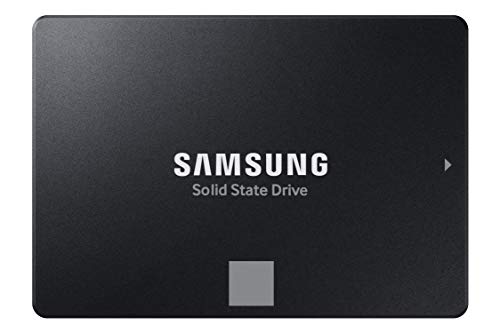
Samsung 870 EVO 1TB SATA SSD
A fast and reliable recovery target drive with plenty of space for restored files
For storing recovered files long-term, you’ll want something with decent capacity and reliability. A dedicated external drive kept as a backup copy of your recovered data is always smart. The WD Elements 2TB is a solid, budget-friendly option for this purpose.

WD Elements 2TB External Hard Drive
Affordable external storage for keeping backup copies of recovered files
Frequently Asked Questions
Can I recover data after a full format instead of a quick format?
A full format on Windows 7 and later actually writes zeros to every data sector, which makes recovery extremely difficult or impossible. TestDisk’s partition recovery won’t work because the data has been overwritten. PhotoRec and Recuva might find fragments, but complete file recovery is unlikely. If you only did a quick format, your chances are much better because the actual data blocks remain untouched.
Do Recuva and TestDisk work on Mac-formatted drives?
Recuva is Windows-only and primarily handles NTFS and FAT file systems. It has limited support for Mac’s HFS+ format. TestDisk and PhotoRec are cross-platform (Windows, Mac, Linux) and support HFS+, APFS, ext4, and many other file systems. If you’re recovering a Mac drive, TestDisk/PhotoRec is the better choice. For Mac-specific recovery scenarios, check out our article on recovering data from a MacBook Air SSD.
Will these tools work on a USB flash drive or SD card?
Yes, both tools support USB flash drives, SD cards, microSD cards, and CompactFlash. PhotoRec was originally designed for memory card recovery (hence the name). For flash media, I’d actually recommend PhotoRec over Recuva because it tends to handle FAT32 and exFAT file systems more

James Kennedy is a writer and product researcher at Drives Hero with a background in IT administration and consulting. He has hands-on experience with storage, networking, and system performance, and regularly improves and optimizes his home networking setup.