Ps5 Ssd Speed Vs Pc: Which One Is More Preferable?
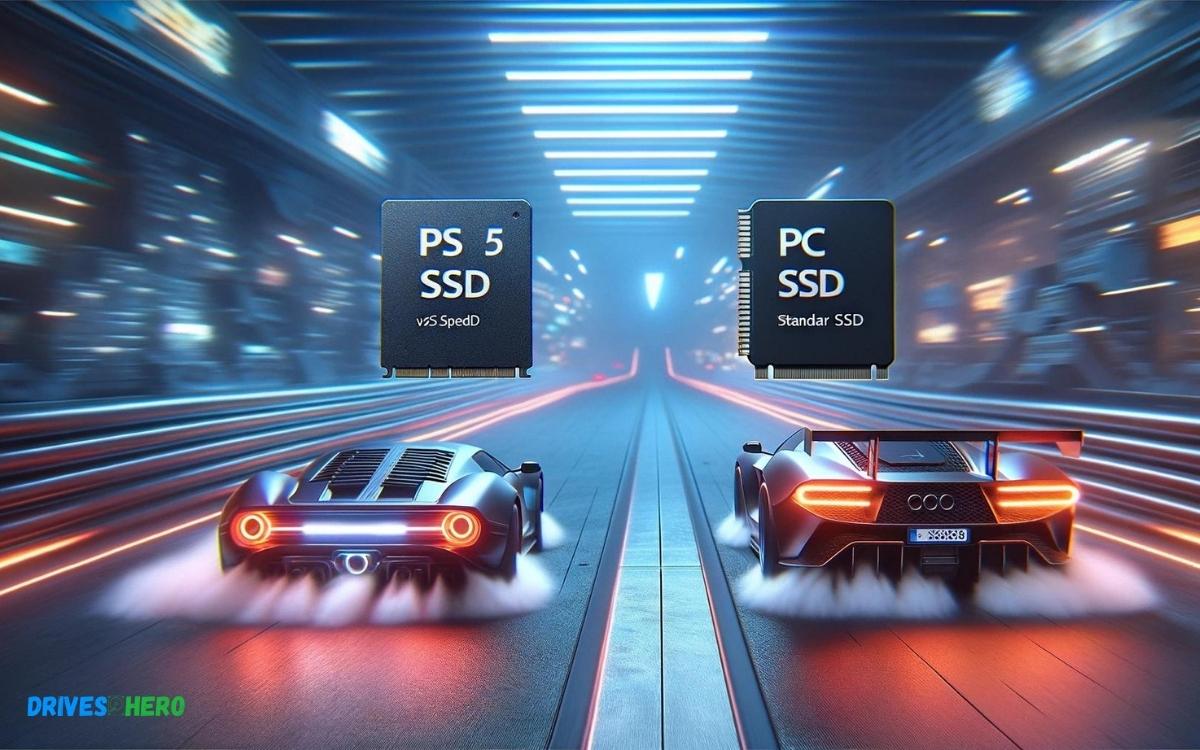
The PlayStation 5 (PS5) features a custom SSD with impressive speeds reaching up to 5.5GB/s for raw data transfer. This outpaces many standard PC NVMe SSDs, which typically offer speeds between 3.5GB/s to 4GB/s.
Check out this helpful video on the topic:
However, top-tier PC SSDs with PCIe 4.0 support can match or exceed the PS5’s speeds, with the fastest models offering up to 7GB/s.
The PS5’s SSD speed is a significant advancement in console gaming, offering rapid load times and seamless gameplay.
The custom SSD utilizes a 12-channel memory interface, which is a departure from traditional SSDs found in PCs that often use a 4 or 8-channel interface.
This allows the PS5 to deliver higher throughput, enhancing game performance substantially. PC SSDs vary widely in performance, with some models specifically designed to leverage PCIe 4.0 technology to reach or surpass the PS5’s speeds.
However, only the latest PCs with compatible motherboards and CPUs can take full advantage of these high-speed SSDs.
- PS5’s SSD: 5.5GB/s raw data transfer
- Standard PC NVMe SSDs: 3.5GB/s to 4GB/s
- Top-tier PC NVMe SSDs: Up to 7GB/s with PCIe 4.0
The PS5’s custom SSD sets a new benchmark for console storage speed, influencing future gaming experiences through its rapid data transfer capabilities.
Key Takeaway
9 Specifications Of Ps5 Ssd Speed Vs Pc SSD
| Specification | PlayStation 5 SSD | PC SSD (Average NVMe) |
|---|---|---|
| Storage Capacity | Custom 825GB SSD | Ranges from 250GB to 4TB+ |
| Interface | Custom PCIe 4.0 Interface | PCIe 3.0/4.0 |
| Speed (Read) | Up to 5.5GB/s (Raw), 8-9GB/s (Compressed) | Up to 7GB/s (PCIe 4.0) |
| Speed (Write) | Typical Write Speeds Unknown | Up to 5GB/s (PCIe 4.0) |
| I/O Throughput | 5.5GB/s (Raw), Typical 8-9GB/s (Compressed) | Varies with model |
| Expandable Storage | Yes (NVMe SSD Slot) | Yes |
| External Storage Support | USB HDD Support for PS4 Games | Depends on Motherboard |
| Proprietary Technology | Custom SSD Controller | Standard Controllers |
| Game Load Times | Significantly Reduced | Varies by game and drive |
Understanding The Basics
The Need for Speed
The speed of storage devices has become a crucial aspect in the gaming world in recent years, with the launch of next-gen consoles like the Ps5 and advancements in PC hardware.
Gamers are recognizing the significance of speedy SSDs for seamless gameplay, faster loading times, and overall improved performance.
Overview of Ps5 SSD
- The Ps5’s SSD offers blistering fast speeds, with a custom 825 GB SSD that delivers up to 5.5 GB/s of raw data transfer.
- This means games load almost instantaneously, and players can seamlessly navigate through expansive game worlds without encountering loading screens.
- The integrated SSD is a game-changer, setting a new standard for console gaming performance.
The Power of PC SSDs
- PC SSDs, on the other hand, offer a diverse range of options, catering to the specific needs and preferences of individual gamers.
- From NVMe drives offering similar speeds to the Ps5’s SSD to high-end PCIe 4.0 SSDs capable of delivering unparalleled performance, PC gamers have the flexibility to choose a storage solution that suits their unique requirements.
Understanding the basics of SSD speed – whether on the Ps5 or PCs – is essential for gamers looking to harness the full potential of their gaming experiences.
The need for speed is clear, and with the advancements in SSD technology, both console and PC gamers can expect a future with lightning-fast load times and seamless gameplay.
Technical Specifications
When comparing the technical specifications of the PlayStation 5 (PS5) and PC SSD speed, it’s essential to dive into the nitty-gritty details to understand the capabilities and performance of the storage drives.
Both the PS5 and PC utilize SSDs to deliver faster load times and smoother gameplay experiences.
Ps5 Ssd Speed: A Closer Look
The PS5 comes equipped with a custom 825GB SSD designed to deliver lightning-fast loading times and improved overall system performance.
With a raw read speed of up to 5.5GB/s, the PS5’s SSD is optimized for reducing in-game loading times and enabling seamless transitions between gameplay environments.
The integration of custom flash controllers and a bespoke interface further enhances the SSD’s efficiency, setting a new standard for console storage technology.
Pc Ssd Speed In Comparison
- On the other hand, PC SSD speeds can vary depending on the specific drive and system configuration.
- While high-end NVMe SSDs for PCs can achieve read speeds comparable to the PS5’s SSD, the wide range of available options means that not all PC users may experience the same level of performance.
- PC users have the flexibility to upgrade or customize their storage solutions based on their unique requirements, allowing for greater versatility in optimizing speed and capacity.
- Overall, the technical specifications for the PS5 and PC SSD speed indicate that both systems offer impressive performance.
However, the PS5’s custom 825GB SSD with a raw read speed of up to 5.5GB/s sets a new standard for console storage technology, while PC users have the flexibility to customize their storage solutions based on their specific needs.
Understanding these specifications can help consumers make informed decisions when choosing between the two platforms.
Real-world Performance
When it comes to evaluating the real-world performance of SSD speeds between the PS5 and PC, factors such as load times, game rendering, and overall gaming experience play a pivotal role.
Gaming Experience on PS5
The PS5, equipped with an ultra-fast SSD, revolutionizes the gaming experience. Load times are drastically reduced, allowing for seamless transitions between game environments.
With almost instantaneous data retrieval, games are not only loaded faster but also deliver a smoother and uninterrupted gameplay experience.
- The SSD speed of the PS5 directly translates into an unparalleled gaming experience that elevates the overall immersion and excitement for players.
- PC gaming performance is highly dependent on the SSD speed, impacting game loading times, level streaming, and overall responsiveness.
- A high-speed SSD significantly enhances the gaming experience by reducing loading screens and ensuring smoother gameplay.
- However, compared to the proprietary SSD architecture of the PS5, PC users need to carefully select compatible SSDs and utilize advanced hardware to unlock the full potential of their gaming systems.
The flexibility of SSD on PC offers users the ability to customize and upgrade according to their preferences and requirements.
Nevertheless, optimizing SSD speeds on PC demands careful consideration of hardware compatibility and the overall system architecture to achieve maximum performance benefits.
Factors Affecting Speed
The speed of a PS5 SSD versus a PC is influenced by several factors, including hardware specifications, file processing capabilities, and optimization techniques.
These components play a significant role in the overall performance and speed of the SSD, affecting the gaming experience.
The factors affecting speed play a crucial role in determining the performance of SSDs, especially in the comparison between the PS5 and PC.
The interplay between hardware and software optimization and the potential for future developments and implications must be carefully considered.
Hardware Vs Software Optimization
- The speed of an SSD is influenced by a combination of hardware and software optimization.
- While the hardware components, such as the controller and NAND flash memory, contribute to the fundamental speed capabilities of an SSD, software optimization plays a vital role in harnessing the full potential of these components.
- The efficient interaction between hardware and software is essential for unlocking the maximum speed of an SSD.
Future Developments And Implications
As technology continues to advance, future developments in SSDs will inevitably impact speed and performance.
The introduction of new interfaces, such as PCIe 4.0 and PCIe 5.0, holds the promise of significantly enhancing SSD speeds.
- Advancements in NAND flash memory technology, including the adoption of technologies like QLC and PLC, are poised to further elevate SSD speeds.
- The implications of these developments extend beyond mere speed, encompassing aspects such as power efficiency, durability, and overall system performance.
- In essence, the speed of an SSD is not solely reliant on its inherent hardware capabilities, but also on the synergy between hardware and software optimization.
The potential for future advancements in SSD technology stands to revolutionize the speed and performance landscape, signaling exciting prospects for both PS5 and PC users.
Conclusion
After comparing the SSD speed of PS5 and PC, it’s clear that both have their strengths. PC offers flexibility and customization, while PS5 provides a seamless gaming experience.
Ultimately, the choice depends on individual preferences and requirements. With constantly evolving technology, it’s essential to weigh the pros and cons before making a decision.

Harold Williams is a senior writer and technical editor at Drives Hero with 20+ years of experience in IT administration. He specializes in storage systems, SSD reviews, and performance testing, bringing real-world insight to every guide.