Gaming SSD Size Guide: How Much Storage Do You Really Need?
You just bought a shiny new SSD for your gaming PC, and two months later it’s already full. You’re staring at your Steam library trying to decide which games to uninstall to make room for the latest release. It’s a frustrating cycle, and it happens to almost every gamer who underestimates how much storage they actually need.
Modern games are enormous. We’re not talking about the tidy 8-10 GB installs of a decade ago. Triple-A titles regularly exceed 100 GB, and some push well past 200 GB with all their updates and DLC. If you’re building or upgrading a gaming PC in 2024 or 2025, choosing the right SSD capacity is one of the most important decisions you’ll make.
This guide breaks down real game file sizes, analyzes how your gaming habits affect storage needs, and gives you specific capacity recommendations so you can buy the right SSD the first time around.
How Big Are Modern Games, Really?
Let’s start with hard numbers. Here’s a snapshot of actual install sizes for some of the most popular games as of early 2025:
- Call of Duty: Modern Warfare III / Warzone — 149 GB (and growing with each season)
- Baldur’s Gate 3 — 150 GB
- Cyberpunk 2077 (with Phantom Liberty) — 75 GB
- Starfield — 125 GB
- Red Dead Redemption 2 — 120 GB
- Final Fantasy VII Rebirth — 155 GB
- Star Wars Jedi: Survivor — 155 GB
- Microsoft Flight Simulator 2024 — 130 GB+
- Fortnite — 90 GB
- Hogwarts Legacy — 85 GB
Just those ten games alone would consume over 1.2 TB of storage. And that’s before your operating system, drivers, game launchers, screenshots, recordings, and everything else that lives on your drive.
The Hidden Space Eaters
Raw install sizes don’t tell the whole story. Many games require temporary space during installation or updates, sometimes needing up to double the final install size as a buffer. Windows itself takes around 30-40 GB, and you should always keep at least 10-15% of your SSD free for optimal performance and longevity.
Game launchers like Steam, Epic Games Store, Battle.net, and EA App each take their own slice. If you record gameplay, a single hour of 1080p footage can eat 5-10 GB. Playing at 4K? Multiply that number considerably.
Game File Sizes Are Only Getting Bigger
This trend isn’t slowing down. Over the past five years, average triple-A game install sizes have roughly doubled. Several factors are driving this growth:
- Higher resolution textures: 4K texture packs can add 30-50 GB to an install.
- Larger open worlds: Games keep getting more expansive with more detailed environments.
- Live service updates: Games like Fortnite and Call of Duty continuously add content, pushing file sizes up over time.
- Uncompressed audio: Many developers ship multiple language packs with uncompressed audio files to reduce loading latency.
By 2026 and beyond, 200 GB installs will likely become common for major releases. Planning your storage around today’s game sizes without accounting for this growth is a recipe for buyer’s remorse.
SSD Capacity Options: A Realistic Breakdown
500 GB: The Bare Minimum (Not Recommended for Most Gamers)
After Windows and essential software, you’ll have roughly 400 GB of usable space. That’s enough for maybe three to four modern triple-A games simultaneously. You’ll spend a lot of time managing installs, uninstalling and redownloading games constantly.
A 500 GB SSD only makes sense as a dedicated boot drive paired with a larger secondary storage drive, or if you exclusively play smaller indie titles and competitive games like Valorant (27 GB) or Counter-Strike 2 (35 GB).
1 TB: The Entry Point for Serious Gaming
With about 900 GB of usable space, a 1 TB drive lets you keep your OS, a handful of large triple-A games, and several smaller titles installed at once. For many gamers, this is a reasonable starting point, especially if you tend to focus on one or two big games at a time and don’t mind occasionally shuffling your library.
The Samsung 990 Pro 1TB remains one of the fastest and most reliable options in this category, delivering excellent read/write speeds that actually make a difference in game load times. If you want a more budget-friendly 1 TB option, the WD Black SN770 1TB delivers strong gaming performance without the premium price tag.
A 1 TB SSD works well if you play mostly competitive multiplayer games, tend to finish and move on from single-player games quickly, or supplement your SSD with a secondary hard drive for less frequently played titles.
2 TB: The Sweet Spot for Most Gamers
This is the capacity I recommend for the majority of PC gamers in 2025. With roughly 1.8 TB of usable space, you can comfortably maintain a diverse game library without constant management. You’ll have room for your OS, 10-15 modern games (a mix of large and small), recording software, clips, and still have breathing room.
The price per gigabyte on 2 TB drives has dropped significantly over the past two years, making this capacity the best value for gamers right now. You get double the storage of a 1 TB drive without paying double the price.
Samsung 990 Pro 2TB
Top-tier NVMe performance with 2TB of storage, ideal as a primary gaming drive for most players
The Samsung 990 Pro 2TB is my top pick for a primary gaming SSD. It delivers sequential read speeds up to 7,450 MB/s, runs cool with its nickel-coated controller, and Samsung’s firmware reliability is hard to beat. If you’re only going to have one drive in your system, this is the one to get.
For a strong alternative at a lower price point, the WD Black SN850X 2TB competes neck and neck on real-world gaming performance and frequently receives positive reviews from the gaming community.
4 TB: For the Dedicated Enthusiast
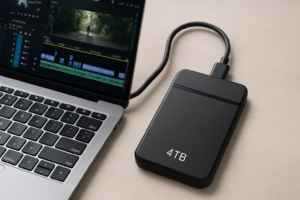
If you maintain a massive library, hate uninstalling anything, create content, or play a lot of live-service games that continuously grow, 4 TB gives you freedom to stop thinking about storage entirely. This capacity also makes sense for gamers who record and edit gameplay footage, since video files consume space rapidly.
Crucial T500 4TB
One of the most affordable high-performance 4TB NVMe SSDs available, perfect for large game libraries
The Crucial T500 4TB is an excellent choice in this tier. It uses a PCIe Gen 4 interface with speeds up to 7,400 MB/s, and it tends to be priced more competitively than Samsung’s 4 TB offerings while still delivering outstanding performance. Check current pricing on Amazon, because 4 TB drives occasionally see significant discounts during sales events.
Choosing the Right Capacity Based on Your Gaming Habits
Your ideal SSD size depends on how you actually play. Here’s a practical framework:
The Casual Gamer (500 GB to 1 TB)
You play a few games at a time, mostly indie titles or competitive multiplayer games. You don’t mind waiting for downloads when you want to revisit an older game. You’re on a tight budget and can always add more storage later. A 1 TB NVMe SSD will serve you well.
The Mainstream Gamer (2 TB)
You play a mix of triple-A and indie games, keep several titles installed simultaneously, and want to avoid constant library management. You might dabble in game recording or streaming. 2 TB is your sweet spot, and this is where most gamers should land.
The Power User / Content Creator (4 TB or 2 TB + 2 TB)
You have a massive backlog, play multiple live-service games, record and edit gameplay, or simply never want to think about storage. You could go with a single 4 TB drive or split your setup into two 2 TB drives (one for your OS and most-played games, one for everything else).
Single Drive vs. Multi-Drive Setup
One big SSD or two smaller ones? Both approaches have merits.
A single large drive keeps things simple. One volume to manage, no decisions about which games go where. This works perfectly well for most people.
A dual-drive configuration offers some advantages, though. You can use a fast NVMe SSD (like a 1 TB Samsung 990 Pro) as your boot and primary game drive, then add a larger but more affordable SATA SSD or secondary NVMe for your broader library. If one drive fails, you don’t lose everything. You can also dedicate one drive entirely to games, which makes reinstalling Windows cleaner since your game installs survive on the separate drive.
Many experienced builders prefer a 1 TB + 2 TB configuration. Your operating system, frequently played games, and productivity software live on the fast 1 TB primary drive. Everything else goes on the 2 TB secondary. This gives you 3 TB of total space with excellent organization.
NVMe vs. SATA: Does It Matter for Gaming?
NVMe drives are significantly faster than SATA SSDs in benchmarks. A modern PCIe Gen 4 NVMe drive reads data at 5,000-7,000 MB/s, while SATA SSDs top out around 550 MB/s. That’s a massive difference on paper.
In practice, the gap in actual game load times is smaller than you’d expect. Most games see a 1-3 second improvement in load times when moving from SATA to NVMe. The bigger benefit comes from DirectStorage and games specifically designed to stream assets from fast NVMe storage, a trend that’s growing but still not universal.
My recommendation: go NVMe for your primary drive. The price difference between NVMe and SATA has shrunk to the point where there’s little reason to choose SATA for a new build. But if you’re adding a secondary storage drive on a budget, a SATA SSD still loads games dramatically faster than a hard drive and can offer great value at larger capacities.

Samsung 870 EVO 2TB SATA
Excellent budget-friendly secondary storage option with proven reliability for expanding your game library
Tips to Manage Your Game Storage Effectively
Regardless of your SSD size, smart storage habits will extend how long your drive feels spacious:
- Uninstall completed single-player games. You can always redownload them. Don’t let a finished game occupy 120 GB indefinitely.
- Skip optional high-res texture packs unless you’re playing at 4K. Many games offer separate downloads for HD textures that add 20-50 GB.
- Delete old game recordings and screenshots regularly. These accumulate faster than most people realize.
- Use Steam’s storage manager (Settings > Storage) to quickly identify and remove your biggest space hogs.
- Move less-played games to a secondary drive. Steam, Epic, and most launchers let you move game installs between drives without redownloading.
- Disable multiplayer/co-op components if you only play single-player. Call of Duty, for example, lets you uninstall multiplayer packs separately.
Future-Proofing Your Storage Decision
Games will keep getting bigger. The Unreal Engine 5 titles hitting the market are already pushing install sizes higher, and as developers target next-gen hardware with more detailed assets, this acceleration will continue.
If you’re building a PC you plan to use for 3-5 years, buy more storage than you think you need right now. The cost difference between 1 TB and 2 TB is modest compared to the inconvenience of running out of space a year from now. And adding a second drive later is always an option if your motherboard has an available M.2 slot.
One thing to check before buying: make sure your motherboard supports the drive you’re considering. Most modern boards have at least two M.2 NVMe slots, but older boards might be limited to one, or might only support PCIe Gen 3 speeds. This won’t prevent a Gen 4 drive from working (they’re backward compatible), but you won’t get the full speed benefit.
Frequently Asked Questions
Is 1 TB enough for gaming in 2025?
It’s workable but tight. A 1 TB SSD can hold roughly 6-8 modern triple-A games alongside your operating system. If you play a lot of large titles simultaneously or hate managing your installed library, you’ll find yourself running out of space frequently. For most gamers, 2 TB provides a much more comfortable experience and is the better long-term investment.
Do games load faster on NVMe SSDs compared to SATA SSDs?
Yes, but the difference is usually modest for most current games. You’ll typically see 1-3 seconds of improvement in load times. The more significant advantage of NVMe comes with newer titles that use DirectStorage or asset streaming technologies designed for fast storage. As more games adopt these features, the gap between NVMe and SATA will widen. For a new build, NVMe is the better choice given how competitive pricing has become.
Should I get one large SSD or two smaller ones?
Both approaches work well. A single 2 TB or 4 TB drive is simpler to manage and perfectly fine for most people. A dual-drive setup (like 1 TB + 2 TB) offers better organization, keeps your OS separate from your game library, and provides some redundancy if a drive fails. If your motherboard has two M.2 slots and your budget allows it, the dual-drive approach is slightly preferable for organization and flexibility.
How much SSD space does Windows actually take?
A fresh Windows 11 installation occupies about 27-30 GB, but after updates, drivers, system restore points, and the hibernation file, you should realistically budget 50-60 GB for Windows and core system files. This is why a “1 TB” drive (which actually provides about 931 GB of formatted space) gives you closer to 870-880 GB of truly usable storage for games and applications.
My Final Recommendation
For most gamers building or upgrading a PC in 2025, a 2 TB NVMe S

James Kennedy is a writer and product researcher at Drives Hero with a background in IT administration and consulting. He has hands-on experience with storage, networking, and system performance, and regularly improves and optimizes his home networking setup.