Backblaze vs Wasabi vs Google One: Best Cloud Backup for the Money
Choosing a cloud backup provider feels a lot like choosing a cell phone plan. The advertised price looks great until you read the fine print about data caps, overage fees, and surprise charges for doing something as basic as downloading your own files. Backblaze, Wasabi, and Google One are three of the most popular options for cloud storage and backup, but they serve very different audiences and charge in very different ways.
I’ve spent months testing all three for personal backup, long-term archiving, and media storage workflows. If you’ve been weighing these options (or wondering whether cloud backup even makes sense compared to a local NAS setup), this breakdown will help you pick the right service without overpaying.
How Each Service Works (and Who It’s Actually For)
Before we compare pricing, it’s important to understand that these three services aren’t all doing the same thing. They overlap in some areas, but each one was designed with a specific use case in mind.
Backblaze Personal Backup is a set-it-and-forget-it backup tool for individual computers. You install the client, it backs up everything on your machine (including external drives), and it runs continuously in the background. Backblaze also offers B2 Cloud Storage, which is an S3-compatible object storage platform aimed at developers and power users.
Wasabi is pure object storage. There’s no consumer-friendly app or automatic backup client. You connect to it through S3-compatible tools like Cyberduck, rclone, or third-party backup software. It’s built for businesses and tech-savvy users who need hot storage at cold storage prices.
Google One is Google’s consumer storage subscription. It expands your Google Drive, Gmail, and Google Photos storage. It’s the most user-friendly option of the three, with apps for every platform and tight integration with the Google ecosystem.
Pricing Breakdown: What You’ll Actually Pay
This is where the differences get stark. Each provider structures its pricing differently, and the total cost depends heavily on how much data you store and how often you need to access it.
Backblaze
Personal Backup competitively priced/year for unlimited backup from a single computer. That’s the entire pricing model. No storage caps, no per-gigabyte charges. You can back up 10 TB from one machine and pay the same as someone backing up 100 GB.
B2 Cloud Storage charges competitively priced/TB per month for storage. The first 10 GB of downloads per day are free, and beyond that, egress competitively priced/GB. There’s also a free egress alliance with Cloudflare, Fastly, and other CDN partners that can eliminate download costs entirely for certain workflows.
Wasabi
Wasabi charges competitively priced/TB per month with no egress fees, no API request fees, and no minimum storage duration on their standard tier. However, there’s an important caveat: Wasabi enforces a policy where your monthly egress can’t exceed your total stored data. If you store 1 TB, you can download up to 1 TB per month for free. Go beyond that, and Wasabi may charge overage fees or throttle your account.
There’s also a 90-day minimum storage policy on the standard tier. If you upload a file and delete it within 90 days, you still pay for the full 90 days of storage. This doesn’t matter for long-term backups, but it can add cost if you’re frequently overwriting files.
Google One
Google One uses a tiered subscription model. You get 15 GB free, then paid plans start at 100 GB for roughly competitively priced/month. The 2 TB plan runs competitively priced/month, and there’s a premium AI plan at 2 TB with additional Gemini features. Larger plans go up to 30 TB, but the per-terabyte cost increases significantly at higher tiers.
There are no egress fees with Google One. You download your files through Google Drive, and you won’t see any surprise charges for accessing your own data.
Cost Comparison at Scale
For 1 TB of storage over a year, here’s what you’d spend approximately:
- Backblaze Personal Backup: competitively priced/year (unlimited, so 1 TB or 10 TB costs the same)
- Backblaze B2: ~competitively priced/year (plus egress if you download frequently)
- Wasabi: ~competitively priced/year (no egress within policy limits)
- Google One (2 TB plan): ~competitively priced/year
At 5 TB and above, Backblaze Personal Backup becomes the clear value winner for personal computer backup since it’s still competitively priced/year regardless. Wasabi and B2 scale linearly, competitively priced and competitively priced per year respectively at 5 TB. Google One doesn’t even offer a 5 TB plan without jumping to their more expensive tiers.
Egress Fees: The Hidden Cost That Kills Your Budget
Egress fees are what cloud providers charge you to download your own data. This is the single most important factor most people overlook when choosing a backup provider, and it can turn a cheap storage plan into an expensive nightmare during a recovery scenario.
Imagine your hard drive fails (and if you haven’t prepared for that possibility, check out our guide on recovering data from a failed external drive). You need to download 2 TB of backed-up files. Here’s what you’d pay just for the download:
- Backblaze Personal Backup: Free (restore by download or they’ll ship you a USB drive)
- Backblaze B2: Roughly competitively priced (after free daily allowance)
- Wasabi: Free (assuming you’re within the 1:1 egress-to-storage ratio)
- Google One: Free
- AWS S3 (for comparison): Roughly competitively priced
Backblaze Personal Backup also offers a unique perk: they’ll overnight you a USB hard drive with your data for a refundable deposit. If you mail the drive back within 30 days, you get your money back. For large restores on slow internet connections, this is incredibly practical.
Features and Usability Compared
Backup Software and Ease of Use
Google One wins for simplicity. If you already use Gmail and Google Drive, expanding your storage is as simple as upgrading your plan. Everything syncs automatically through Google’s apps on Windows, Mac, Android, and iOS. For most non-technical users, this is the path of least resistance.
Backblaze Personal Backup comes in second. The desktop client installs in minutes, and the initial backup starts immediately. It backs up everything except your operating system and applications (which you’d reinstall anyway). One limitation: it only backs up drives physically or wirelessly connected to your computer. You can’t back up network drives or NAS devices with the personal plan.
Wasabi requires the most technical knowledge. There’s no native backup app. You’ll need to pair it with software like Duplicati, Arq Backup, Veeam, or rclone. For anyone comfortable with S3-compatible workflows, this is fine. For everyone else, it’s an unnecessary barrier.
File Versioning and Retention
Backblaze Personal Backup keeps file versions and deleted files for 30 days by default, with an option to extend to one year or forever (for an additional fee). B2 supports lifecycle rules so you can configure retention however you want.
Google One through Google Drive keeps 100 versions of each file for 30 days. Google Photos doesn’t really do versioning, but deleted photos stay in the trash for 60 days.
Wasabi retains whatever you tell it to. Since it’s object storage, you control versioning and lifecycle policies through the API or your backup software. This gives you the most flexibility but also the most responsibility.
Security and Encryption
All three services encrypt data in transit (TLS) and at rest (AES-256). Backblaze Personal Backup offers an optional private encryption key that even Backblaze can’t access, though enabling it means they can’t help you if you lose the key. Wasabi supports SSE (server-side encryption) and is compatible with client-side encryption through your backup tool. Google encrypts everything on their end but doesn’t offer a zero-knowledge option through Google One itself.
If encryption and data security matter to you (and they should), also consider what happens to data on your old local drives. Before selling or recycling any storage device, make sure you securely wipe it first.
Best Cloud Backup by Use Case
Best for Personal Computer Backup: Backblaze Personal Backup
If you just want to back up your PC or Mac and not think about it again, Backblaze Personal Backup is the obvious choice. Unlimited storage for a flat annual fee, automatic continuous backup, and multiple restore options make it the best value for individual users. The 30-day version history covers most “oops I deleted that” moments, and the extended retention add-on handles the rest.
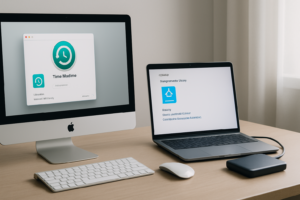
Pair it with a good local backup for true redundancy. A reliable external hard drive (even a basic WD Elements external drive) running Time Machine or Windows File History alongside Backblaze gives you the gold standard 3-2-1 backup strategy: three copies, two different media types, one offsite.
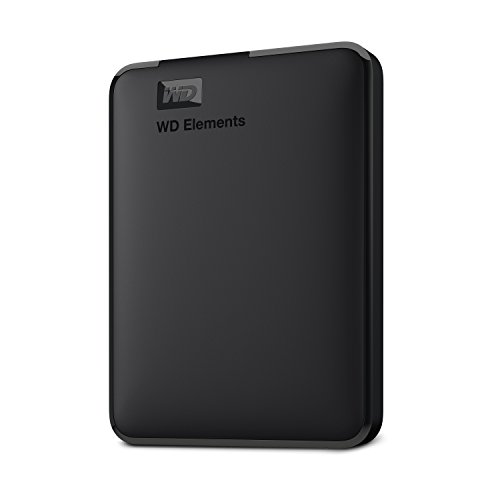
WD Elements 4TB External Hard Drive
A reliable and affordable external drive to pair with cloud backup for a complete 3-2-1 strategy
Best for Long-Term Archiving: Wasabi
If you’re archiving data you rarely need to access, such as old project files, tax documents, raw footage from completed projects, or full system images, Wasabi hits a sweet spot. The storage cost is competitive, there are no egress fees within normal usage, and the data is always “hot” (immediately accessible) rather than locked behind retrieval delays like AWS Glacier.
The 90-day minimum storage commitment is a non-issue for archives since you’re not deleting archived data within three months anyway. Pair Wasabi with Duplicati (free, open-source) or Arq Backup for an automated archival workflow that costs a fraction of what AWS or Azure would charge.
For anyone building a hybrid setup with a home NAS for local storage and cloud for offsite redundancy, Wasabi is an excellent target for NAS-to-cloud sync. Many NAS devices from Synology and QNAP support S3-compatible cloud sync natively.
Best for Media Storage and Google Ecosystem Users: Google One
If your primary need is storing photos, videos from your phone, and documents that sync across devices, Google One makes the most sense. The integration with Google Photos is particularly strong: automatic photo and video backup from your phone, AI-powered search, and easy sharing with family members.
The 2 TB plan includes Google’s VPN (on supported devices), expanded Google Photos features, and the ability to share storage with up to five family members. If you split the 2 TB plan with a partner, the effective cost drops significantly.
Where Google One falls short is raw storage cost at scale. If you’re a videographer or photographer with 5+ TB of media, you’ll outgrow Google One’s pricing very quickly. In that case, a combination of fast local storage (like the drives we tested in our best 4TB external drives for video editing roundup) plus Backblaze B2 or Wasabi for cloud archiving will serve you much better.
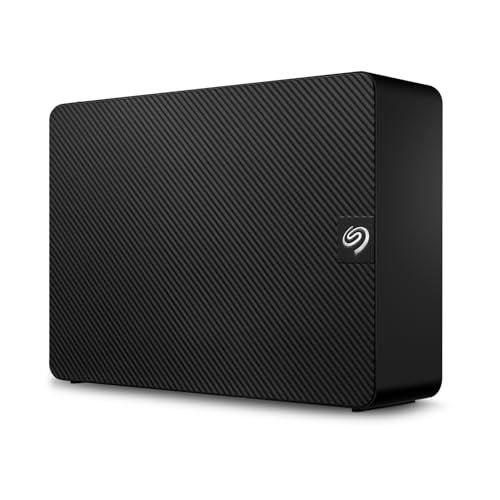
Seagate Expansion 8TB External Hard Drive
Great high-capacity option for local media storage before archiving to the cloud
What About Using Multiple Services Together?
Many power users combine services rather than picking just one. A common and effective setup looks like this:
- Local backup to an external drive or NAS for fast restores
- Backblaze Personal Backup for continuous offsite protection of your active computer
- Wasabi or B2 for archiving large datasets you don’t need immediate access to
- Google One for phone photos/videos and document sync
This layered approach costs more than a single service, but it also means no single failure point can wipe out your data. If your house floods, your cloud backup survives. If your cloud provider has an outage, your local backup is right there. If you accidentally delete a file and don’t notice for six months, your archive has it.
The cost of a solid multi-tier backup system is often less than people expect. Backblaze competitively priced/year, a 2 TB Google One plan at roughly competitively priced/year, and a one-time investment in a quality external hard drive for local backup covers most personal users completely.
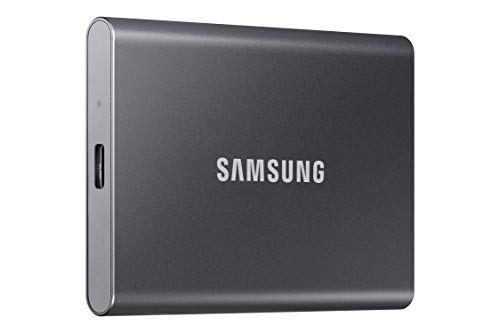
Samsung T7 Portable SSD 2TB
Fast, compact, and durable for local backups and quick file transfers alongside your cloud strategy
Quick Reference: Feature Comparison Table
- Unlimited storage: Backblaze Personal (yes), Wasabi (no, pay per TB), Google One (no, tiered plans)
- Egress fees: Backblaze Personal (none), B2 (minimal), Wasabi (none within policy), Google One (none)
- Backup client included: Backblaze Personal (yes), Wasabi (no), Google One (yes, via Drive)
- S3-compatible API: B2 (yes), Wasabi (yes), Google One (no)
- Mobile photo backup: Backblaze (no), Wasabi (no), Google One (yes)
- Zero-knowledge encryption option: Backblaze Personal (yes), Wasabi (via client-side), Google One (no)
- Family sharing: Backblaze (no), Wasabi (no), Google One (yes, up to 5 members)
My Recommendation
For most people reading this, Backblaze Personal Backup is the best overall value for protecting your computer’s data. Unlimited storage at a flat rate, zero egress fees, and a dead-simple interface make it the easiest recommendation I can give.
If you need flexible, API-driven storage for large archives or developer projects, Wasabi offers the best price-to-performance ratio

James Kennedy is a writer and product researcher at Drives Hero with a background in IT administration and consulting. He has hands-on experience with storage, networking, and system performance, and regularly improves and optimizes his home networking setup.