What Is Ssd Storage on Macbook? Practical Guide!
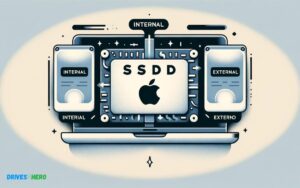
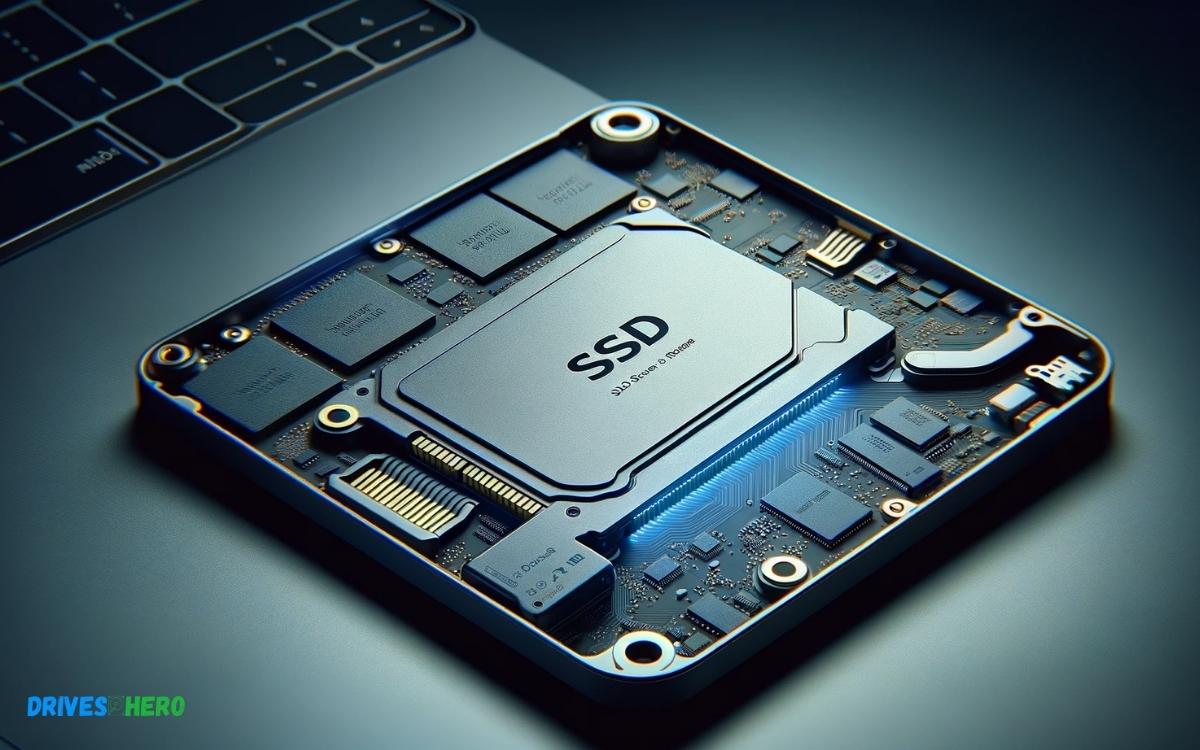
SSD storage on a MacBook refers to the use of a Solid State Drive as the primary storage device within the laptop.
Compared to traditional hard drives, SSDs offer faster data access speeds, increased reliability, and improved overall system performance.
MacBooks utilize SSDs for several reasons:
An example:
- The difference SSD storage makes can be seen when comparing the load time of applications. A MacBook with SSD storage can load applications almost instantaneously, while the same task might take several seconds on a MacBook with a traditional hard drive.
The integration of SSD storage in MacBooks underscores Apple’s commitment to enhancing user experience with fast, reliable, and efficient computing solutions.
Key Takeaway
Importance Of SSD Storage On Macbook
SSD storage on a MacBook provides lightning-fast data access, significantly enhancing system responsiveness.
The integration of solid-state drives (SSDs) ensures a smoother, more efficient user experience, without the moving parts found in traditional hard drives, leading to improved durability and reliability.
Impact On Performance
- Boot up in seconds, not minutes
- Launch applications almost instantaneously
- Transfer files at speeds unimaginable with traditional hard drives
- Handle multiple tasks with elevated efficiency
These advantages are not just numbers on a spec sheet; they translate to a tangible uptick in productivity, whether you’re crunching through heavy data sets or multitasking in a creative workflow.
Storage Capacity Options
| Model | Base SSD Storage | Maximum Upgradeable Capacity |
|---|---|---|
| MacBook Air | 256GB | 2TB |
| MacBook Pro 13-inch | 256GB | 4TB |
| MacBook Pro 15-inch & 16-inch | 512GB | 8TB |
Compatibility With Macbook Models
When upgrading or replacing the SSD storage on your MacBook, understanding which models are compatible with certain SSDs is crucial. Not all MacBook models support the same type of SSD due to differences in hardware specifications and design.
Both the physical connection interface and the software requirements must align to ensure a successful upgrade.
Understanding Hardware Requirements
- MacBook Air models (2013 – 2017): Use PCIe-based SSDs with a proprietary connector.
- MacBook Pro Retina models (Late 2013 – Mid 2015): Similar to MacBook Air models, they support PCIe 2.0 x2 SSDs with a customized interface.
- MacBook Pro models (2016 and later): Feature onboard storage or use a proprietary NVMe interface, making third-party upgrades more challenging.
Considerations For Older Models
| MacBook Model | Maximum MacOS Support | SSD Compatibility Notes |
|---|---|---|
| MacBook Pro (Late 2011) | macOS 10.13 High Sierra | Requires 3rd party SSD with SATA connection |
| MacBook Pro (Mid 2012) | macOS 10.15 Catalina | Supports 3rd party 2.5″ SATA SSDs |
| MacBook Air (Mid 2012) | macOS 10.15 Catalina | Eligible for specific 3rd party SSDs designed for this model |
Steps For Upgrading
An SSD, or Solid State Drive, is a game-changer for MacBooks, offering lightning-fast storage solutions that enhance performance and reliability. If you’re ready to take your MacBook to the next level, upgrading to an SSD is the way to go.
Backing Up Data
- Use Time Machine to create a full backup.
- Store your backup on an external drive or cloud service.
- Verify the backup integrity to ensure all files are accessible.
Installation Process
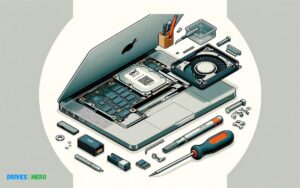
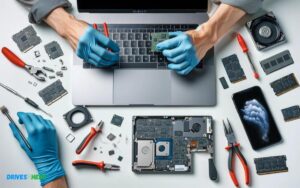
The installation process requires precision and attention to detail. First, turn off your MacBook and disconnect all cables.
- Remove the back panel with the appropriate screwdriver.
- Gently take out the existing hard drive or SSD.
- Insert the new SSD securely into the slot.
- Reattach the back panel and ensure it’s firmly in place.
Data Migration Options
After a successful SSD installation, you’ll need to migrate your data:
| Migration Method | Description | Notes |
|---|---|---|
| Time Machine Restoration | Reinstate your backup from an external drive. | Ensures your system returns to its previous state. |
| Clean macOS Installation | Install a fresh version of macOS and then import data. | Ideal for improved performance and a clean start. |
| Cloning Software | Duplicate your old drive’s contents to the new SSD. | Effectively mirrors your old setup on the new drive. |
Optimizing Storage Efficiency
When discussing the realm of MacBook storage, wielding the power of solid-state drives (SSDs) is a game-changer for both performance and efficiency.
SSDs are praised for their quick data access speeds, robustness, and energy efficiency compared to their hard drive predecessors.
However, even with SSDs, optimizing storage efficiency is critical to keeping your Mac running smoothly, ensuring your data is organized and your disk space is used effectively.
Utilizing Built-in Tools
- Storage Management: Access this tool by clicking the Apple menu, selecting ‘About This Mac,’ and then clicking ‘Storage.’ Here you can review a breakdown of your SSD’s usage and enable ‘Optimize Storage’ to automatically remove watched TV shows and movies.
- Empty Trash Automatically: Activate this feature to have items in the trash deleted after 30 days, freeing up space without manual intervention.
- Reduce Clutter: This function helps identify files that may no longer be of use and can be deleted or archived elsewhere.
File Organization Best Practices
Organizing files is not just about decluttering; it’s about enhancing your MacBook’s performance.
Follow these best practices for superior file organization on your SSD:
- Regularly review and delete unnecessary files. Keep on top of documents that are no longer needed and remove them to reclaim valuable SSD space.
- Create a structured, hierarchical folder system to keep related files together, making them easier to locate and manage.
- Use Tags in Finder to categorize and easily retrieve content across your MacBook.
- Consider offloading infrequently used files to external storage solutions or cloud services, thus keeping your SSD lean and performance-optimized.
By applying these strategies to your MacBook, you can ensure that your SSD storage is being utilized to its full potential, thus bolstering both your efficiency and your machine’s longevity.
Maintaining Ssd Performance
Solid State Drives (SSD) on MacBook not only offer lightning-fast access speeds and silent operation but also come with the requirement of different maintenance techniques compared to their HDD counterparts.
Ensuring peak performance from your MacBook’s SSD involves a few critical practices that can prolong the life of the drive and maintain its speed.
Preventing Fragmentation
- Keep your macOS updated for the latest file system optimizations.
- Avoid unnecessary disk defragmentation processes.
- Use the TRIM command with third-party SSDs, if not automatically supported.
Monitoring Health And Lifespan
- Regularly check the S.M.A.R.T status of your SSD using Disk Utility.
- Consider using third-party apps for detailed SSD health reports.
- Backup your data consistently to mitigate risks associated with potential SSD failure.
Common Performance Issues
Your MacBook, equipped with Solid State Drive (SSD) storage, is designed to operate at impressive speeds and efficiency.
Yet, like any technology, SSDs can encounter performance issues that can slow down your Mac’s operation. Recognizing these issues early can save you from potential productivity dips or data losses.
Identifying Symptoms
- Longer boot times than usual, indicating the drive struggles to access your system files.
- Sluggish application launches, reflecting delayed read and write speeds.
- Files taking longer to save or transfer, potentially signifying a degradation in SSD performance.
- Error messages about disk errors or storage corruption.
- A noticeable decrease in overall system responsiveness may point towards widespread SSD wear.
Troubleshooting Methods
Once you’ve identified signs of an SSD slow-down, a structured troubleshooting approach can help restore your MacBook’s performance.
- Restart your MacBook to clear temporary files and processes that may be affecting SSD performance.
- Use Disk Utility to perform a storage check and repair disk permissions. This can be accessed by rebooting your Mac in Recovery Mode.
- Check for macOS updates; sometimes performance issues are software-related and can be fixed through an update.
- Trim your drive. Ensure TRIM is enabled to aid in the wear-leveling process, prolonging your SSD’s lifespan.
- Prune unnecessary files or applications that take up a significant amount of SSD space, and could be bogging down the system.
- Consider resetting the System Management Controller (SMC), which can resolve a range of issues including those related to power and hardware performance.
- If problems persist, seek professional assistance from an authorized service provider to determine if there’s an underlying hardware issue.
Executing these troubleshooting steps can often resolve the most common performance issues affecting SSD storage on MacBooks, enhancing your user experience and productivity.
Addressing Storage-related Errors
When MacBook users encounter the ‘Addressing storage-related errors,’ it stands as a critical juncture in maintaining the integrity and performance of their SSD (Solid State Drive) storage.
These errors can range from innocuous notices nudging you to manage storage space to critical warnings indicating potential hardware failures.
Understanding how to navigate these error messages and resolve common issues is essential for keeping your MacBook running smoothly and efficiently.
Resolving Common Issues
- Managing space: For
'Your disk is almost full'alerts, start by reviewing large files and unused apps that can be deleted or moved to an external storage device. - Optimization tools: Use built-in utilities like
'Optimize Storage'and'Reduce Clutter'found in the macOS storage management window to regain space. - File system check: In case of a
'This disk is not readable by this computer'error, running Disk Utility’s First Aid can resolve many file system issues. - Freeing up for updates: Errors during installation, such as
, often requiringfreeing up additional storage; ensure at least 20GB is available before attempting installation tasks.
Regularly monitoring and resolving these issues not only ensures the longevity of your MacBook’s SSD but also provides a seamless user experience.
Should complexities persist, contacting Apple Support or visiting an authorized service provider is recommended.
Evolving Technology And Trends
SSD storage on a MacBook revolutionizes data access speed and reliability. Embracing cutting-edge technology, these solid-state drives enhance the user experience with lightning-fast boot times and efficient file transfers.
Impact On Macbook Design
- Thinner profiles allowing for more portable devices
- Removal of moving parts reduces mechanical failure rates
- Efficient heat distribution contributes to better thermal management
Potential Advancements In Storage Capacity
| Year | Storage Capacity Expectation |
|---|---|
| 2021 | Maximum of 2TB SSD |
| 2023 | Trending towards 4TB SSDs |
| 2025+ | Potential for 8TB+ SSDs |
Conclusion
In wrapping up, SSD storage on MacBooks is a game changer for speed and efficiency. It enhances the performance and longevity of your device with impressive speed.
Consider an SSD upgrade for a smoother, faster computing experience. It’s a worthwhile investment for any MacBook user seeking peak performance.

Harold Williams is a senior writer and technical editor at Drives Hero with 20+ years of experience in IT administration. He specializes in storage systems, SSD reviews, and performance testing, bringing real-world insight to every guide.