Which Macbook Pro Can Upgrade Ssd? Practical Guide!
The MacBook Pro models from 2012 to early 2015 allow users to upgrade the internal SSD. Specifically, non-Retina MacBook Pros up to mid-2012 and Retina MacBook Pros from late 2012 to early 2015 can be upgraded.
Check out this helpful video on the topic:
Upgrading the SSD in a MacBook Pro can be a viable option to increase storage capacity and improve performance, particularly for older models.
Here’s what you need to know:
Keep in mind that upgrading the SSD on your MacBook Pro should be performed carefully, and it’s recommended to backup all data before proceeding. Upgrading hardware can potentially void Apple’s warranty.
For example:
- If you have a MacBook Pro Retina from early 2015, you could purchase a compatible SSD upgrade kit from a third-party manufacturer, follow their instructions to swap out the old SSD, and then use macOS Recovery to reinstall the operating system on the new drive.
Owners of certain MacBook Pro models have the flexibility to upgrade their SSD, breathing new life into their devices with enhanced storage and speed.

Key Takeaway
Early Models With Limited Upgradeability
Upgrading the SSD in older MacBook Pro models is often elusive, as Apple’s design choices limited hardware customizability. Select pre-2012 MacBook Pros allow for SSD upgrades, enhancing their longevity and performance.
Introduction To Early Macbook Pro Models
The MacBook Pro line made its illustrious debut back in 2006, quickly becoming a favorite among professionals for its sleek design and robust performance.
The ‘early’ MacBook Pro models, specifically those released between 2006 and 2012, were engineered with the daily rigors of productivity in mind.
However, with time and the rapid evolution of technology, these models began to lag, propelling users to seek upgrades, predominantly to their SSDs, to keep pace with modern requirements.
Limitations Of Ssd Upgrade In Early Models
When it comes to upgrading the SSD in these early MacBook Pro models, users face some hurdles. Firstly, not all models offer easy access to their internal components.
Users of the earliest models must navigate through a labyrinth of screws and delicate connectors to reach the SSD.
These MacBooks were built before the adoption of standard m.2 SSDs, meaning they require specific form factors and connectors, such as the mSATA.
- Compatibility Issues: Early SSDs for MacBook Pros use distinct interfaces, and finding a compatible replacement can be a challenge.
- Operating System Limitations: Some older MacBook Pros may not support the latest macOS, which could be a prerequisite for certain SSDs.
- Discontinued Support: Manufacturers have largely moved on to newer technologies leaving a scarcity of parts.
Finding the right SSD for these early MacBook Pro models requires due diligence and sometimes, creative solutions.
The process may seem daunting, but for those committed to reviving their trusty old MacBook, the results can be a significant enhancement to their machine’s longevity and performance.
Identifying Compatible Macbook Pro Models

As technology evolves, so does the need for more robust storage solutions. For those who own a MacBook Pro and are considering an SSD upgrade, it’s crucial to know which models are compatible for such enhancements.
Compatibility is not uniform across all MacBook Pro versions, and understanding the specifics can save time and prevent potential mishaps during the upgrade process.
Explanation Of Compatible Models
- Early to Late 2013: MacBook Pro Retina display models in this year bracket have proprietary SSDs that are upgradeable, though finding compatible drives is vital.
- Mid-2014 to Early 2015: These models also support SSD upgrades. Users must seek specific third-party kits designed for these MacBook Pros.
- Late 2016 and onward: Apple shifted to soldered SSDs in these models, rendering them non-upgradeable after purchase. Users must pre-plan the storage capacity before buying.
Highlighting Notable Features
Upgrading your MacBook Pro’s SSD not only optimizes storage capacity but also improves overall system performance.
Here are notable features to consider:
| Feature | Benefit |
|---|---|
| Faster Read/Write Speeds | Increases efficiency and speed in data transfer, reducing wait times during large file operations. |
| Extended Lifespan | SSDs have no moving parts, which implies a lower failure rate compared to traditional HDDs, prolonging the MacBook’s usable life. |
| Quiet Operation | Unlike HDDs, SSDs operate silently, creating a more focused and noise-free environment. |
| Lower Power Consumption | SSDs consume less power, potentially enhancing the MacBook Pro’s battery life. |
Professional Upgrade Services
Discover the possibilities for enhancing your workflow by upgrading the SSD in your MacBook Pro. Certain models before the 2016 release offer the flexibility for SSD enhancements, thereby boosting performance and storage capacity.
Discussing Professional Ssd Upgrade Options
The right SSD can transform the way your MacBook Pro operates.
Professional services offer a plethora of options to suit different models and needs:
- Capacity Expansion: Choose from a wide range of storage capacities to meet your data needs.
- Speed Boost: Professionals can recommend SSDs with faster read/write speeds for improved system responsiveness.
- Data Migration: Trust in a seamless transition of your data to the new SSD, ensuring nothing gets lost in the upgrade process.
Examining Compatibility Factors
It’s crucial to take into account several compatibility considerations before upgrading your MacBook Pro’s SSD:
| Model | Year | Compatible SSDs |
|---|---|---|
| MacBook Pro Retina | 2012-2015 | M.2 PCIe NVMe/SATA SSDs (with adaptors) |
| MacBook Pro Non-Retina | Up to 2012 | 2.5″ SATA SSDs |
Step-by-step Guide For Diy Ssd Replacement
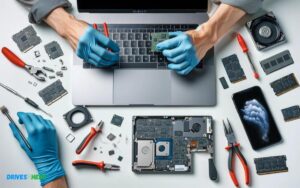
Welcome to your go-to ‘Step-by-Step Guide for DIY SSD Replacement’ for the MacBook Pro. Upgrading your MacBook’s SSD can breathe new life into an older model, offering better performance and increased storage space.
While this process can seem daunting, our easy-to-follow guide aims to empower you with expert knowledge and confidence to successfully enhance your MacBook Pro.
Providing A Comprehensive Approach
Embarking on a DIY SSD replacement mission entails a series of critical steps that demand your meticulous attention.
To ensure a smooth installation process, here’s what you need to know:
- Determine Compatibility: Firstly, check if your MacBook Pro model supports SSD upgrades. Notably, models from 2016 onwards come with soldered SSDs, and are not upgradable.
- Purchase the Right SSD: Select an SSD that is compatible with your specific MacBook Pro model.
- Gather Necessary Tools: A set of precision screwdrivers, a spatula, or a plastic opening tool will be required for this task.
- Backup Your Data: It is essential to back up all your data to prevent any loss during the replacement process.
- Shut Down and Disconnect Power: Power off your MacBook Pro and disconnect the power adapter before beginning.
- Open the Back Panel: Remove the screws holding the back panel in place and gently lift it away from the body.
- Static Precautions: Ground yourself to avoid damaging the internal components with static electricity.
- Remove Existing SSD: Carefully unscrew and slide out the old SSD.
- Install New SSD: Slide the new SSD in place and secure it with screws.
- Reassemble: Place the back panel again and screw it tightly.
- Set up the Operating System: Following the hardware installation, reinstall the macOS onto the new SSD.
Highlighting Potential Risks And Benefits
Executing a DIY SSD upgrade has its share of both risks and benefits:
| Risks | Benefits |
|---|---|
| Potential damage to MacBook’s internal components if handled improperly. | Significant performance improvement and faster data access. |
| Voiding the warranty if your MacBook Pro is still under coverage. | Expanded storage capacity allowing more data and applications. |
| Static electricity can fry sensitive electronics without proper grounding. | Increased MacBook’s lifespan, delaying the need for a complete replacement. |
Predictions For Upcoming Models
Exploring the future lineup, certain MacBook Pro models retain SSD upgradeability. Tech enthusiasts eagerly anticipate which models will allow for easy enhancements to storage capacity.
Speculating On Potential Developments
- Modular SSDs: The return to modularity with SSDs could democratize repairs and upgrades.
- In-house Silicon SSDs: New SSD technology could be developed in line with Apple’s M-series chips, offering unprecedented integration and performance.
- Expansion Bays: A futuristic design allowing room for SSD upgrades can provide users with the flexibility to expand storage.
Considering Implications For Users
| Potential Feature | User Implication |
|---|---|
| Modular SSD Design | Easier upgrades and repairs, leading to extended device longevity and potentially lower long-term costs. |
| Proprietary SSD Technology | Boost in performance, but with possible implications for compatibility and repairability. |
| Expansion Bays | Flexibility in storage expansion offers better customization to fit individual user needs. |
Conclusion
Exploring MacBook Pro SSD upgrades has its complexities. Yet, certain models do offer the flexibility to enhance your machine’s storage capabilities.
Older MacBook Pros pre-2015 Retina models are prime candidates for this process. Seek a compatible kit and ensure a safe, skillful upgrade to keep your MacBook running at its peak performance.

Harold Williams is a senior writer and technical editor at Drives Hero with 20+ years of experience in IT administration. He specializes in storage systems, SSD reviews, and performance testing, bringing real-world insight to every guide.