Best Enterprise vs Consumer SSDs: Is the Price Worth It?
You’ve probably noticed that enterprise SSDs can cost several times more than their consumer counterparts with similar storage capacities. It’s a gap that makes most people wonder whether they’re just paying for a fancy label or if there’s real engineering behind that premium.
The truth is more nuanced than most comparisons suggest. Enterprise and consumer SSDs are built for fundamentally different workloads, and the differences go far deeper than just the sticker on the box. From the NAND flash quality to the firmware tuning, power-loss protection circuits, and endurance ratings, these are genuinely different products designed for different jobs.
This guide will break down exactly where those differences matter, where they don’t, and help you figure out whether spending more on an enterprise drive actually makes sense for your specific situation. Because for some of you, a consumer SSD is absolutely the right call. For others, skipping the enterprise drive could end up being the most expensive mistake you make this year.
What Actually Makes an Enterprise SSD Different?
Before we compare specific models, let’s clarify what separates these two product categories at a hardware level. The differences aren’t cosmetic.
NAND Flash Quality and Binning
All NAND flash isn’t created equal. When manufacturers like Samsung, Micron, or SK Hynix produce NAND wafers, the individual dies are tested and sorted through a process called binning. The highest-quality dies with the best endurance characteristics and lowest error rates get reserved for enterprise drives. Consumer SSDs receive dies that still meet quality standards but may have slightly higher error rates or lower endurance potential.
This difference shows up in real-world use over time. Enterprise NAND can handle more program/erase (P/E) cycles before degradation becomes a concern. Where a consumer TLC die might be rated for 1,000 to 3,000 P/E cycles, the same generation of enterprise TLC could handle 5,000 or more.
Power-Loss Protection (PLP)
This is one of the biggest and most practical differences. Enterprise SSDs include onboard capacitors (sometimes called power-loss protection capacitors) that provide enough energy to flush all data from the drive’s DRAM cache to the NAND flash during an unexpected power outage. Consumer SSDs generally don’t include this hardware.
If you’re running a database server or handling financial transactions, losing data that was sitting in the write cache during a power failure can be catastrophic. For a home gaming PC? You’d lose whatever file was being written at that exact moment, and your operating system would likely recover on the next boot with minimal issues.
Endurance Ratings (DWPD vs. TBW)
Enterprise drives are rated using Drive Writes Per Day (DWPD) over their warranty period, while consumer drives typically use Total Bytes Written (TBW). Both measure how much data you can write before the drive is expected to wear out, but DWPD gives a clearer picture for sustained workloads.
A typical consumer 1TB NVMe SSD might carry a 600 TBW rating. An enterprise 1TB drive could be rated at 1 DWPD or higher over a 5-year warranty, which works out to roughly 1,825 TBW. That’s more than three times the endurance. Some write-intensive enterprise models go as high as 3 or even 10 DWPD, putting them in a completely different category.
Firmware and Error Handling
Enterprise firmware is tuned for consistent performance under sustained loads rather than bursty consumer workloads. Consumer SSDs often use aggressive caching tricks (like SLC caching) to deliver impressive sequential speeds in benchmarks, but performance can drop significantly once the cache fills up during large sustained writes.
Enterprise drives prioritize latency consistency. A database server doesn’t care about peak sequential read speed nearly as much as it cares about predictable latency on random 4K reads at queue depth 32. Enterprise firmware also includes more sophisticated error correction and data integrity checking.
Consumer SSDs: Best Options for Most Users
For the vast majority of use cases, including home desktops, laptops, gaming PCs, and even home NAS setups, a quality consumer SSD delivers excellent performance at a fraction of the cost. Here are the standout options.
The Samsung 990 Pro remains one of the best consumer NVMe drives available. It offers sequential reads up to 7,450 MB/s, and Samsung’s firmware maturity is hard to beat. The 2TB model carries a 1,200 TBW endurance rating, which is generous for a consumer drive and more than enough for even heavy desktop workloads.
Samsung 990 Pro 2TB NVMe SSD
Top-tier consumer NVMe with excellent endurance ratings and Samsung’s proven firmware reliability
For budget-conscious buyers who still want strong performance, the WD Black SN770 is an excellent pick. It doesn’t have DRAM, relying instead on Host Memory Buffer (HMB) technology, but real-world performance is remarkably close to drives costing much more. It’s a fantastic choice for gaming and general productivity.
The Crucial T705 pushes the consumer performance envelope even further with PCIe 5.0 speeds exceeding 14,000 MB/s sequential reads. If you’re doing frequent large file transfers or video editing on a workstation, it’s worth a look, though most people won’t notice the difference over a good Gen 4 drive in everyday tasks.
Enterprise SSDs: When the Premium Makes Sense
Enterprise SSDs aren’t just for Fortune 500 companies. Several scenarios justify the higher cost, even for smaller businesses and power users.
Top Enterprise Picks
The Samsung PM9A3 (MZQL21T9HCJR) is a workhorse in data centers worldwide. Available in U.2 and M.2 form factors, it offers 1 DWPD endurance with full power-loss protection. Samsung’s enterprise firmware delivers remarkably consistent latency even under mixed random read/write workloads, making it ideal for database and virtualization servers.
Samsung PM9A3 1.92TB Enterprise NVMe SSD
Data center workhorse with power-loss protection, 1 DWPD endurance, and rock-solid latency consistency
For those working within the SATA ecosystem (which is still extremely common in enterprise storage arrays), the Samsung PM893 series has become a go-to choice. It delivers up to 560 MB/s sequential reads and 530 MB/s writes with 1 DWPD endurance. SATA may feel ancient compared to NVMe, but many existing servers and storage appliances only support SATA interfaces, and the reliability of Samsung’s enterprise SATA drives is well proven.
The Intel (now Solidigm) D7-P5620 is another strong contender in the mixed-use enterprise space, offering up to 2 DWPD endurance. If your workload involves a roughly 70/30 read/write mix, this drive is specifically optimized for that pattern. Solidigm has continued Intel’s enterprise SSD legacy well, and the D7 series has earned a solid reputation in production environments.
Head-to-Head: Key Specification Comparison
Let’s look at how representative enterprise and consumer drives stack up across the specs that matter most.
- Endurance (1TB class): Consumer NVMe drives typically offer 300 to 600 TBW. Enterprise drives at 1 DWPD deliver around 1,825 TBW over 5 years, with write-intensive models reaching 5,475+ TBW.
- Warranty: Most consumer SSDs carry 5-year warranties. Enterprise drives also carry 5-year warranties, but they’re backed by much higher endurance limits before the warranty is voided.
- Power-Loss Protection: Absent on nearly all consumer drives. Standard on enterprise drives.
- Latency Consistency: Consumer drives can spike to 10ms+ under sustained load. Enterprise drives typically hold under 1ms at the 99.99th percentile.
- Temperature Monitoring: Both categories include thermal monitoring, but enterprise drives often support more granular SMART attributes and predictive failure analytics.
- Encryption: Consumer drives may offer software-based encryption. Enterprise drives commonly support hardware-based AES-256 encryption with TCG Opal and eDrive compliance.
When Enterprise Drives Are Worth Every Penny
Here are the specific situations where skipping the enterprise drive is a false economy:
Database servers and transaction-heavy applications. If you’re running MySQL, PostgreSQL, MongoDB, or any database that performs constant random writes, enterprise drives will maintain consistent performance where consumer drives degrade. The power-loss protection alone justifies the cost here, since a corrupted database from a power failure can mean hours or days of recovery.
Virtualization hosts. Running VMware ESXi, Proxmox, or Hyper-V with multiple virtual machines creates a mixed, sustained I/O pattern that consumer SSD firmware isn’t optimized for. Enterprise drives handle this workload pattern gracefully.
Write-intensive workloads. Video surveillance recording, logging servers, or any application that continuously writes data will burn through consumer SSD endurance faster than you’d expect. A 600 TBW consumer drive writing 100GB per day would theoretically hit its endurance limit in about 16 years, but a server writing 1TB per day would exhaust it in less than 2 years.
Any environment where downtime costs real money. If a failed drive means your e-commerce site goes down or your team can’t access critical applications, the premium for enterprise reliability and longer endurance is a small insurance policy.
When Consumer SSDs Are the Smart Choice
Don’t fall into the trap of thinking more expensive always means better for your needs. Consumer SSDs are the right pick in many scenarios:
Desktop workstations for creative work. Even video editors working with 4K and 8K footage are primarily doing sequential reads and writes. A fast consumer NVMe like the Samsung 990 Pro handles this beautifully. The bursty nature of creative workflows (edit, render, export, repeat) aligns perfectly with how consumer SSD firmware manages caching.
Gaming PCs. Games primarily involve reading data, and modern consumer NVMe drives deliver more than enough read performance. You’ll never write enough data to a gaming drive to worry about endurance limits.
Home NAS and media servers. Running a Synology or QNAP NAS at home for media streaming and personal backups? Consumer SSDs (or even consumer HDDs) are perfectly adequate. The write volumes in a home environment are tiny compared to enterprise use.
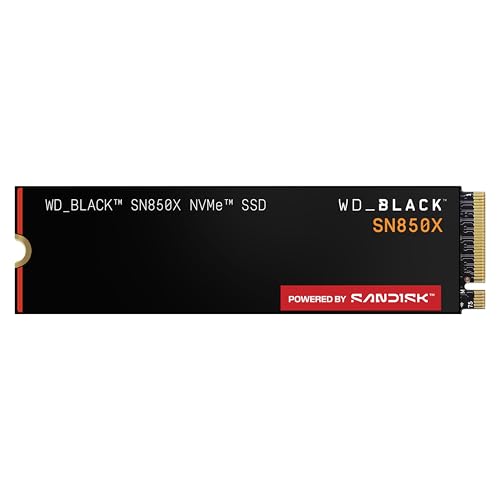
WD Black SN770 2TB NVMe SSD
Best value consumer NVMe for gaming and everyday use with performance that punches well above its price class
Development environments. Writing code, compiling projects, and running containers locally don’t generate the sustained I/O that requires enterprise hardware. A developer with a fast consumer NVMe will be perfectly well served for years.
The “Prosumer” Middle Ground
There’s an interesting category of drives that blurs the line between consumer and enterprise. These “prosumer” or “client workstation” drives offer some enterprise features at lower premiums.
The Samsung 983 DCT (if you can still find one) and the Samsung 990 EVO Plus represent different points on this spectrum. Some users also repurpose older-generation enterprise pulls (used drives removed from data center service after 2-3 years). These used enterprise drives often have plenty of endurance remaining and can be found at steep discounts, though you’ll obviously sacrifice any warranty coverage.
For home lab enthusiasts running small Proxmox or ESXi setups, buying used enterprise drives like the Samsung PM983 or Intel D3-S4610 can be a fantastic value play. Just check the SMART data carefully before purchasing to verify remaining endurance.
My Recommendation
For 90% of individual users, a quality consumer NVMe SSD is the right call. The Samsung 990 Pro or WD Black SN770 will serve you well for years, and you can put the money you save toward more storage capacity instead.
If you’re running any kind of production server, especially one handling databases, virtualization, or continuous write operations, go enterprise. The Samsung PM9A3 is my top recommendation for NVMe enterprise workloads. The performance consistency, power-loss protection, and endurance ratings will pay for themselves the first time you survive a power outage without data loss.
For home lab and small business servers handling lighter workloads? Consider used enterprise drives or prosumer options. You’ll get meaningful reliability improvements without the full enterprise premium.
Frequently Asked Questions
Can I use an enterprise SSD in a regular desktop PC?
Yes, enterprise SSDs work in desktop PCs as long as the interface matches. An enterprise M.2 NVMe drive plugs right into a standard M.2 slot, and enterprise U.2 drives can work with a U.2-to-M.2 adapter. However, you likely won’t notice any performance improvement over a good consumer drive for typical desktop tasks. You’re paying for endurance and reliability features that desktops rarely need.
Do enterprise SSDs actually last longer than consumer SSDs?
Under heavy write workloads, yes, significantly. An enterprise drive rated at 1 DWPD can handle roughly 3x the total writes of a typical consumer drive. Under light consumer workloads (general browsing, gaming, office work), both types of drives will likely outlast the rest of your system. Most consumer SSDs fail from controller or firmware issues rather than NAND wear in typical desktop use.
Is power-loss protection really necessary?
It depends entirely on your use case. For a home PC with a UPS (or even without one), operating systems handle unexpected shutdowns reasonably well thanks to journaling file systems. For a server running a database with data in the write cache, a power failure without PLP can cause data corruption that’s expensive or impossible to recover from. If your data has real financial or operational value, PLP is worth having.
Are there consumer SSDs with enterprise-like features?
A few consumer drives include partial enterprise features. Some higher-end consumer NVMe drives include full-drive encryption capabilities, and a handful include basic power-loss protection for the mapping tables (though not for all cached user data). The Samsung 990 Pro’s hardware encryption support and high TBW ratings make it one of the more enterprise-adjacent consumer options, but it still lacks the full PLP capacitors and firmware tuning of a true enterprise drive.
This article contains affiliate links. We may earn a small commission at no extra cost to you.

James Kennedy is a writer and product researcher at Drives Hero with a background in IT administration and consulting. He has hands-on experience with storage, networking, and system performance, and regularly improves and optimizes his home networking setup.