What to Look for in a Waterproof or Shockproof Portable SSD
You’ve found a portable SSD that claims it can survive a dunk in a river and a tumble off a cliff. But what do those IP68 and MIL-STD-810G labels actually mean? And more importantly, will the drive really hold up when your backpack takes a spill on a rocky trail?
Marketing teams love slapping rugged labels on products, but the specs behind those claims vary wildly. Some drives can genuinely survive being submerged in water for 30 minutes. Others might only handle a light splash. If you’re spending good money on a portable SSD for fieldwork, travel, or outdoor photography, you need to know exactly what you’re getting. This guide breaks down the ratings, explains what matters in practice, and points you toward drives that actually deliver on their promises.
IP Ratings Explained: What Those Numbers Really Mean
IP stands for “Ingress Protection,” and it’s an internationally recognized standard (IEC 60529) that rates how well an enclosure keeps out solids and liquids. The rating uses two digits. The first digit (0 through 6) measures dust protection. The second digit (0 through 9) measures water resistance.
For portable SSDs, you’ll typically see three ratings:
- IP55: Protected against dust ingress (not fully sealed) and low-pressure water jets from any direction. Fine for rain, not for submersion.
- IP67: Dust-tight, and can handle temporary submersion in water up to 1 meter for 30 minutes.
- IP68: Dust-tight, and can survive submersion beyond 1 meter. The exact depth and duration are set by the manufacturer, so always read the fine print.
A drive rated IP68 from one brand might be tested at 2 meters for 30 minutes, while another tests at 3 meters for 72 hours. The “8” in IP68 doesn’t specify a universal depth. You need to check the manufacturer’s documentation to know the actual limits.
One thing people often miss: IP ratings don’t cover saltwater, chlorinated pool water, or other corrosive liquids. A drive rated IP68 for freshwater submersion could still suffer corrosion if you drop it in the ocean and don’t rinse it off promptly.
MIL-STD-810G and MIL-STD-810H: Drop Protection Decoded
MIL-STD-810 is a U.S. Department of Defense testing standard that covers environmental durability, including drop resistance, vibration, temperature extremes, and more. When a portable SSD advertises MIL-STD-810G or 810H compliance, it almost always refers to Method 516.6 (shock) or Method 516.8, which tests the device’s ability to survive drops.
Here’s what you should know: there’s no single “MIL-STD drop test.” The standard includes dozens of procedures, and manufacturers get to choose which ones they test against. A company might test drops from 1.22 meters (about 4 feet, roughly desk height) onto a hard surface, but they could also test from a lower height or onto a softer surface and still claim compliance.
Most reputable SSD manufacturers test drops from 2 to 3 meters onto concrete. The Samsung T7 Shield, for example, is rated for drops up to 3 meters. The SanDisk Extreme Pro Portable SSD handles up to 2-meter drops. These are meaningful differences if you’re regularly working at elevation or in rough terrain.
Always look for the specific drop height rather than just the MIL-STD label. A drive that survives a 3-meter drop is categorically more protective than one rated for 1.2 meters, even though both can technically claim MIL-STD compliance.
What Actually Matters for Real-World Protection
Ratings and certifications tell part of the story, but there are a few practical factors that matter just as much when you’re choosing a rugged portable SSD.
Enclosure Material and Design
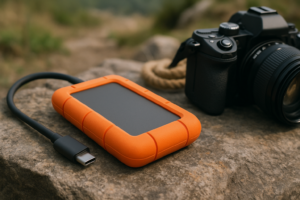
Silicone rubber sleeves absorb shock better than bare aluminum. Drives like the Samsung T7 Shield wrap the internal components in a thick rubber housing that cushions impacts. Aluminum-only enclosures (like the standard Samsung T9) look premium but offer less drop protection. If durability is your priority, look for drives with rubber or silicone bumpers integrated into the shell, not just a removable case.
Connector Durability
The USB-C port is often the weakest point on any portable drive. Water resistance means nothing if the connector corrodes or breaks from repeated plug-unplug cycles. Some drives include a rubber flap or recessed port design that protects the connector from debris and moisture. If you’re frequently connecting an external SSD to a laptop in the field, this small detail can save you a lot of frustration.
Temperature Range
If you’re working in extreme cold (skiing, winter fieldwork) or extreme heat (desert shoots, leaving a drive in a hot car), check the operating temperature range. Most portable SSDs operate between 0°C and 45°C, but ruggedized models often extend that range. The ADATA SE920 and similar high-performance drives can throttle in heat, so rugged models with better thermal management are worth the premium for hot environments. For a deeper look at why drives slow down under sustained use, check out our guide on why your SSD slows down over time and how to fix it.
No Moving Parts Advantage
This is why SSDs are inherently better for rugged use than traditional hard drives. With no spinning platters or read/write heads, a solid-state drive can handle vibration and sudden impacts that would destroy an HDD. If you’re still carrying a portable hard drive into the field, upgrading to an SSD is the single biggest reliability improvement you can make. Our SSD vs. HDD comparison covers the full breakdown of why.
Top Picks for Waterproof and Shockproof Portable SSDs
After comparing specs and real-world durability, a few drives consistently stand out for rugged use.
The Samsung T7 Shield remains one of the best all-around options. It carries IP65 water resistance (strong water jets, not full submersion), 3-meter drop protection, and delivers read speeds up to 1,050 MB/s over USB 3.2 Gen 2. The rubber enclosure is genuinely tough, and it comes in 1TB, 2TB, and 4TB capacities.
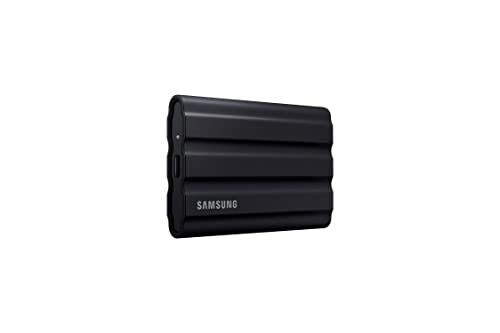
Samsung T7 Shield 2TB Portable SSD
Best balance of speed, durability, and capacity for most outdoor and travel use cases
For full submersion protection, the SanDisk Extreme Portable SSD V2 offers IP55 water resistance and 2-meter drop protection with solid NVMe speeds. It’s lighter than the T7 Shield and fits easily in a pocket. The Pro version bumps speeds up to 2,000 MB/s if you need faster transfers for video work.
If maximum water protection is non-negotiable, consider the LaCie Rugged SSD Pro. It’s IP67 rated (submersible to 1 meter), handles 3-meter drops, and supports Thunderbolt 3 for blazing-fast transfers. It’s a premium option built for professional photographers and videographers who work near water. We featured several of these drives in our roundup of the best portable SSDs for travel in 2026.

LaCie Rugged SSD Pro 2TB Thunderbolt 3
Top-tier IP67 submersion protection with Thunderbolt 3 speeds for professional field use
For a wider view of rugged and waterproof options, browse the full selection of waterproof portable SSDs on Amazon.
Encryption and Data Protection: The Other Half of Security
Physical toughness is only one kind of protection. If your rugged drive gets lost or stolen in the field, hardware encryption keeps your data safe. Most premium portable SSDs, including the Samsung T7 Shield and SanDisk Extreme Pro, offer AES 256-bit hardware encryption with password protection.
Enable this feature. It takes 30 seconds to set up and ensures that even if someone finds your drive on a hiking trail, they can’t access your files. And if you ever sell or repurpose an old drive, make sure you securely wipe it first to remove all traces of your data.
Frequently Asked Questions
Can I use a waterproof portable SSD in saltwater?
IP ratings are tested with freshwater only. Saltwater is far more corrosive and can damage connectors and seals even on IP68-rated devices. If your drive gets exposed to saltwater, rinse it thoroughly with fresh water as soon as possible and dry it completely before use. No manufacturer warranties cover saltwater damage.
Does a higher IP rating mean better drop protection?
No. IP ratings only measure dust and water resistance. They have nothing to do with shock or drop protection. A drive rated IP68 with no MIL-STD drop testing could shatter its internals from a waist-height fall. Always check both the IP rating and the drop-test spec separately. They measure completely different things.
Will a rugged SSD last longer than a standard portable SSD?
The internal NAND flash and controller have the same lifespan regardless of the enclosure. Rugged enclosures protect against physical damage, not cell wear. A rugged SSD and a standard SSD with the same controller will degrade at similar rates under identical workloads. If you’re curious about how long your drive’s flash memory will hold up, our SSD lifespan analysis covers the data in detail. The rugged housing simply makes it less likely you’ll kill the drive with an accidental drop or splash before the NAND wears out.
This article contains affiliate links. We may earn a small commission at no extra cost to you.

James Kennedy is a writer and product researcher at Drives Hero with a background in IT administration and consulting. He has hands-on experience with storage, networking, and system performance, and regularly improves and optimizes his home networking setup.