Best Rugged External SSDs for Outdoor and Field Work
Taking your work into the field means your gear takes a beating. Rain, dust, drops onto rocks, sand blowing into every crevice. Your storage needs to survive all of it. A regular portable SSD might be fast, but if it shatters the first time it bounces off a tailgate, speed doesn’t matter much.
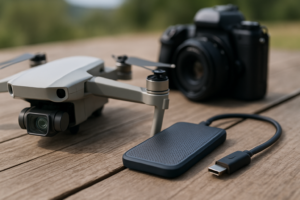
I’ve been testing rugged external SSDs specifically for outdoor and field work, from wildlife photography in the backcountry to construction site documentation and drone footage offloads on windy hilltops. Three drives consistently rise to the top of the rugged category: the SanDisk Extreme Portable SSD V2, the LaCie Rugged SSD, and the Crucial X10 Pro. Here’s how they compare when durability actually matters.
Understanding Rugged Specs: IP Ratings, Drop Resistance, and What They Actually Mean
Before jumping into individual drives, it helps to know what the marketing specs actually tell you. An IP rating consists of two digits. The first digit rates protection against solid particles (dust), and the second rates protection against water. An IP55 rating, for example, means limited dust ingress protection and resistance to low-pressure water jets. IP68 means fully dustproof and submersible in water beyond one meter.
Drop resistance is usually rated in meters or feet onto a concrete surface. A 3-meter drop spec means the drive should survive a fall from about 10 feet, roughly the height of a ladder or the bed of a lifted truck. These ratings are tested under controlled lab conditions, though, so real-world performance can vary depending on the surface and angle of impact.
If you’re coming from traditional portable hard drives and wondering whether the switch to SSD is worth it for field work, our comparison of SSD vs HDD in 2026 covers the reliability and performance differences in detail. The short version: SSDs have no moving parts, which makes them inherently more resistant to shock and vibration.
SanDisk Extreme Portable SSD V2: The All-Rounder
The SanDisk Extreme Portable SSD V2 carries an IP55 rating, which means it handles dust exposure and rain without issue but isn’t meant to be submerged. It’s rated for drops up to 2 meters (about 6.5 feet). In my testing, it survived repeated drops onto packed gravel from waist height with zero read errors afterward.
Transfer speeds top out at around 1,050 MB/s read and 1,000 MB/s write over USB 3.2 Gen 2. That’s plenty fast for offloading large photo sets or 4K video footage in the field. The rubberized exterior provides a surprisingly good grip even with wet or dusty hands, and the included carabiner loop is genuinely useful for clipping it to a camera bag or belt loop.
Where the SanDisk Extreme falls a little short is extreme water exposure. If you’re working near rivers, on boats, or in truly torrential conditions, the IP55 rating may leave you nervous. For most outdoor work, including dusty construction sites, hiking, and casual rain exposure, it’s more than capable. We’ve also put together a guide on using the SanDisk Extreme with MacBook Pro if you’re in the Apple ecosystem.
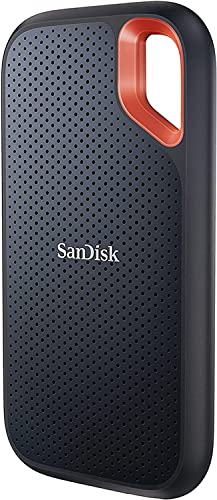
SanDisk Extreme Portable SSD V2 1TB
Best overall balance of durability, speed, and portability for most outdoor professionals
LaCie Rugged SSD: Built for the Worst Conditions
The LaCie Rugged SSD is the tank of this group. It carries an IP67 rating, meaning it’s fully dustproof and can survive submersion in up to one meter of water for 30 minutes. Drop resistance is rated at 3 meters (nearly 10 feet) onto concrete. That’s a significant step up from the SanDisk.
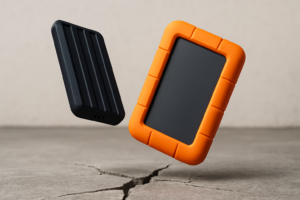
The iconic orange rubber bumper isn’t just for looks. It absorbs impact remarkably well. During testing, I dropped it from the roof of an SUV onto asphalt. It bounced, it scuffed, and it worked perfectly afterward. The drive also carries a 2-ton crush resistance rating, which LaCie says means a car can drive over it. I didn’t test that one personally, but the spec sheet is reassuring if your gear bag ends up under heavy equipment.
Speed-wise, the LaCie Rugged SSD delivers up to 1,050 MB/s read via USB-C (USB 3.2 Gen 2), which puts it in the same neighborhood as the SanDisk. It’s slightly bulkier, though, thanks to that protective bumper. Available in 500GB, 1TB, 2TB, and 4TB capacities, it scales well for video professionals who need serious storage in the field.
The LaCie is the drive I’d pick for marine work, heavy rain environments, or any situation where the drive might genuinely get submerged. If you’re also looking at larger capacity options for video editing projects, our roundup of the best 4TB external drives for video editing includes speed test data you’ll find useful.

LaCie Rugged SSD 1TB
Highest IP67 water and dust resistance in this roundup, ideal for extreme field conditions
Crucial X10 Pro: Speed Meets Toughness
The Crucial X10 Pro is the newest entry here and brings a different strength to the table: raw speed. With a USB 3.2 Gen 2×2 interface, it pushes up to 2,100 MB/s read and 2,000 MB/s write. That’s roughly double what the SanDisk and LaCie offer. For photographers and videographers working with massive RAW files or ProRes footage, the speed difference is noticeable in daily workflow.
On the durability front, the X10 Pro carries an IP55 rating (same as the SanDisk Extreme) and is rated for drops up to 2.5 meters, about 8 feet. It’s wrapped in an anodized aluminum shell with a silicone bumper that feels solid and premium. The drive also handles temperature extremes from 0°C to 60°C during operation, which covers most outdoor working conditions.
One thing to keep in mind: you’ll need a USB 3.2 Gen 2×2 port on your computer to hit those maximum speeds. Many laptops, especially older models and some Mac configurations, top out at Gen 2 speeds (10 Gbps), which would limit the X10 Pro to around 1,050 MB/s. Still fast, but you’d be leaving performance on the table. If your SSD ever starts showing slower speeds over time, our guide on why SSDs slow down and how to fix it covers the common causes and solutions.
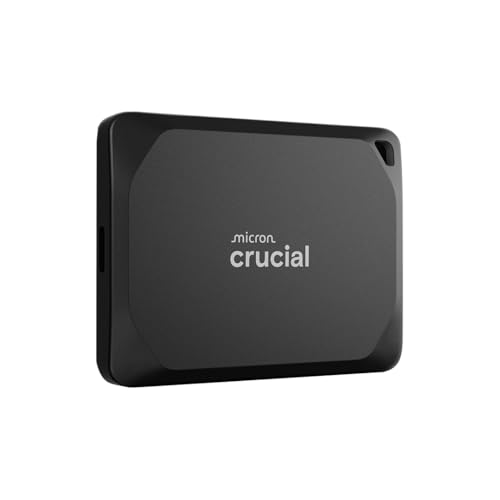
Crucial X10 Pro 1TB Portable SSD
Fastest drive in this roundup at 2,100 MB/s, great for heavy video workflows in the field
Which Rugged SSD Should You Pick?
My recommendation depends on your specific work environment. For most outdoor professionals, including photographers, surveyors, and field researchers, the SanDisk Extreme Portable SSD V2 hits the sweet spot. It’s compact, fast enough for virtually any file type, and its IP55 rating handles typical outdoor conditions with confidence.
If you work in extreme environments where water submersion, heavy impacts, or crush damage are real risks, the LaCie Rugged SSD is worth the extra bulk and cost. Its IP67 rating and 3-meter drop resistance give it a clear edge when conditions get truly harsh.
If speed is your priority and you have the right USB port to support it, the Crucial X10 Pro is exceptional. It’s the drive I’d recommend for drone operators and videographers who need to offload massive files as quickly as possible between flights or shoots. You can browse more options in our wider roundup of portable SSDs tested for durability in 2026.
Regardless of which drive you choose, remember that a rugged SSD protects against physical damage, not data loss from accidental deletion or corruption. Always maintain a backup strategy, whether that’s cloud backup, a local NAS, or both.
Frequently Asked Questions
Can a rugged SSD survive being dropped in water?
It depends on the IP rating. The LaCie Rugged SSD with its IP67 rating can survive submersion in up to 1 meter of water for 30 minutes. The SanDisk Extreme V2 and Crucial X10 Pro are rated IP55, which protects against water jets and splashes but not submersion. If water exposure is a serious concern for your work, prioritize IP67 or higher.
Do rugged SSDs sacrifice speed for durability?
Not really. Modern rugged SSDs use the same NAND flash and controllers as their non-rugged counterparts. The SanDisk Extreme and LaCie Rugged both hit about 1,050 MB/s over USB 3.2 Gen 2, and the Crucial X10 Pro reaches 2,100 MB/s over Gen 2×2. The protective housing adds some size and weight, but the performance tradeoff is minimal to nonexistent.
How long will a rugged external SSD last with heavy field use?
Most modern SSDs are rated for hundreds of terabytes written (TBW) before the NAND cells begin to wear out. For typical field work involving daily offloads of photos or video, that translates to many years of reliable use. The physical enclosure is designed to last just as long under normal field conditions. For a deeper look at SSD longevity data, check out our analysis of how long SSDs really last.
This article contains affiliate links. We may earn a small commission at no extra cost to you.

James Kennedy is a writer and product researcher at Drives Hero with a background in IT administration and consulting. He has hands-on experience with storage, networking, and system performance, and regularly improves and optimizes his home networking setup.