
Can You Upgrade Ssd on Macbook Pro 2020? Yes
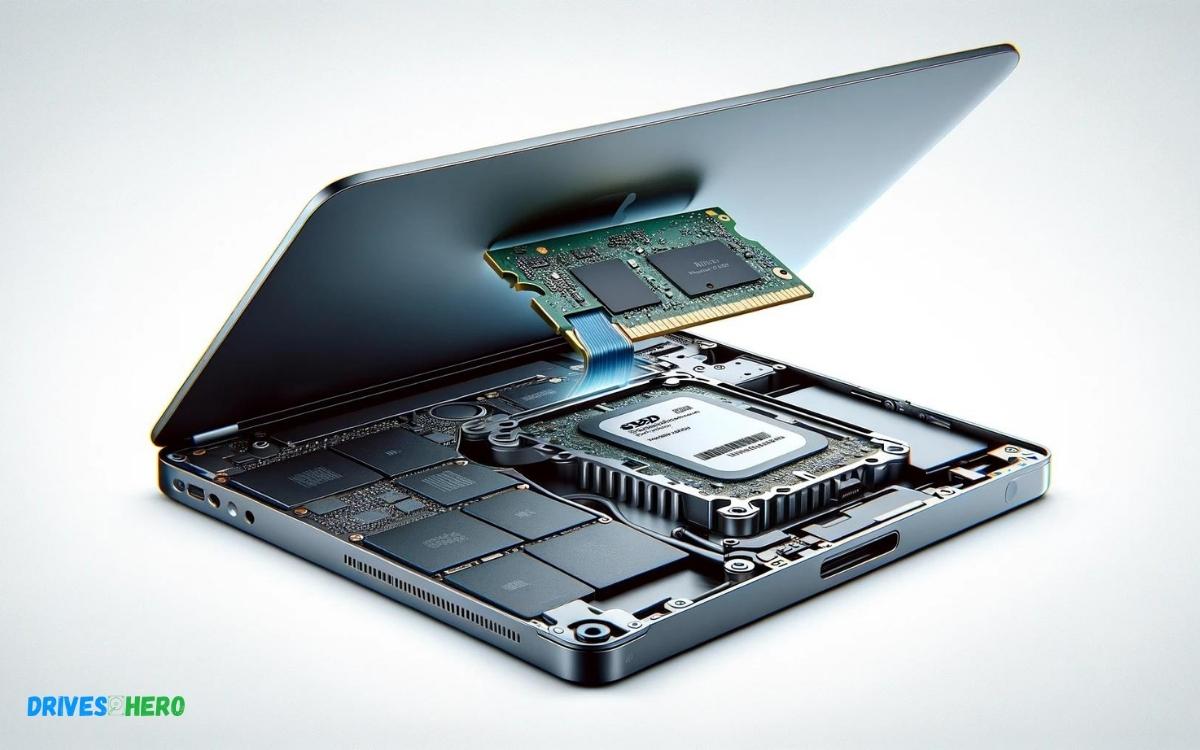
Yes, technically it is possible to upgrade the SSD on a MacBook Pro 2020, but it is not designed to be user-replaceable. It requires specialized tools and expertise, and opening the MacBook Pro yourself will void its warranty.
The MacBook Pro 2020 comes with an SSD that is soldered onto the logic board, making it a complex task for an average user to upgrade the storage after purchase.
Unlike older models with detachable storage, the 2020 MacBook Pro’s design leans towards a compact and integrated approach, which enhances performance but sacrifices upgradeability.
For those determined to upgrade their SSD, there are a few points to consider:
Professional upgrade services, although available, come with the risk of damage to the device and potential loss of Apple support.
Before considering an SSD upgrade on your MacBook Pro 2020, it’s crucial to weigh the risks and warranty implications against the need for additional storage.
Key Takeaway
Introduction To Macbook Pro 2020 SSD Upgrades
When it comes to premium laptops, the MacBook Pro 2020 stands out as a powerhouse that combines performance with sleek design.
For professionals and enthusiasts alike, speed and storage are essential to workflow efficiency. Therefore, upgrading the Solid State Drive (SSD) is a topic of interest for many.
Overview Of The Macbook Pro 2020
The MacBook Pro 2020 is designed with performance in mind. From its stunning Retina display to the cutting-edge internals, it’s engineered to handle demanding tasks seamlessly.
Equipped with top-notch security features and a sophisticated cooling system, this model stands as a testament to Apple’s innovation.
Ssd Specifications And Performance
The MacBook Pro 2020 boasts impressive SSD speeds that contribute to its lightning-fast performance. The integrated SSD plays a pivotal role in application load times, file transfers, and system boot-up.
Here’s a glance at the specifications:
- Flash Storage: Onboard PCIe-based SSD
- Capacity Options: Varies from 256GB to 4TB
- Performance: Sequential read and write speeds that are industry-leading.
Understanding The Possible Upgrade Options
Unlike earlier models, the MacBook Pro 2020 presents challenges when considering an SSD upgrade. Apple’s design choices have led to greater integration of components, which affects upgrade flexibility.
- The SSDs in the MacBook Pro 2020 are soldered directly onto the motherboard, complicating potential upgrades.
- After-market upgrade options may be limited or non-existent due to compatibility and design constraints.
- Seeking professional assistance from authorized service providers could mitigate risks associated with self-upgrade attempts.
Apple’s Design Choices And Upgrade Limitations
The MacBook Pro 2020 is a testament to Apple’s commitment to sleek, compact design, and performance optimization.
This machine comes with a significant caveat: its solid-state drive (SSD) is not user-upgradeable. This design decision impacts users looking for flexibility and future-proofing their devices.
Soldered Ssd Components: Pros And Cons
Apple’s choice to solder the SSD directly onto the motherboard of the MacBook Pro 2020 has sparked debate among tech enthusiasts and professionals alike. This decision affects both performance and repairability.
- Pros:
- Enhanced physical durability due to fewer moving parts and connections
- Faster data transfer speeds, since directly integrated components minimize distance for data travel
- Slimmer design profile, aligning with Apple’s aesthetic and portability goals
- Cons:
- No option to upgrade the SSD after purchase, limiting storage expansion
- Higher repair costs and complexities, as any SSD issues require motherboard servicing
- Increased e-waste, since components cannot be individually replaced or recycled
Warranty And Apple’s Official Stance On Upgrades
Apple’s official stance on hardware upgrades in the MacBook Pro 2020 is clear: any modifications made by the user can void the warranty. This policy is summarized in Apple’s warranty documentation and reiterated by their customer support.
The company encourages users to consider their storage needs before purchase or rely on external storage solutions and cloud services post-purchase.
Comparison With Earlier Models’ Upgrade Flexibility
Comparing the MacBook Pro 2020 to its predecessors reveals a stark contrast in upgrade flexibility.
Below is a table highlighting the differences:
| Model | SSD Upgradeability | User-Serviceability |
|---|---|---|
| MacBook Pro 2015 (and earlier) | User-upgradeable | High |
| MacBook Pro 2016 – 2019 | Limited (dependent on model) | Moderate |
| MacBook Pro 2020 | Not user-upgradeable | Low |
The earlier MacBook Pro models provided more leeway for users to upgrade their devices, thus extending their functional lifespans and potentially improving performance.
Contrarily, the 2020 model enforces a new norm, prioritizing a thinner and lighter design while eschewing modularity and self-service upgrades.
Alternative Solutions To Storage Limitations
When considering the MacBook Pro 2020 and its storage capabilities, users might bump into an unwelcome realization: onboard SSD upgrades are not straightforward due to Apple’s proprietary design.
The notion of being stuck with the pre-configured amount of storage can be quite disheartening.
Fret not, as there are several alternative solutions to circumvent these storage limitations effectively, ensuring your MacBook remains a powerful tool for both work and entertainment without the need to perform complex physical upgrades.
Utilizing External Ssds For Additional Storage
External SSDs stand as a beacon of hope for those in search of immediate storage expansion for their MacBook Pro 2020. These devices are not only portable but also offer lightning-fast data transfer speeds, making them a seamless extension of your MacBook’s storage capacity.
Here are some notable benefits and considerations:
- Plug-and-play convenience: Simply connect the external SSD via a USB-C or Thunderbolt 3 port, and you’re ready to store and access files.
- High-speed transfers: With transfer rates rivaling internal drives, these SSDs ensure productivity remains uninhibited.
- Portability: Compact and lightweight designs make external SSDs perfect for on-the-go use.
Cloud Storage Options And Their Integration
Cloud storage presents a flexible and scalable solution to storage woes. The integration of cloud services with macOS allows users to access their files from any location with an internet connection.
Below is a comparison of popular cloud services:
| Service | Storage Capacity | Integration Level |
|---|---|---|
| iCloud Drive | Up to 2TB | Native to macOS |
| Google Drive | Up to 30TB | High, with third-party apps |
| Dropbox | Up to 3TB (Personal) | High, native integration possible |
Opting for cloud storage also enhances security with built-in encryption and allows for easier sharing and collaboration.
Optimizing Existing Storage: Tips And Tricks
Effectively utilizing the current storage within your MacBook Pro can often free up significant space without the need for external solutions.
Here’s a rundown of strategies:
- Regular Cleaning: Routinely prune unnecessary files and apps.
- Duplicate Detection: Use tools to find and remove duplicate content.
- Optimized Storage: macOS features like Optimized Storage can automatically store infrequently used items in iCloud.
- Streamlining Applications: Consider lighter alternatives to bulky software.
By embracing these effective methods, users can ensure that their MacBook Pro’s existing storage is being used as efficiently as possible.
Technical Considerations And Risks
Considering an upgrade like swapping out an SSD in your MacBook Pro 2020 comes with its array of technical intricacies and potential pitfalls.
Many tech enthusiasts are keen on enhancing their system’s performance, yet one must tread carefully to avoid voiding warranties or causing irreversible damage to their device.
Navigating through unauthorized modifications, understanding the potential impact on system stability and performance, and ensuring data security are our prime focal points.
Understanding The Risks Of Unauthorized Modifications
- Unauthorized modifications to your MacBook Pro, including SSD upgrades, can be a slippery slope.
- Such alterations not only void the warranty but may cause compatibility issues that aren’t immediately apparent.
- As Apple designs its systems to work in a finely-tuned harmony, the introduction of third-party components can disrupt this and potentially lead to system failures.
- Careful research and expertise are essential if you decide to proceed.
The Impact Of Ssd Upgrades On System Stability And Performance
Upgrading the SSD could provide a significant boost in storage capacity and speed. This performance improvement, however, hinges on the quality of the SSD and compatibility with the MacBook Pro’s unique architecture.
System stability might be at stake if the new drive fails to communicate effectively with the rest of the hardware, leading to freezes, crashes, or boot failures.
It’s crucial to select an SSD upgrade that’s known to be reliable and compatible with your specific model to maintain optimal performance levels.
Data Security And Backup Strategies Pre-upgrade
Before attempting an SSD upgrade, data security is of paramount importance. Implementing a sturdy backup strategy ensures that your valuable data isn’t lost in the process.
Consider the following steps:
- Time Machine Backup: Use Apple’s built-in tool to create a full system backup on an external drive.
- Cloud Backup: For additional security, backup crucial files to a cloud service.
- Bootable Clone: Create a bootable clone of your current drive for an immediate fallback option if needed.
Executing these strategies provides a safety net, allowing for a stress-free upgrade experience. In the event of any hiccups during the upgrade process, you’ll be equipped with multiple avenues for data retrieval and system restoration.
The Future Of Macbook Upgradability
As the technological landscape continues to shift and users clamor for more powerful and versatile devices, the question of upgradability comes into sharp focus.
This leads us into an exciting discussion on The Future of MacBook Upgradability, where we explore what may lie ahead for Apple enthusiasts looking to get the most out of their investments.
Consumer Demand And Apple’s Response
It’s no secret that customers are seeking longevity and flexibility in their tech gadgets. With rapid advancements and hefty price tags, the ability to upgrade hardware components such as SSDs is more coveted than ever.
Apple has recognized this trend and the potential for adaptability might just become a key feature in upcoming MacBook designs.
The company’s response to consumer demand will be crucial in maintaining its market dominance and customer satisfaction.
Potential Design Changes In Future Models
To address the evolving needs of users, we may see Apple integrating more modular designs in future MacBook models.
These alterations could include:
- Ease of access to internal components like SSDs and memory modules
- Use of standardized connections for quick swaps and upgrades
- Adoption of a more repair-friendly architecture to support upgrades
These potential design changes would not only cater to the tech-savvy user but also align with global initiatives for sustainability and right-to-repair laws.
The Evolution Of External Storage Technologies
While internal upgrade options are important, the advancement of external storage solutions has become a game-changer.
Cutting-edge technologies such as:
- Thunderbolt 3 and 4 with faster data transfer rates
- Portable NVMe SSD drives that rival built-in speeds
- Cloud-based storage services for streamlined data accessibility
have revolutionized how users manage and extend their storage capacities without the need for internal modifications.
These external storage technologies prove to be a flexible and powerful alternative for MacBook Pro users seeking enhanced performance.
Conclusion
Upgrading the SSD on a MacBook Pro 2020 is possible with the right tools and expertise. Careful consideration is key to ensuring compatibility and maintaining device integrity.
Seek professional assistance if needed, and boost your MacBook’s performance effectively. Embrace the change for a swifter, more efficient Mac experience.

Harold Williams is a senior writer and technical editor at Drives Hero with 20+ years of experience in IT administration. He specializes in storage systems, SSD reviews, and performance testing, bringing real-world insight to every guide.