Will External Ssd Make Laptop Faster
One of the most common questions we get asked is whether an external SSD will make a laptop faster. The simple answer is yes, but there are a few things to consider before making the switch. First, it’s important to understand that not all external SSDs are created equal.
Some are faster than others, and some offer more storage space. Second, you’ll need to make sure your laptop has a Thunderbolt 3 port in order to take advantage of the full speed potential of an external SSD. Finally, keep in mind that even the fastest external SSD won’t be as fast as the internal SSD in your laptop, so don’t expect miracles.
If you’re looking for a way to make your laptop faster, one option is to upgrade to an external SSD. This can provide a significant speed boost, particularly if your laptop is currently using a hard drive.There are a few things to keep in mind when shopping for an external SSD.
First, make sure that the drive is compatible with your laptop. Second, consider the capacity you need – larger capacities will be more expensive but may be worth the investment if you store a lot of data on your laptop. Finally, think about how you’ll be connecting the drive – USB 3.0 is typically the fastest option but it may not be available on all laptops.
If you’re looking for a quick and easy way to improve your laptop’s performance, upgrading to an external SSD is definitely worth considering. Just make sure to do your research before making a purchase so that you get the right drive for your needs.
Can I Speed Up My Laptop With an External Hard Drive?
One of the most common questions we get asked at Laptop Mag is whether an external hard drive can speed up a slow laptop. The answer, unfortunately, is no.An external hard drive can give you more storage space for your files, but it won’t do anything to improve your laptop’s speed.
If your laptop is running slowly, there are a number of things you can try to speed it up, including:Uninstalling unused programsCleaning up your disk space by deleting temporary files and old downloads
Running a disk cleanup utility like CCleanerDefragmenting your hard driveHopefully one of these tips will help speed up your laptop!
Does External Ssd Improve Speed?
An external SSD can improve speed in a number of ways. One is by providing faster access to data that is stored on the SSD. This can be particularly helpful if you frequently access files that are stored on an external drive.
Another way that an external SSD can improve speed is by providing a higher data transfer rate than a traditional hard drive. This can be helpful when transferring large files or working with multimedia files.
Does External Ssd Work As Fast As Internal Ssd?
There is a lot of debate surrounding the topic of whether external SSDs are as fast as internal ones. The truth is, it really depends on a variety of factors. Let’s take a closer look at some of the things that can impact the speed of an external SSD.
One factor to consider is the type of interface that is being used. For example, USB 3.0 is going to be faster than USB 2.0. Another thing to keep in mind is the overall capacity of the drive.
A larger drive is going to be slower than a smaller one because it has more data that needs to be accessed.Finally, another thing that can influence the speed of an external SSD is the actual brand and model that you have. Some drives are just faster than others due to their design and technology.
So, does external SSD work as fast as internal SSD? It really depends on what you’re looking at specifically. In general, though, they tend to be comparable in terms of speed and performance.
Is an External Ssd Worth It?
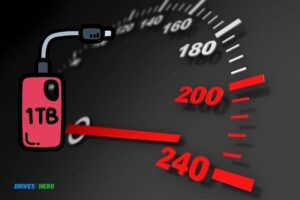
An external SSD is definitely worth the investment, especially if you are looking for a reliable and speedy storage solution. Here are some of the benefits of an external SSD:– much faster than an HDD, with data transfer speeds of up to 550 MB/s
– more durable and shock-resistant than an HDD
– lower power consumption than an HDD
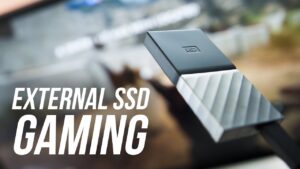
Does an External Ssd Improve Performance for Gaming
An external SSD can improve performance for gaming in a couple of different ways. First, if your game is installed on the external SSD, load times will be much quicker since data can be read from the SSD much faster than from a standard hard drive. This can be especially helpful if you have a lot of large files that need to be loaded when you start up your game.
Another way that an external SSD can improve performance for gaming is by providing additional storage space for games and other files. If you have a lot of games installed on your computer, they can take up a lot of space on your hard drive. Having an external SSD gives you an extra place to store these files so they don’t crowd out your main system drive and slow down your computer.
Additionally, if you keep any save files or other large data sets on your external SSD, they will load faster since the data transfer speed is much higher than with a standard hard drive.
Will an External Ssd Make My Pc Faster
If your computer is running slow, you may be wondering if an external SSD will make it faster. The short answer is: maybe. It depends on a few factors.
First, let’s talk about what an SSD is and how it works. An SSD (solid state drive) is a storage device that holds data like a regular hard drive, but uses flash memory instead of spinning disks. This makes it much faster than a regular hard drive, since there are no moving parts to access the data.
Now, onto whether or not an SSD will speed up your computer. If your computer is slow because it has a lot of large files (like video files) that take a long time to load from a regular hard drive, then using an SSD can definitely help speed things up. However, if your computer is slow for other reasons (like having too many programs installed), adding an SSD probably won’t make much difference.
So, in summary: if your computer is slow because of its hard drive, an SSD can help speed things up; but if your computer is slow for other reasons, an SSD probably won’t make much difference.
How to Use External Ssd on Laptop
External SSDs are becoming increasingly popular as a way to store and access data. They offer many benefits over traditional hard drives, including faster data transfer speeds and lower power consumption. But how do you use an external SSD with your laptop?
Here are a few tips:1. Make sure your laptop has a USB 3.0 port. This is the latest standard for USB ports and offers the fastest data transfer speeds.
If your laptop only has older USB 2.0 ports, you won’t be able to take full advantage of an external SSD’s capabilities.2. Use a high-quality USB cable. Not all cables are created equal and using a cheap or poorly made one can result in slower data transfer speeds or even data corruption.
Invest in a good quality cable that is designed for use with external storage devices.3. Choose the right file format for your needs. External SSDs can be formatted using either the FAT32 or exFAT file system .
FAT32 is compatible with more devices but has a 4GB single file size limit, so it’s not ideal for large files such as video or audio files . exFAT doesn’t have this limitation but isn’t as widely supported . If you’re not sure which format to choose , check with your device’s manufacturer to see what they recommend .
4.. Keep your drive healthy with regular maintenance . Just like any other storage device, external SSDs need to be properly maintained in order to function their best .
This includes regularly backing up your data , defragmenting the drive , and checking for errors .
5.. Know when to upgrade . Even though external SSDs are much faster than traditional hard drives , they will eventually reach their end of life . When this happens , you’ll start seeing decreased performance and reliability issues .
How to Make Laptop Run Faster Windows 10
Slow computers are frustrating. If your laptop is running slower than it used to, there are a number of things you can do to speed it up. Here are some tips on how to make your Windows 10 laptop run faster:
1. Restart your computer. This may seem like an obvious first step, but restarting your computer can help clear its memory and close any programs that may be running in the background and slowing down your machine.2. Delete unused programs and files.
Over time, your computer can accumulate a lot of junk files and programs that you no longer use or need. Deleting these can free up space on your hard drive and help improve performance.3. Defragment your hard drive.
When files become fragmented, they can take longer to load when you try to access them. You can defragment your hard drive using the built-in tools in Windows 10; simply search for “defragment” in the Start menu.4. Adjust your power settings.
Your laptop may be configured to save power by reducing its performance; if this is the case, you can change these settings in the Control Panel under “Power Options” (again, simply search for this in the Start menu). Selecting “High Performance” will typically give you the best results in terms of speed, although it will also use more battery power if you’re not plugged in.5 .
Disable startup programs . Many programs set themselves to launch automatically when Windows starts up; while this can be convenient, having too many programs starting up at once can slow down your laptop significantly . To disable startup programs , open Task Manager (press Ctrl+Shift+Esc on your keyboard) and go to the Startup tab ; here , you can select which programs should launch automatically and which shouldn’t .
Be careful not to disable anything essential , however – only disable things that you recognize and know you don’t need launching at startup .6 .Use a lightweight antivirus program . Some antivirus software , especially older or heavier suites , can have a significant impact on performance ; lighter options such as Microsoft Defender or Avast Free Antivirus tend to have less of an effect on speed without sacrificing much in terms of protection .7 .
Conclusion
If you’re looking to give your laptop a speed boost, one option is to upgrade to an external SSD. This can be a great way to improve performance without having to spend a lot of money on a new computer. External SSDs are typically smaller and lighter than traditional hard drives, so they won’t add much bulk to your laptop.
They’re also more durable and resistant to shock, making them ideal for use with portable computers. Plus, they offer faster data transfer rates than traditional hard drives, so you’ll be able to take advantage of the full potential of your computer’s speed.

Harold Williams is a senior writer and technical editor at Drives Hero with 20+ years of experience in IT administration. He specializes in storage systems, SSD reviews, and performance testing, bringing real-world insight to every guide.