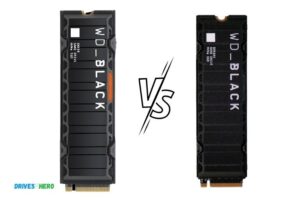
Is NVMe Really Faster Than SSDs?
Yes, nvme is faster than ssd. Nvme utilizes the pcie interface to unlock faster read and write times compared to traditional ssds, which use the sata interface.
Nvme (non-volatile memory express) is the latest development in storage technology, leveraging the pcie interface to enable faster data transfer speeds than ordinary sata-based ssds. Nvme drives have significant advantages over their sata counterparts since they benefit from and leverage the latest storage technology.
The results are blazing-fast read-write rates, improved system boot times, and reduced application and program loading times, which are incredibly beneficial for gamers, power users, and professionals alike. This article will explore the differences between nvme and sata ssds, including speeds, performance comparisons, and how to pick among the two alternatives.
Demystifying Ssds And Nvme Technology
Solid-state drives (ssds) have been in use for quite some time now, providing fast storage and reliable performance. However, with the introduction of non-volatile memory express (nvme) technology, there has been much discussion about whether nvme is faster than ssds.
So, let’s demystify these technologies and find out more by exploring the following subheadings:
Definition Of Ssds And Nvme Technology
- An ssd is a type of storage device made up of nand-based flash memory, similar to the memory used in usb drives and memory cards.
- Nvme is essentially a protocol designed to further optimize the experience of using ssds by reducing latency and increasing bandwidth.
History Of Ssds And Nvme Technology
- The concept of ssds goes back to the 70s when the first solid-state memory systems were developed.
- The first commercial ssds arrived in the market in the 80s, but due to their high cost, they were mostly used in industrial or military applications.
- It was not until the 2000s that ssds started becoming more mainstream, with early sata ssds offering lower latency and faster read/write speeds compared to traditional hard drives.
- Nvme technology was first introduced in 2011 with the goal of taking advantage of ssds’ faster write and read times, minimizing bottlenecks, and improving overall performance.
Key Components Of Ssds And Nvme Technology
- Ssds consist of nand-based flash memory, a controller, and a dram cache.
- Nvme, on the other hand, relies on protocols that allow for the efficient movement of data between the device and the host computer, as well as faster access to storage and lower latency.
Pros And Cons Of Ssds And Nvme Technology
Ssds:
Pros:
- Ssds are much faster than traditional magnetic hard drives.
- They have no moving parts, making them more durable and less prone to physical damage.
- Ssds are less power-hungry, making them an ideal choice for laptops and mobile devices.
Cons:
- Ssds are typically more expensive than traditional hard drives with the same storage capacity.
- They have a finite lifespan, with each nand flash memory cell eventually having a limited number of writes before it fails. This can also lead to issues with data retention.
Nvme:
Pros:
- Nvme is faster than traditional sata protocols, allowing for faster read/write speeds and lower latency.
- With nvme, ssds can achieve increased performance, reducing the cost per gigabyte of storage and making them more practical for mass deployments.
- Their low power consumption makes them ideal for power-constrained environments, such as laptops and embedded systems.
Cons:
- Nvme is a newer technology with potential compatibility issues with older hardware and systems.
- It may require additional system configurations, drivers, or updates to work correctly, which may require technical expertise.
- The cost of implementation can be somewhat higher than traditional storage protocols.
Let’s hope this article helped you to understand the underlying differences between ssds and nvme technology.
Analyzing The Performance Of Ssds And Nvme In Real-World Applications
The Importance Of Evaluating Performance For Real-World Applications
Performance is crucial when it comes to real-world applications, especially for computer hardware. In today’s world, speed is of utmost importance, and computer users demand devices that perform at their peak. Solid-state drives (ssds) and non-volatile memory express (nvme) devices are the most popular storage solutions available today.
It is necessary to evaluate their performance to meet the increasing demands of end-users.
Assessing The Performance Of Ssds In Real-World Situations
Ssds use flash memory technology that makes them faster than traditional hard drives. They do not have any moving parts, which contributes to their reliability and speed. Despite their superior performance compared to hard drives, ssds’ performance can be affected by the specific workload they encounter.
For instance, they may experience a significant decrease in performance when working with large files. Therefore, it is essential to evaluate the performance of ssds through benchmark and real-world testing before making any purchase decisions.
Here are some things that can affect an ssd’s performance in real-world situations:
- Workload type: Large file transfers, gaming, or office applications
- File size: Small files versus large files
- Operating system: Different operating systems may have an impact on performance
Comparing The Performance Of Nvme And Ssds In Real-World Scenarios
Nvme drives incorporate speedy flash memory technology that surpasses the performance of other ssds. They use the pcie interface, which provides faster data transfer speeds than the older sata interface that ssds use. Nvme drives can achieve data transfer rates of up to six times faster than sata ssds, making them an excellent choice for users who demand high performance.
However, they are also more expensive, making a comparison against ssds necessary.
Here are some factors to consider when comparing the performance of nvme and ssds in real-world scenarios:
- Capacity and price: Nvme drives are relatively more expensive than ssds
- Workload type: Both types of drives offer high performance, but nvme drives may outmatch ssds in certain workloads, such as gaming and other high-performance applications.
- File size: Large files will benefit from nvme’s faster read and write speeds.
Benchmarks Vs. Real-World Applications: An Objective Analysis
Benchmarks are synthetic tests that use standardized procedures to measure the speed and performance of storage devices. While synthetic benchmarks are a useful tool to evaluate performance, they may not always represent real-world scenarios. Hardware components may work differently when used for actual tasks than they do when performing on synthetic benchmark tests.
Objective analysis of storage drives should involve benchmark testing and real-world applications. Real-world tests provide data about the devices’ performance when used in actual situations, while synthetic benchmarks provide a baseline for comparison.
Evaluating the performance of ssds and nvme drives is necessary for users who demand high-end performance. It is necessary to consider multiple factors such as workload types, file sizes, and operating systems before making a purchase decision. While synthetic benchmarks are a useful tool to evaluate performance, they may not always represent real-world scenarios, making an objective analysis of drives necessary.
Exploring The Key Factors That Impact Nvme And Ssds Performance
Is nvme faster than ssd? This is a question that has been asked by many computer users who are trying to decide which storage to use. Understanding the factors that impact nvme and ssds performance can help provide an answer to this question.
We will explore the key factors that affect the performance of ssds and nvme.
An Insight Into The Factors That Determine Ssds And Nvme Performance
Solid-state drives (ssds) and non-volatile memory express (nvme) drives are both based on flash memory technology. While there are similarities between the two, differences in performance are attributed to several factors. These factors include bus type, socket type, interface, cpu, memory, sequential read and write speed, random read and write speed, and storage capacity.
Each of these factors plays a critical role in determining the overall performance of ssds and nvme.
Understanding The Impact Of Cpu And Memory On Nvme And Ssds Performance
- The central processing unit (cpu) and memory are crucial in determining the performance of both nvme and ssds.
- Ssds rely heavily on the cpu and memory to function. The cpu calculates the data to be read or written, while the memory temporarily stores the data before it is written to the ssd.
- Nvme uses fewer cpu cycles compared to ssd. This is because nvme communicates with the cpu directly, while ssd uses the storage controller to communicate with the cpu.
Examining The Role Of Bus Type, Socket Type, And Interface On Performance
- Bus type, socket type, and interface play a critical role in determining the performance of both ssds and nvme.
- Modern sata iii ssds are limited to a maximum read and write speed of 600mb/s and 550mb/s, respectively.
- Nvme uses peripheral component interconnect express (pcie) interface, which provides a faster connection between the storage and the cpu.
- Nvme also uses a more efficient socket type specifically designed for flash memory called m.2. This offers faster storage and processing speeds compared to traditional ssds.
Identifying The Impact Of Sequential Read And Write Speed And Random Read And Write Speed On Performance
- Sequential and random read and write speeds are critical in defining the performance of both ssds and nvme.
- Sequential read and write speeds refer to how fast data is read or written from start to end of the storage device.
- Random read and write speeds refer to the rate of data read or write in a random order. In other words, random read and write speeds measure how fast small files are accessed or transferred.
- Nvme has higher sequential and random read/write speeds than ssds, making it faster.
There is no debate that nvme is faster than ssds. It provides faster read and write speeds, uses fewer cpu cycles, and offers a more efficient interface that allows for faster data transfer. However, nvme storage is more expensive than ssds storage.
Thus, deciding the suitable storage type for your specific needs and budget is crucial.
Comparative Analysis Of Nvme And Ssds To Determine The Faster And More Efficient Option
Comparative analysis of nvme and ssds to determine the faster and more efficient option
Nvme and ssds are among the most popular data storage devices for modern computers. Both options have revolutionized computer storage, and for some time, most people considered them the same. However, advances in technology have brought out their significant differences.
In this section, we will explore a comparative analysis of nvme and ssds to determine which option is faster and more efficient.
Head-To-Head Comparison Of Nvme And Ssds: Speed And Efficiency
- Nvme, an acronym for non-volatile memory express, is a type of data storage capable of lightning-fast read and write speeds. It is the fastest data storage device available on the market today, with excellent performance that makes it perfect for resource-intensive applications.
- Ssd, on the other hand, stands for solid state drive and is a data storage device that uses nand and other types of flash memory to store data. Ssds have considerably faster read and write speeds compared to traditional hard disk drives.
- Nvme has a dedicated interface, which allows it to jump ahead in line, unlike ssds that share a sata cable with other devices, causing potential traffic on the connection. This dedicated channel makes nvme a game-changer in the speed arena, making it faster and more efficient than ssds.
- Nvme operates at a higher bandwidth with lower latency and consequently is superior to ssds in the speed and efficiency department.
Real-World Applications And Scenarios: Nvme Vs. Ssds Performance
- Both nvme and ssds have a considerable impact on daily computer performance, but nvme’s superior speed and efficiency make it ideal for those resource-intensive applications such as editing videos or gaming.
- Ssds deliver better performance and are cost-effective, making them a suitable option for budget builds.
- Nvme excels incredibly in data-intensive applications and tasks such as content creation, rendering, and other demanding computer operations.
- Nvme drives are designed to contain enormous files and applications that happen to require high-speed access.
Evaluating The Preferences Of Different Users In Choosing Nvme Or Ssds
- Computer users have different storage requirements and preferences. Understanding what to look for in a new storage device can help users determine whether nvme or an ssd is the better fit.
- If the priority for the potential user is strictly performance, getting an nvme instead of an ssd is the only way to go. In contrast, users on a budget or with simplistic storage necessities should consider ssds.
- For users unsure of whether performance outweighs cost considerations, a comprehensive analysis of nvme and ssds is necessary.
- It is essential to evaluate different computer users and their specific storage needs to choose a storage device that may result in the most favorable outcome.
Future Forecast Of Nvme And Ssds Technology: Speed And Efficiency Update
- As technology advances further, nvme and ssds have the potential to become even faster and more efficient, with a possibility of prices decreasing for faster nvme options.
- Ssds are also becoming faster, with the latest models pushing transfer speeds further into the gigabyte per second range.
- Future forecasts predict that nvme will replace ssds in the current market.
While ssds have been the preferred option for some time, the incredible speed and efficiency of nvme give it the upper hand. Nvme will stand out for applications that require the utmost performance, such as gaming or rendering video content.
It may cost more compared to ssds, but the difference in speed and performance makes any investments worthwhile.
Frequently Asked Questions For Is Nvme Faster Than Ssd
Is Nvme Better Than Ssd?
Yes, nvme is better than sata ssds in terms of speed, efficiency, and performance.
What Is The Speed Difference Between Nvme And Ssd?
Nvme ssds are approximately six times faster than sata-based ssds. The exact speed difference depends on the model and make.
Is Nvme Worth It Over Ssd?
Yes, nvme is worth it over sata ssds if you are looking for speed, performance, and efficiently transferring data.
How Much Faster Is Nvme Than Traditional Ssds?
Nvme can be up to six times faster than sata-based ssds, making it ideal for gaming, content creation, and data transfer.
Conclusion
After delving into the topic “is nvme faster than ssd? ” Through this blog, we can conclude that nvme provides a significant performance boost over traditional ssds. The advancements in technology have enabled nvme to achieve speeds of up to seven times faster than sata-based ssds.
Although it comes at a steep price, users who require speed and high-level performance will undoubtedly benefit from investing in nvme. In terms of gaming, nvme provides faster loading times and a more seamless playing experience. For content creators and professionals, nvme’s high transfer rates shorten the time required for saving and retrieving massive files, such as videos and images.
Nvme provides faster and superior performance compared to traditional ssds. However, it may not be the best for someone on a tight budget. To decide whether nvme is right for you, it is essential to consider your specific needs and budget.

Harold Williams is a senior writer and technical editor at Drives Hero with 20+ years of experience in IT administration. He specializes in storage systems, SSD reviews, and performance testing, bringing real-world insight to every guide.