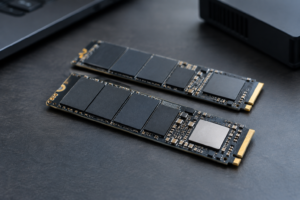
4TB NVMe SSDs With DRAM Cache
Not every 4TB NVMe drive is built the same way, even when the marketing photos look identical. Some use a dedicated DRAM chip to manage the flash translation layer, while others rely purely on Host Memory Buffer (HMB) and borrow a sliver of your system RAM instead. At smaller capacities that difference is often forgivable. At 4TB, where the mapping tables get much larger and sustained writes matter more, DRAM cache stops being a nice-to-have and starts being the thing that keeps performance from falling off a cliff during heavy workloads.
This page is meant to be a reference you can actually use when shopping, not another “what is DRAM cache” explainer. Below you’ll find specific 4TB drives, their real controllers, NAND, TBW ratings, and warranty terms, along with notes on where manufacturers quietly changed components between capacities or revisions.
Why DRAM Cache Matters More at 4TB
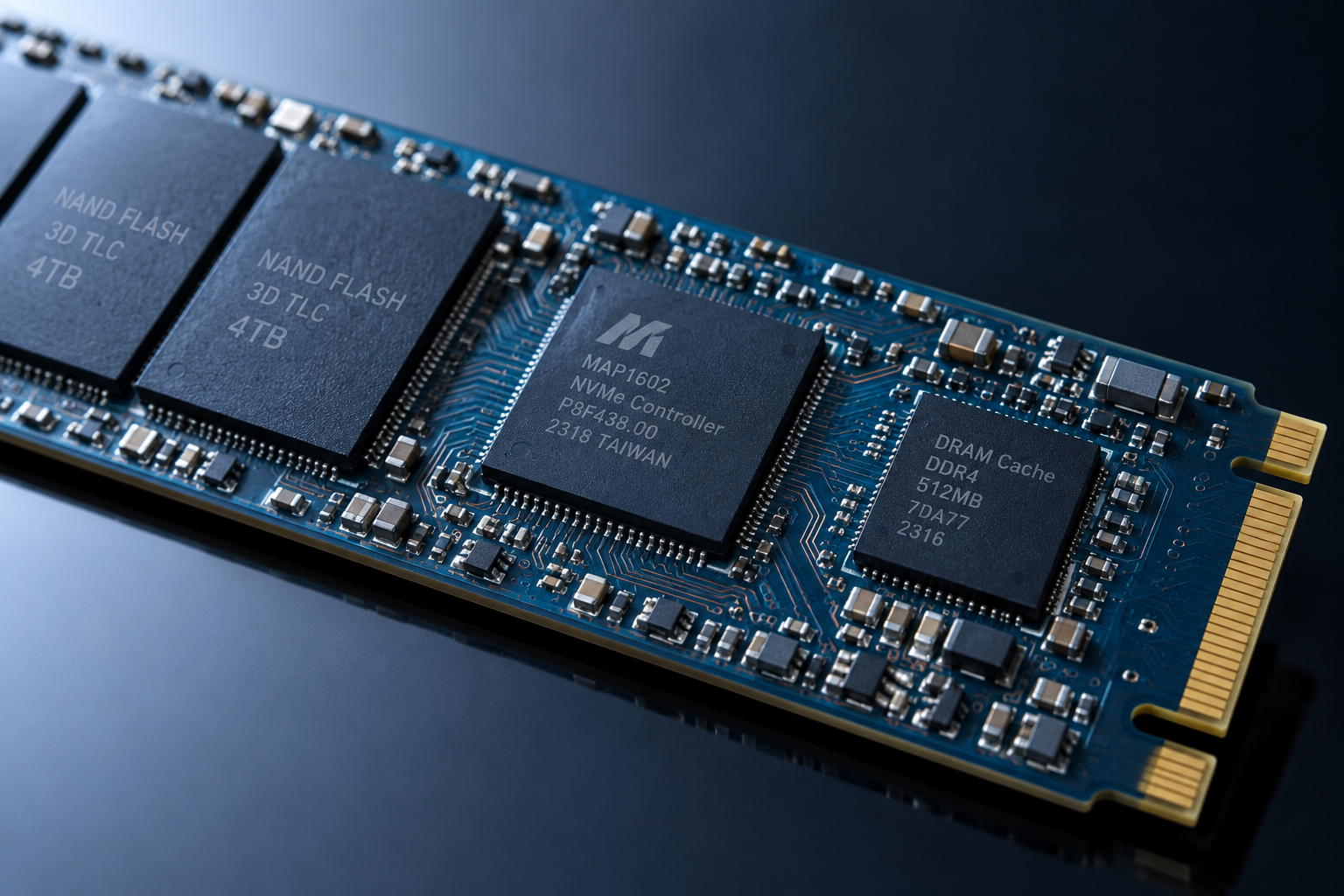
A DRAM-less SSD still works fine for everyday tasks. The problem shows up when you’re moving large files, editing 4K or 8K video, or running a database off the drive. Without dedicated DRAM, the controller has to lean on HMB or the NAND itself to store mapping tables, and at 4TB there’s simply a lot more table to manage.
The practical result is longer sustained write performance and more consistent latency under load. If you’ve ever wondered why an NVMe drive feels blazing fast in a benchmark but stutters during a massive copy job, this is usually why. For more on how NVMe drives behave differently from older interfaces, our Is NVMe Really Faster Than SSDs? article breaks down the mechanics in more depth.
4TB NVMe SSDs With DRAM Cache: Verified Specs
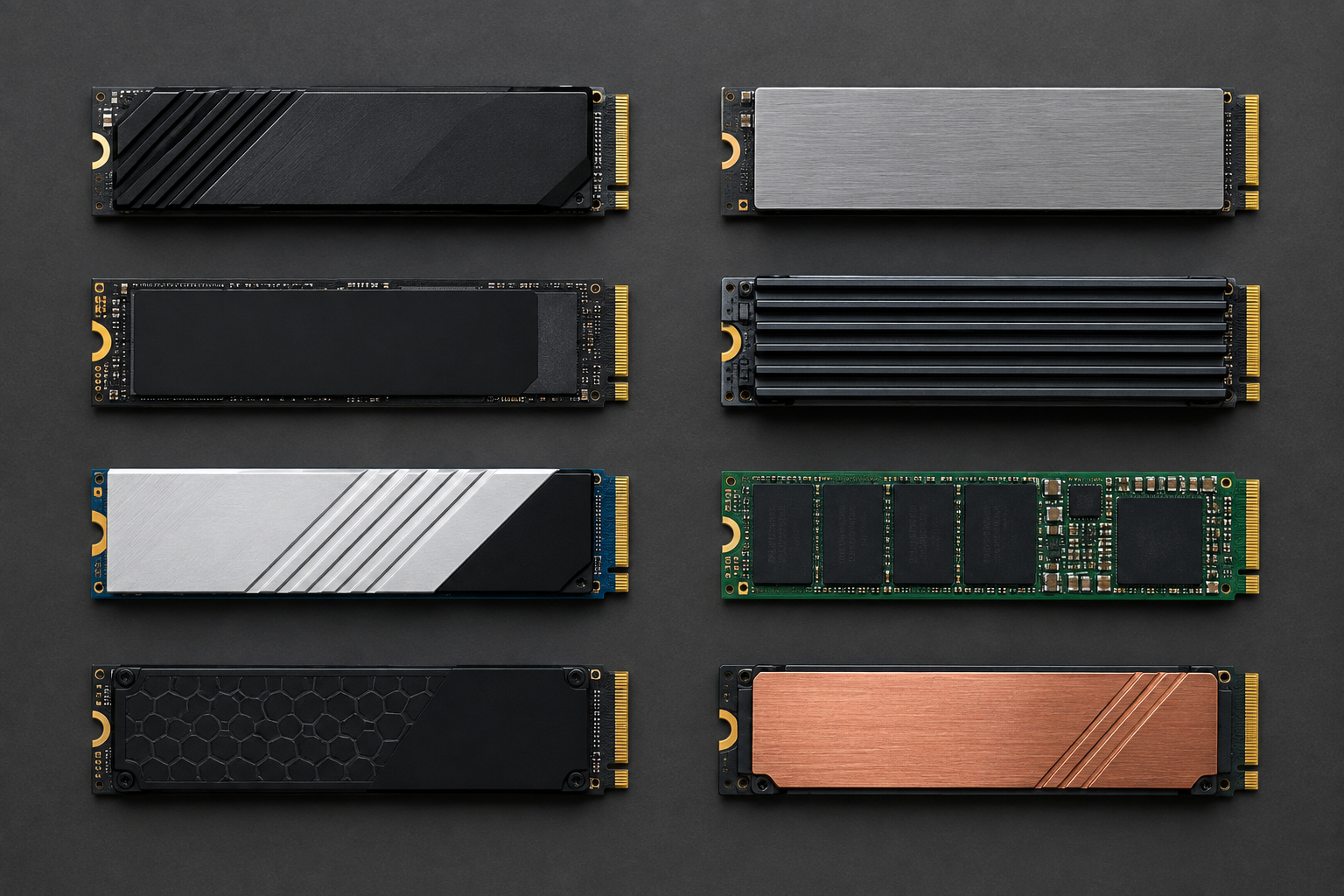
Here’s what’s actually inside the drives worth considering at this capacity. Specs below reflect the 4TB SKU specifically, since controller and NAND choices sometimes shift between capacities within the same product line.
Samsung 990 Pro 4TB
The 990 Pro uses Samsung’s in-house Pascal controller paired with Samsung’s own 176-layer V-NAND TLC and a dedicated LPDDR4 DRAM cache. It runs on PCIe 4.0 and is rated for 2,400 TBW at 4TB, backed by a 5-year warranty. Samsung has historically kept the controller and DRAM approach consistent across capacities in this line, though NAND die counts scale with capacity, which is part of why the 4TB model sustains writes noticeably longer than the 1TB or 2TB versions.
Samsung 990 Pro 4TB
Samsung’s own controller, NAND, and DRAM combination makes this one of the most consistent performers at 4TB.
WD Black SN850X 4TB
WD’s SN850X uses an in-house WD/SanDisk controller with BiCS5 112-layer TLC NAND and a DRAM cache, running over PCIe 4.0. The 4TB model is rated for 2,400 TBW with a 5-year warranty. This is the drive we’d point you to if you already compared it against its DRAM-less sibling in our WD Black SN770 vs SN850X specs breakdown. The SN770 skips DRAM entirely, which is exactly the kind of tradeoff you want to avoid once you’re spending on 4TB capacity.
Seagate FireCuda 530 4TB
The FireCuda 530 runs a Phison E18 controller with 3D TLC NAND (sourced from Micron or Kioxia depending on production batch) and a full DRAM cache. It’s PCIe 4.0 and carries one of the higher endurance ratings in this class at 2,550 TBW for the 4TB model, with a 5-year warranty. Seagate also sells a Heatsink variant of this same drive aimed at PS5 owners, so check which SKU you’re buying if cooling matters for your case.
Crucial T500 4TB
Crucial’s T500 pairs a Micron/Silicon Motion controller with Micron’s own 232-layer TLC NAND and DRAM cache, over PCIe 4.0. The 4TB model is rated for 2,000 TBW and comes with a 5-year warranty. It runs a bit cooler than the FireCuda 530 under sustained load, which matters if you’re building in a small form factor case without much airflow around the M.2 slot.
Kingston KC3000 4TB
The KC3000 also uses a Phison E18 controller, paired with Micron 176-layer TLC NAND and dedicated DRAM. It’s PCIe 4.0 and rated for 3,200 TBW at 4TB, one of the highest endurance figures in this roundup, backed by a 5-year warranty. Kingston has kept this configuration consistent across the line’s capacities, which isn’t always the case with budget-oriented brands.
Kingston KC3000 4TB
Highest endurance rating in this list, making it a strong pick for heavy write workloads like video editing or VM hosting.
DRAM vs DRAM-less at 4TB: What You Actually Lose
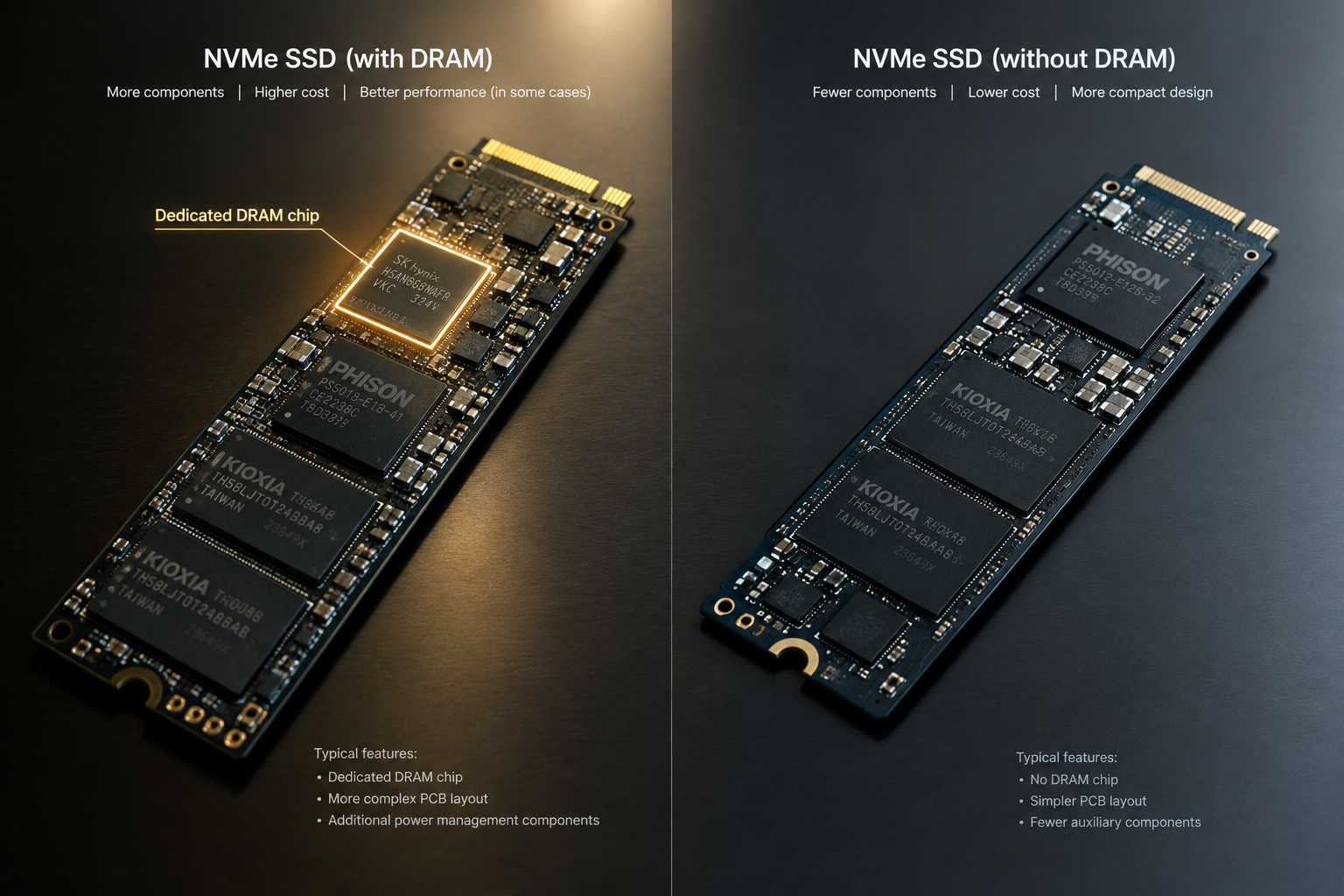
Drives like the Samsung 990 EVO Plus or WD Black SN770 skip dedicated DRAM and rely on HMB instead, borrowing a small chunk of your system’s RAM to hold mapping data. At 1TB or 2TB this barely matters for most people. At 4TB, the mapping tables get big enough that HMB-only designs are more likely to show slowdowns during large sequential writes once the SLC cache runs dry.
That doesn’t make DRAM-less drives bad. It makes them a different category, better suited to lighter workloads, secondary storage, or budget builds where you’re not routinely writing hundreds of gigabytes at once. If you’re deciding between architectures for a laptop upgrade rather than a desktop build, our how important is SSD in laptop guide covers where the tradeoffs actually show up in daily use.
Which One Should You Buy
For most people building a 4TB NVMe setup for gaming, general productivity, or creative work, the Samsung 990 Pro and WD Black SN850X are the safest picks. Both use fully in-house controller, NAND, and DRAM stacks, which tends to mean tighter firmware optimization and fewer compatibility surprises.
If your workload involves heavy sustained writes such as large video exports or frequent big file transfers, the Kingston KC3000 or Seagate FireCuda 530 are worth the extra look thanks to their higher TBW ratings. Either way, avoid assuming a 4TB drive automatically inherits the same internals as its 1TB sibling. Manufacturers routinely swap NAND suppliers or tweak controller firmware between capacities, so always check the specific SKU’s listed specs before buying.
Seagate FireCuda 530 4TB
One of the highest endurance ratings here, a solid choice for sustained heavy write workloads.
If you’re weighing NVMe against other storage types entirely before committing to a 4TB purchase, it’s also worth reading through NVMe SSD vs Intel SSD and SATA vs NVMe SSD gaming for context on where the real-world gains actually come from.
Frequently Asked Questions
Do all 4TB NVMe SSDs have DRAM cache?
No. Several popular models, including the Samsung 990 EVO Plus and WD Black SN770, skip dedicated DRAM entirely and rely on Host Memory Buffer instead. Always check the specific model’s spec sheet rather than assuming based on brand reputation alone.
Does DRAM cache actually improve real-world performance at 4TB?
Yes, particularly during large sustained writes and heavy random I/O. DRAM cache helps the controller manage the flash translation layer more efficiently, which keeps write speeds more consistent once you exceed the drive’s SLC cache during big transfers.
Is a higher TBW rating worth paying more for?
If you write large amounts of data regularly, such as video editing, VM hosting, or frequent large backups, yes. For typical gaming and everyday use, even the lower TBW ratings in this list (2,000 TBW and up) will comfortably outlast the useful life of the drive.
This article contains affiliate links. We may earn a small commission at no extra cost to you.

James Kennedy is a writer and product researcher at Drives Hero with a background in IT administration and consulting. He has hands-on experience with storage, networking, and system performance, and regularly improves and optimizes his home networking setup.