Ssd Or Hdd Which is Better for Laptop
Solid-state drives (ssd) are better for laptops than hard disk drives (hdd). Replacing a laptop’s hdd with an ssd can increase its speed, power, and performance.
Laptop users can enjoy faster boot times, quicker file transfers, and improved application loading times with an ssd. Hdds use spinning disks to store data, while ssds use flash memory chips. Because ssds don’t rely on spinning disks, they’re more durable and less prone to physical damage.
Additionally, ssds produce less heat, use less power and offer longer battery life. While ssds are more expensive than hdds, the benefits of an ssd are worth the price when it comes to increasing productivity and improving overall user experience.
A Brief Introduction To Ssd And Hdd Technologies
Definition And Explanation Of Ssd And Hdd
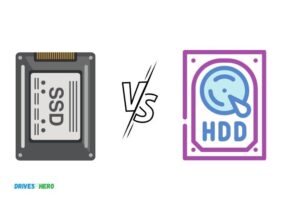
Solid state drive (ssd) and hard disk drive (hdd) are two primary storage options available for laptops. A computer’s hard drive is where the operating system, software, and all types of data are stored. However, these two storage options have differences, and it’s essential to understand them before purchasing a laptop.
Here are some key points to help you understand the differences:
- Ssds are newer and faster versions of hard drives that use flash memory to store data.
- Ssds have no moving parts and use less power than hdds.
- Hdds are traditional storage devices that use spinning disks and mechanical read/write heads to store and access data.
Comparison Of Performance, Speed, And Durability
When it comes to comparing ssd and hdd storage options, the following are some essential factors to consider:
- Performance: Ssds are faster than hdds because they use flash memory to store data, which means they can access data almost instantly.
- Speed: Ssds can read and write data more quickly than hdds. This feature makes ssds ideal for running applications that require quick data access, such as booting up a laptop.
- Durability: Ssds have no moving parts, making them less prone to damage if dropped. Hdds, on the other hand, are susceptible to damage because they have spinning parts.
- Storage capacity and price: Hdds can store data up to several terabytes, whereas ssds have less capacity and are more expensive than hdds. Typically, more storage capacity leads to higher pricing. Moreover, the cost per gigabyte for ssds is substantially higher than hdds.
Both ssds and hdds have their unique strengths and weaknesses. When choosing between ssd and hdd storage options, consider your needs and determine the most suitable storage option that aligns with your requirements.
Why Ssd Is Better For Laptop Storage
Ssd Or Hdd: Which Is Better For Laptop Storage?
When it comes to choosing between ssd and hdd for laptop storage, there are many factors to consider. However, if you want to enhance your laptop’s performance and functionality, then an ssd is the way to go! Here are some reasons why:
Faster Boot-Up, Shutdown, And Application Load Times
An ssd allows you to boot up, shut down, and load applications faster compared to an hdd. This is because ssds have faster read and write speeds, resulting in quicker data transfer.
Some key points to know about ssd speed include:
- An ssd can boot up your laptop in seconds, while an hdd may take up to a minute or more.
- An ssd also enables you to shut down your laptop faster than an hdd.
- When launching applications on your laptop, ssds load them in seconds while the same task can take several seconds or even minutes for an hdd.
Less Power Consumption And Heat Generation
Another reason why ssds are better for laptop storage is that they consume less power and generate less heat than hdds. Since ssds don’t have any moving parts, they consume less power which increases your laptop’s battery life.
Here are some important points to understand about power consumption and heat generation:
- An ssd consumes less power when compared to an hdd, giving you longer battery life.
- Due to the absence of moving parts, ssds generate less heat which helps keep your laptop cool.
Lightweight, Shock-Resistant, And Quiet Operation
Lastly, ssds are lightweight, shock-resistant, and quiet, which makes them perfect for laptops. They can withstand accidental drops without getting damaged due to their shock-resistant design. Additionally, they operate silently, eliminating any distractions caused by the typical noise of hdds.
Some key points to understand about the benefits of ssds include:
- Ssds are lightweight and occupy less space in your laptop.
- They have superior durability and performance when compared to an hdd.
- Since ssds have no moving parts, they operate silently without causing any distractions.
The performance and durability of an ssd make it a better option for laptop storage. Ssds offer faster boot-ups, less power consumption, generate less heat, and have a shock-resistant design. Now that you know why ssds are better, you can make an informed decision when choosing between ssd and hdd for your laptop storage.
Why Hdd Is Better For Laptop Storage
When it comes to laptop storage, the choice between hdd and ssd can be confusing. While ssds have been gaining popularity in recent times, hdds still have their advantages. Let’s take a closer look at why hdd is better for laptop storage with the following reasons:
High Storage Capacity For A Lower Price
One of the main advantages of hdds over ssds is their high storage capacity at a lower price point. Hdds can offer up to 4tb of storage space, making them ideal for people who need to store large files like videos, music, and photos.
In contrast, ssds can offer only up to 2tb of storage space and can be costly.
Wide Compatibility With Various Operating Systems And Devices
Hdds have been around for decades, and their compatibility with various operating systems and devices is excellent. They can easily be used with different types of laptops, gaming consoles, and desktop computers. As a result, compatibility issues are less likely to arise, and you can be confident that your data will be safe and accessible.
Availability In Larger Sizes Suitable For Large Data Handling
Hdds are also available in larger sizes, making them suitable for handling large data sets. If you work with large amounts of data, like in photography or video editing, an hdd is an excellent choice. With an hdd, you can store everything you need in one place without worrying about running out of storage space.
Hdds still have their place in laptop storage, thanks to their high storage capacity, compatibility, and availability in larger sizes. If you’re working with large files and need lots of space, an hdd is an excellent choice. With advancements in technology, hdds will continue to evolve and remain an essential tool for storing and handling large data sets.
Factors To Consider Before Buying A Laptop With Either Ssd Or Hdd
Ssd Or Hdd: Which Is Better For Laptop?
Upgrading your current laptop or purchasing a new one always comes with the question, “what storage capacity do i need? ” The two primary storage options are solid state drives (ssd) and hard disk drives (hdd). Each of these options comes with its pros and cons.
Intended Use Of The Laptop (Gaming, Graphics Design, General Use)
Before considering which storage option is best, consider intended use. For gaming purposes or video editing, ssd is the better choice. Ssd can help boost system performance, making it respond faster and enabling quicker data retrieval. On the other hand, if you use your laptop for general browsing, word processing, or light computing, an hdd is a more affordable choice.
Budget And Required Storage Capacity
Budget is always a factor that needs to be taken into consideration. Ssd laptops tend to be more costly than hdd, and the price increases as the storage capacity expands. If you need a lot of storage space, hdd may be the best option, especially if cost is an issue.
Additionally, if you need more storage capacity and have a limited budget, a combination of ssd and hdd can be a viable option.
Durability And Environmental Factors
The lifespan of both ssd and hdd is a determining factor. Hdds use mechanical platters, which are more prone to failure when there is a sudden jarring or impact. Unlike hdds, ssds have no moving parts, which makes them less vulnerable to shock or damage.
As for environmental factors, ssds perform better at extreme temperatures or humidity.
Operating System And Compatibility Issues
Some operating systems, such as windows 10, is optimized to work with both ssd and hdd. However, compatibility issues can occur between storage options and operating systems. For instance, older operating systems may not support ssd. Replacing an hdd with an ssd requires reinstalling the operating system and updating drivers.
Therefore, it is essential to consider the operating system and compatibility issues when choosing between ssd or hdd.
To choose between ssd or hdd, start by considering your intended use, budget, durability, environmental factors, and the operating system. Whether you need faster system performance, affordable storage, or a balance between both, you can choose the right storage option that fits your needs.
Guidelines For Selecting The Right Ssd Or Hdd For Your Laptop
When it comes to choosing between a solid-state drive (ssd) and a hard disk drive (hdd) for your laptop, there are several factors to consider. Here are some guidelines to help you make the right decision:
What To Consider When Buying A New Ssd Or Hdd
- Capacity: The capacity of your new drive is one of the most important considerations. Hdds typically offer higher capacities than ssds, but ssds are becoming increasingly affordable and can be found in sizes up to 2tb or more.
- Speed: Ssds are faster than hdds as they don’t have any moving parts. This means faster boot times and faster application launches, while also making multitasking smoother and more efficient.
- Durability: Ssds are more durable than hdds as they are built using flash memory. Hdds have mechanical parts that can fail and are more prone to damage if dropped or bumped while in use.
- Price: Ssds are generally more expensive than hdds, but the price gap is narrowing as ssd technology becomes more common.
- Compatibility: Before purchasing a new drive, make sure it is compatible with your laptop’s connector type, whether it be sata, msata or m.2.
How To Install, Partition, And Format The New Drive
- Installation: The installation process will vary depending on the laptop model. Most laptops will have easy-to-access drive bays, while others may require some disassembly. Check your laptop’s manual for instructions.
- Partitioning: Once the new drive is installed, it will need to be partitioned and formatted before it can be used. Use your laptop’s built-in disk management tool to partition and format the new drive.
- Cloning: If you don’t want to reinstall your os and applications, you can clone your existing drive onto the new drive using free software such as easeus todo backup.
How To Optimize And Configure The Drive For Maximum Performance
- Alignment: Aligning the partition of your new drive can improve its performance. Use a tool such as aomei partition assistant to align the partition.
- Trim: Trim is a windows feature that helps keep your ssd running quickly over time. Make sure trim is enabled by opening an elevated command prompt and entering the command fsutil behavior query disabledeletenotify. If it returns 0, trim is enabled. If not, enter the command fsutil behavior set disabledeletenotify 0 to enable it.
- Disable hibernation: Hibernation creates a file on your drive equal in size to your ram and will eat away at your ssd’s free space. Disable hibernation by opening a command prompt with administrative privileges and entering the command powercfg -h off.
- Disable indexing: Indexing can also slow down your ssd. Disable indexing for your new drive by right-clicking on it in file explorer, selecting properties, and unchecking “allow files on this drive to have contents indexed in addition to file properties.”
- Update firmware: It’s important to keep your ssd’s firmware up to date to ensure it’s running smoothly. Check your ssd’s manufacturer website for firmware updates.
By following these guidelines, you can select, install, and configure the right ssd or hdd for your laptop to optimize its performance, speed, and durability.
Frequently Asked Questions For Ssd Or Hdd Which Is Better For Laptop
What Is The Difference Between Ssd And Hdd In Laptops?
Solid state drives (ssds) are faster than hard disk drives (hdds) in terms of speed and performance. Ssds are more expensive than hdds, but they have faster data transfer rates, faster boot times, and better reliability due to having no moving parts.
Can I Replace Hdd With Ssd In My Laptop?
Yes, you can replace a hdd with an ssd in your laptop. It is a simple and relatively easy process for most laptops. By upgrading to an ssd, you can enjoy faster boot times and quicker application launches.
How Much Storage Do I Need In An Ssd Or Hdd For My Laptop?
The amount of storage you need depends on your personal use and the amount of data you plan to store. If you use your laptop for basic tasks, such as browsing the internet and using office applications, a 256gb ssd would be plenty.
If you have a lot of large files, such as videos or images, then you may want to consider a larger drive.
Are Ssds More Reliable Than Hdds In Laptops?
Yes, ssds are more durable and reliable than hdds in laptops. This is because ssds have no moving parts, unlike hdds which have spinning disks. This means that ssds are less likely to fail due to wear and tear, and are less susceptible to damage from drops or other impacts.
Conclusion
Considering the performance and reliability of laptops, the purchase of an ssd or hdd can affect your overall satisfaction. While an hdd may offer more storage capacity and a budget-friendly price, an ssd showcases faster read and write speeds, improved durability, and better energy consumption.
Even though both options have their advantages, it is crucial to select the hardware that suits your needs the most. As ssd prices continue to fall and their storage capacity rises, more and more people are inclined towards indulging in this technology revolution.
Ssds are the future, and investing in them will provide faster boot times, superior performance, and longer battery life. So, if you want to upgrade your laptop or choose a new one, consider buying an ssd. It is a valuable investment that could significantly improve your overall computing experience.

Harold Williams is a senior writer and technical editor at Drives Hero with 20+ years of experience in IT administration. He specializes in storage systems, SSD reviews, and performance testing, bringing real-world insight to every guide.