Can You Upgrade Ssd on Macbook Air M1? Yes!
Yes, technically it is possible to upgrade the SSD on a MacBook Air M1, but it is not recommended.
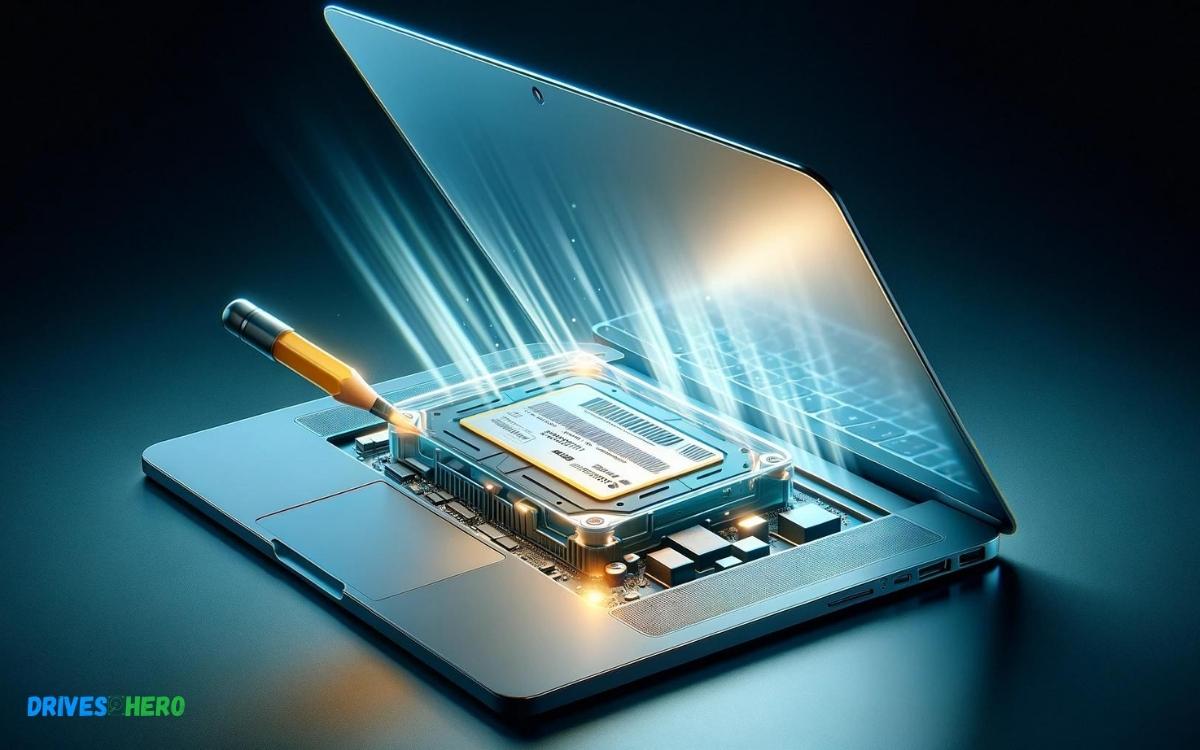
The M1 MacBook Air has a solid-state drive (SSD) that is soldered onto the motherboard, making it extremely difficult to replace or upgrade without specialized equipment and expertise.
Unlike previous MacBook models with removable storage, the M1 MacBook Air was designed with an integrated SSD to maximize performance and space efficiency.
This integration helps achieve faster data transfer speeds and lower power consumption but comes at the cost of upgradeability.
While a skilled technician with the right tools may be able to replace the SSD, there are significant risks involved, including damaging the device and voiding Apple’s warranty.
To address storage needs, consider these alternatives:
- Use external storage solutions such as USB-C drives or cloud services.
- Opt for a MacBook Air with higher storage capacity at the time of purchase.
- Utilize network-attached storage (NAS) for additional space.
Considering the risks, it’s generally better to choose a MacBook Air M1 with the desired storage capacity from the outset or rely on external storage options.
Key Takeaway
Introduction To Macbook Air M1 And SSD Upgradeability
The MacBook Air M1 burst onto the tech scene, not just as a sleek and state-of-the-art device, but as a pivot into a new era for Apple’s hardware prowess.
Among the features touted was its groundbreaking M1 chip, promising high performance and efficiency. However, for many users, the question of SSD upgradeability is a topic of much debate and curiosity.
This segment aims to offer an understanding about the potential for upgrading the MacBook Air M1 with a larger or faster SSD, unveiling the mysteries behind the machine’s solid-state drive capabilities.
What Is The Macbook Air M1?
The MacBook Air M1 is Apple’s ultrathin laptop that debuted towards the end of 2020, making headway with its custom-designed M1 chip.
This chip, built on ARM architecture, brings together processing, graphics, and AI performance in a single component.
The launch model’s SSD options are crucial to consider, since they impact storage capacity and speed, integral to the device’s overall performance.
Understanding Ssds And Their Importance
Solid State Drives (SSDs) are vital for modern computers, boosting speed and responsiveness. Unlike HDDs, SSDs store data on flash memory, which yields quicker data access times and reliability.
They are integral in a device’s boot time, application loading, and overall system responsiveness, making them an essential aspect of computer performance optimization.
Overview Of Upgrade Possibilities For The Macbook Air M1
When it comes to upgrading the MacBook Air M1’s SSD, users face a tough reality. The M1 presents a different architecture from previous Intel-based models, where upgradeability was somewhat more flexible.
Here’s what we know about the M1’s upgrade scenario:
- The SSD components in the MacBook Air M1 are soldered onto the motherboard, suggesting that post-purchase upgrades are not supported.
- Third-party solutions or services offering upgrades for the M1 have yet to be established, posing a challenge for those in need of additional storage.
- An external SSD can be utilized for additional storage, however, this solution is external and does not integrate into the device.
With these points in mind, potential buyers must carefully consider their storage requirements upfront, as they would with other integrated components such as RAM and the M1 chip itself.
Assessing The Macbook Air M1’s Hardware Limitations
Assessing the MacBook Air M1’s Hardware Limitations is crucial for prospective buyers and existing users considering future-proofing their investments.
Apple’s transition to the M1 chip ushered in a new era of computing power and efficiency, but this leap forward came with specific design decisions that bear implications for user upgradeability and repairability.
Built-in Nature Of The M1’s Ssd
Apple’s M1 chip, while a marvel of engineering, comes with an SSD that is soldered directly onto the motherboard.
This means that, unlike previous generations of MacBook Airs, where users could consider upgrading their storage post-purchase, the M1 model does not allow this flexibility.
The SSD’s built-in nature means any consideration of storage space needs to be addressed at the outset, as expansion via traditional means is not an option.
Apple’s Design Philosophy: Integrating Ssds For Performance
Apple’s design philosophy has always emphasized a seamless integration of hardware and software. By integrating the SSD within the MacBook Air M1’s motherboard, Apple ensures optimal performance and swift data transfer rates.
This design choice aligns with the goals of improved efficiency and speed, contributing to the MacBook Air M1’s impressive performance benchmarks. However, it’s a trade-off that impacts upgradeability.
Implications Of Non-upgradeable SSD on Consumers
The non-upgradeable SSD of the MacBook Air M1 has various implications for users:
- Long-term Planning: Customers need to forecast their storage needs accurately at the time of purchase.
- Cost: Opting for a higher storage model at the outset can be more costly, increasing the initial investment.
- Repairs and Data Recovery: Should the SSD fail, the need for repairs can be a more complex and expensive process, potentially involving a full motherboard replacement.
Understanding these limitations is key to making an informed choice. Users should weigh the cutting-edge performance against the lack of upgradeability, ensuring the model they choose aligns with their current and future needs.
Alternative Solutions For Increasing Storage
When it comes to the MacBook Air M1, you might find yourself seeking additional storage options as the internal SSD is not upgradable post-purchase.
Fear not, as several alternative solutions can help expand your storage capacity without the need to tamper with the internals of your Mac.
Utilizing External Ssds And Their Benefits
Connecting an external SSD to your MacBook Air M1 offers a straightforward, plug-and-play experience.
The benefits are plentiful:
- Speed: External SSDs can offer comparable performance to the built-in SSD, ensuring fast data transfer rates that don’t disrupt your productivity.
- Portability: Take your additional storage with you wherever you go, a perfect solution for professionals on the move.
- Ease of Use: With no complicated setup required, an external SSD is an ideal, user-friendly storage extension.
- Flexibility: Easily share and transfer files between different devices, not limited to your Mac.
Simply connect an external SSD via USB-C or Thunderbolt, and your MacBook instantly gains access to more storage perfect for high-resolution video files, extensive photo libraries, and large datasets.
Cloud Storage Options: A Virtual Extension
As an alternative, cloud storage provides a virtual extension of your MacBook’s capacity.
It offers several advantages:
- Accessibility: Access files from any device with an internet connection, breaking the physical chains of local storage.
- Security: Benefit from the provider’s security protocols, reducing the risk of data loss due to local hardware failure.
- Scalability: Adjust your storage plan according to your needs, ensuring you only pay for the space you use.
- Collaboration: Share files and collaborate in real-time with colleagues or friends, regardless of location.
Services such as iCloud, Google Drive, Dropbox, and OneDrive provide seamless integration with macOS, making cloud storage an incredibly efficient solution for expanding your digital space.
Network-attached Storage (NAS) As An Alternative
For those who require large amounts of data accessible across multiple devices, Network-Attached Storage (NAS) stands out as a robust choice:
- Centralized Storage: NAS systems allow multiple devices to access shared data, streamlining work processes and media management.
- Data Protection: Many NAS setups come with RAID configurations that provide data redundancy, protecting against drive failures.
- Remote Access: Securely access your files remotely, giving you the freedom to work from anywhere with an internet connection.
- Streaming and Backup: Stream media directly from the NAS or use it as a backup hub for all your devices.
NAS units come in various sizes and specifications to cater to different needs, from home offices to professional environments, making them a versatile solution for storage expansion.
Preparing For The Future: Tips Before Purchasing
As technology quickly advances, making a wise purchase for your tech needs is more crucial than ever. Owning a MacBook Air M1 is a significant investment, and ensuring you select the right configuration from the start can save you headaches down the road.
Although the built-in SSD of the MacBook Air M1 is not upgradable post-purchase, there are several factors you can consider before making your decision to help future-proof your device.
Assessing Your Storage Needs Before Buying
Determining the right storage capacity for your MacBook Air M1 is essential before heading to checkout.
To avoid future storage woes, here are some tips:
- Think about your current data usage and add a buffer to accommodate future needs.
- Consider the types of files you’ll be storing; high-resolution videos and images can quickly eat up space.
- Look at cloud storage options as a supplement, but remember offline access and data sensitivity.
Analyze usage patterns by checking the storage status of your current device. This will give you a ballpark estimate of what to aim for in your new MacBook Air.
Considering Future-proof Configurations
The term “future-proof” might seem elusive, but it is achievable with careful planning.
When customizing your MacBook Air M1, think long-term:
- Select a higher SSD capacity than your current needs to allow for software updates and new applications that will inevitably require more space.
- Look beyond current trends and think about the longevity and evolution of your usage.
- Maximizing RAM can also contribute to a more seamless experience as multitasking and complex applications become the norm.
The Role Of Applecare And Warranty Considerations
Understanding the coverage of AppleCare and the standard warranty is critical.
These protections can influence your decisions about durability and longevity:
| Warranty Feature | AppleCare | Standard Warranty |
|---|---|---|
| Duration | Up to 3 years | 1 year |
| Accidental Damage Coverage | Yes, with fees | No |
| Technical Support | Extended | Limited |
Purchasing AppleCare might be a wise investment if you’re concerned about hiccups or hardware failures that can impact your productivity, and choose a protection plan accordingly.
Concluding Remarks On SSD Upgrades For Macbook Air M1
The MacBook Air M1 has taken the world by storm with its impressive performance and efficiency. However, one question that frequently arises is whether users can upgrade the SSD to expand storage after purchase.
Understanding The Trade-offs Of A Fixed Ssd
With the MacBook Air M1, Apple has introduced a computer with a solid-state drive (SSD) that is soldered directly onto the motherboard.
This design decision has significant implications:
- Enhanced performance: The integration of storage onto the main board allows for faster data transfer speeds, contributing to the system’s overall snappiness.
- Greater reliability: Fewer moving parts and connections mean there’s less that can mechanically go wrong with your MacBook Air.
- Limited upgradability: Users cannot easily increase their storage capacity post-purchase as they could with older, more modular models.
Considering these trade-offs is crucial when choosing a MacBook Air M1, as the storage decision is one you will live with throughout the device’s lifespan.
Evaluating The Possibilities And Constraints
Upon initial inspection, it may seem that upgrading the MacBook Air M1’s SSD is impossible due to its soldered architecture.
However, this does not necessarily mean there are no options to increase storage, although they fall outside the traditional notions of hardware upgrades:
- External storage: A viable alternative is to use high-speed external SSDs that connect via Thunderbolt or USB-C, though this means forfeiting some portability.
- Cloud services: Relying on cloud storage can offset the need for physical storage upgrades while facilitating accessibility across devices.
These external solutions, while not ideal for every user, offer practical workarounds to the fixed internal SSD constraints.
Final Thoughts And Recommendations For Macbook Air Users
For users considering a MacBook Air M1 or those who already own one, here’s a summary of recommendations:
- Choose a model with an SSD capacity that will meet your long-term needs, accounting for future storage requirements.
- If you anticipate needing more storage, consider the feasibility and convenience of external or cloud-based solutions.
- Remember that trade-offs involving upgradability versus performance are inherent in the design of the MacBook Air M1.
Ultimately, while the fixed SSD of the MacBook Air M1 poses challenges for upgrading, there are still ways to work around these limitations and ensure you have access to the storage you need.
Conclusion
Upgrading the SSD on a MacBook Air M1 isn’t straightforward, but it’s not impossible. Expert technicians may provide solutions, albeit with risks.
Before proceeding, consider warranty implications and potential data loss. Research thoroughly and, if in doubt, consult a professional to ensure your Mac’s optimal performance and longevity.

Harold Williams is a senior writer and technical editor at Drives Hero with 20+ years of experience in IT administration. He specializes in storage systems, SSD reviews, and performance testing, bringing real-world insight to every guide.